
3 Minutes
Imagine AI that simply disappears into the background and makes your phone feel smarter without the heavy lifting. That, more than flashy demos, is what Samsung’s mobile leadership is chasing. At the European Leadership Talk in San Francisco, Won-Joon Choi—Samsung Mobile eXperience COO—laid out a deceptively simple mantra: Reach, Openness, Confidence.
Numbers pushed the point. Eighty-one percent of mobile users tell Samsung that AI is useful. Yet 85 percent say AI still feels too complex to use well. Those two statistics are not contradictory; they are a demand and a warning. People want AI. They just do not want to wrestle with it.
So Samsung shrank the strategy down to three aims. First, Reach: make Galaxy AI available where people already live. The company has put a stake in the ground — 800 million users by the end of 2026 — and that goal forces practical thinking. This is not about packing features into a single flagship. It is about seeding intelligence across phones, tablets, watches, and services so assistance becomes an expected part of daily life.
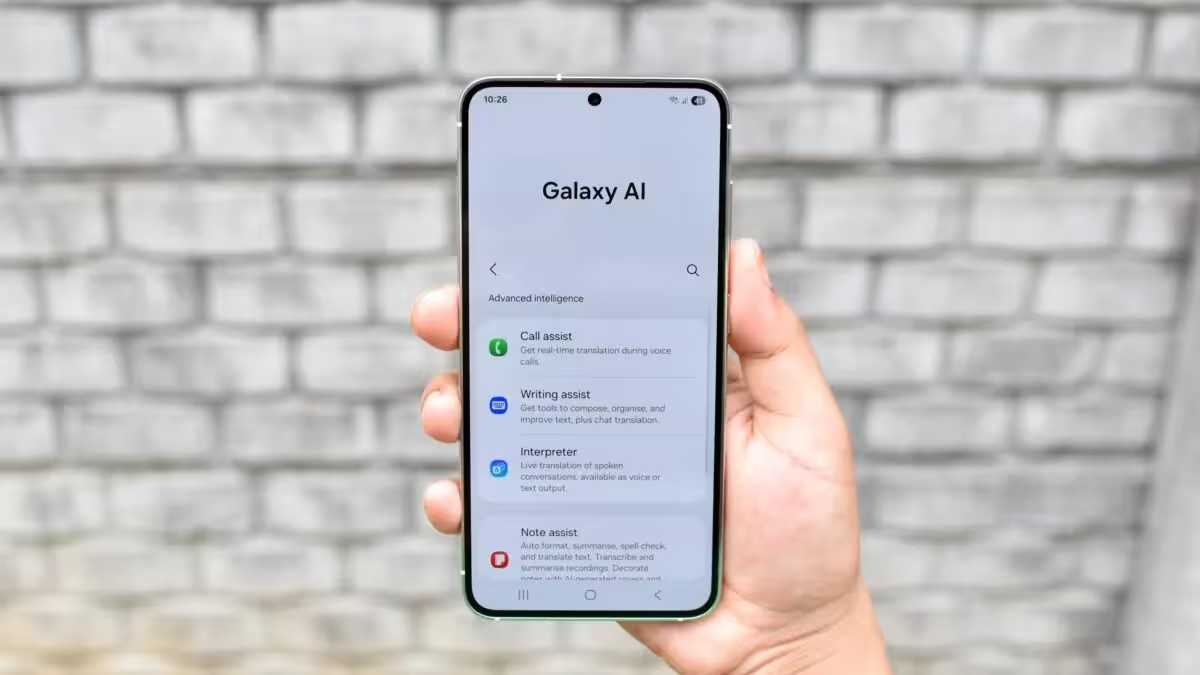
Openness is next. But do not read that as open source for the sake of it. Samsung means agentic, unobtrusive AI—systems that act on your behalf without putting their mechanics on stage. Think of it as a helpful assistant that handles small tasks and offers suggestions without asking you to learn a new interface. The Galaxy S26’s agentic approach is an example of how AI can be present but not pushy.
And then there is Confidence. Trust sits at the center of any useful AI. People will not adopt intelligent features if they fear privacy or security are compromised. Samsung leans on its Knox ecosystem—Knox Enhanced Encryption Protection and Knox Vault among them—to cushion those concerns. Encryption, hardware-level protections, and transparent controls are the scaffolding for everyday AI use.
Samsung also shared a regional snapshot: in Europe, about 32 percent of AI users say they use it always or often. What are they using it for? Mostly for pulling quick facts, drafting or editing content, improving images and video, and troubleshooting problems. Those are practical, repeatable tasks—the very things that reward simplicity.
There is a subtle shift in Samsung’s pitch: rather than asking users to adapt to AI, Samsung wants AI to adapt to users. It sounds modest. It is ambitious. And it raises a question worth following: when intelligent features no longer feel like features at all, how will we measure whether they actually improved our days?


Leave a Comment
Comments
No comments yet. Be the first.