
3 Minutes
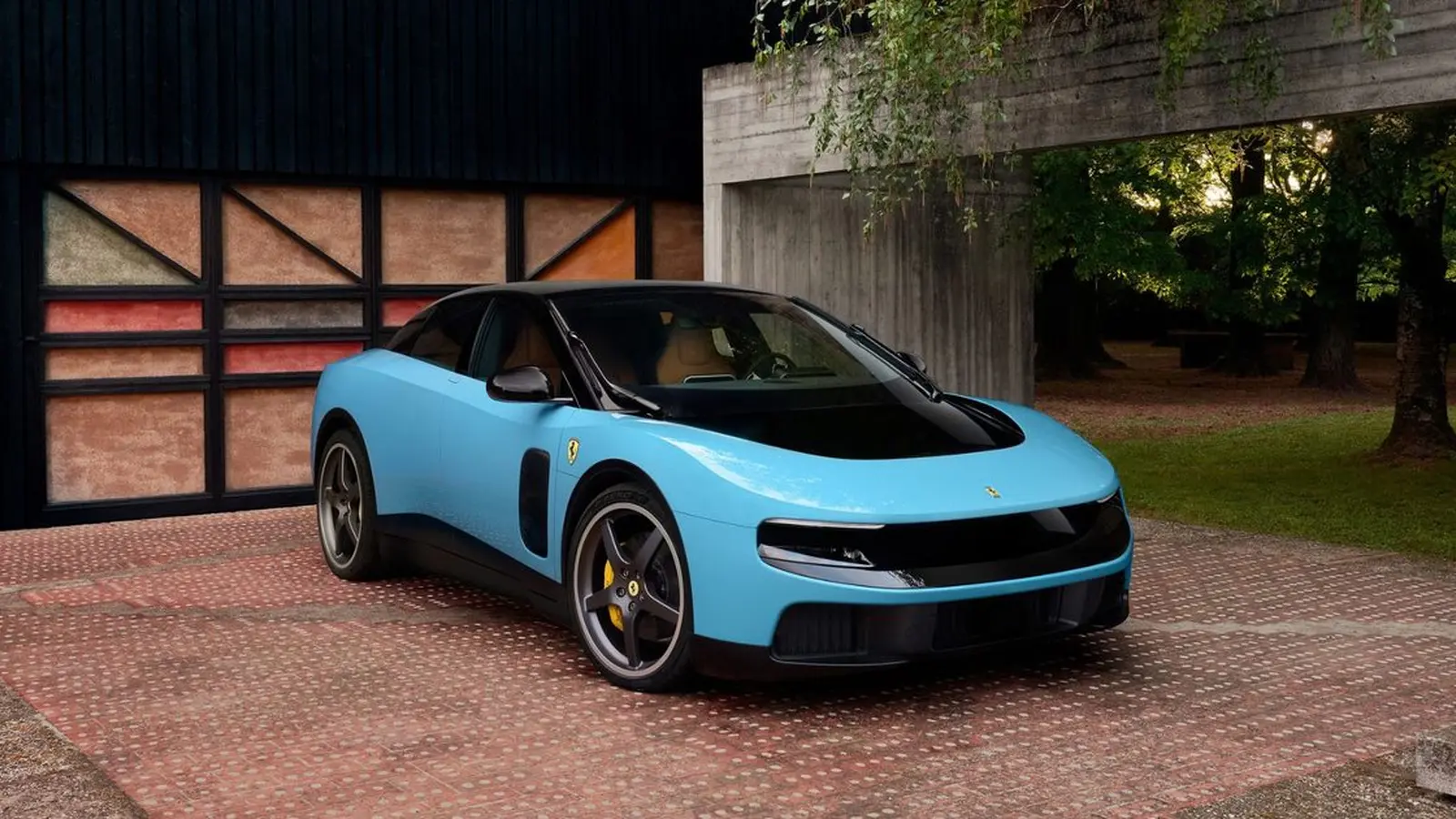
Imagine a tachometer where the needle doesn't sit on glass but actually pierces through it. Strange? Stunning. That's the theatrical flourish Ferrari is betting on with the Luce, a coachbuilt exercise in tactile displays and high-design bravado from Sir Jony Ive's LoveFrom studio.
At the heart of the cabin is a display system that reads like a hardware designer's fever dream. Samsung Display supplies four OLED panel sizes: 12.9 inches, 12 inches, 10.1 inches and 6.3 inches. They aren't merely slabbed onto a dashboard. They are layered, perforated, and choreographed to let physical hands and mechanical cues coexist with digital graphics.

The instrument binnacle gets the most dramatic treatment. Samsung's Hole-In-Active-Area (HIAA) technique—already familiar from smartphone cameras—has been scaled up. Much bigger. A lot bigger. Where a phone camera hole is a few millimeters, the Luce's cutouts are roughly twenty times larger, engineered to allow real, moving hands to occupy the same visual plane as animated gauges.
How does that work in practice? Ferrari uses two stacked OLED panels for the binnacle: a 12-inch lower layer to render background elements like tick marks and indexes, and a 12.9-inch top layer that carries three large circular cutouts. Physical hands protrude through those apertures, creating a layered, three-dimensional readout rather than the flat, glassy graphics found in most modern cockpits. It’s analogue-meets-digital in the most literal sense.

The central module follows the same design language. A 10.1-inch OLED sits in the middle console and supports configurable widgets—a clock, stopwatch, compass and other functions—with three physical hands breaking through the screen surface. The HIAA technology lets Ferrari preserve the tactile tradition of clock hands while keeping the adaptability of a modern touchscreen.
Passengers haven't been forgotten. Two 6.3-inch displays behind the front seats offer climate controls, ride and driving-state readouts, and other interactive elements for rear occupants. Small, but purposeful. Every screen has a designated role, from showpiece instrument cluster to pragmatic rear-seat interface.

It’s easy to frame this as a luxury trick. And yes, the Luce carries a seven-figure-esque price tag—about €550,000—so theatrical touches fit the bill. But there's a deeper logic at play. Layered displays with physical elements can reduce glance time, improve legibility, and give feedback drivers instinctively understand. It's a design choice with both form and function.
Ernesto Lasalandra, Ferrari's Chief R&D officer, framed the collaboration as a marriage of heritage and future-facing tech, saying Samsung Display helped realize Ferrari's vision for seamless software and hardware integration in the cockpit. In short: this wasn't a panel buy. It was a co-design on how people and interfaces should feel inside a sports car.

Jony Ive's influence is visible everywhere—clean surfaces, careful proportions, and a desire to make the digital feel physical. The result is theatrical but purposeful: displays that surprise you, then quickly become intuitive. The Luce wants to be more than a fast car; it wants to be an experience where craftsmanship and display engineering are in constant conversation.
Will this become a trend in automotive UX? Maybe. And even if it doesn't, the Luce shows how far automakers will go to blend tradition and technology. A needle through glass is more than a novelty. It's a reminder that sometimes the most advanced interfaces borrow heavily from the tactile past.

Leave a Comment
Comments
No comments yet. Be the first.