
2 Minutes
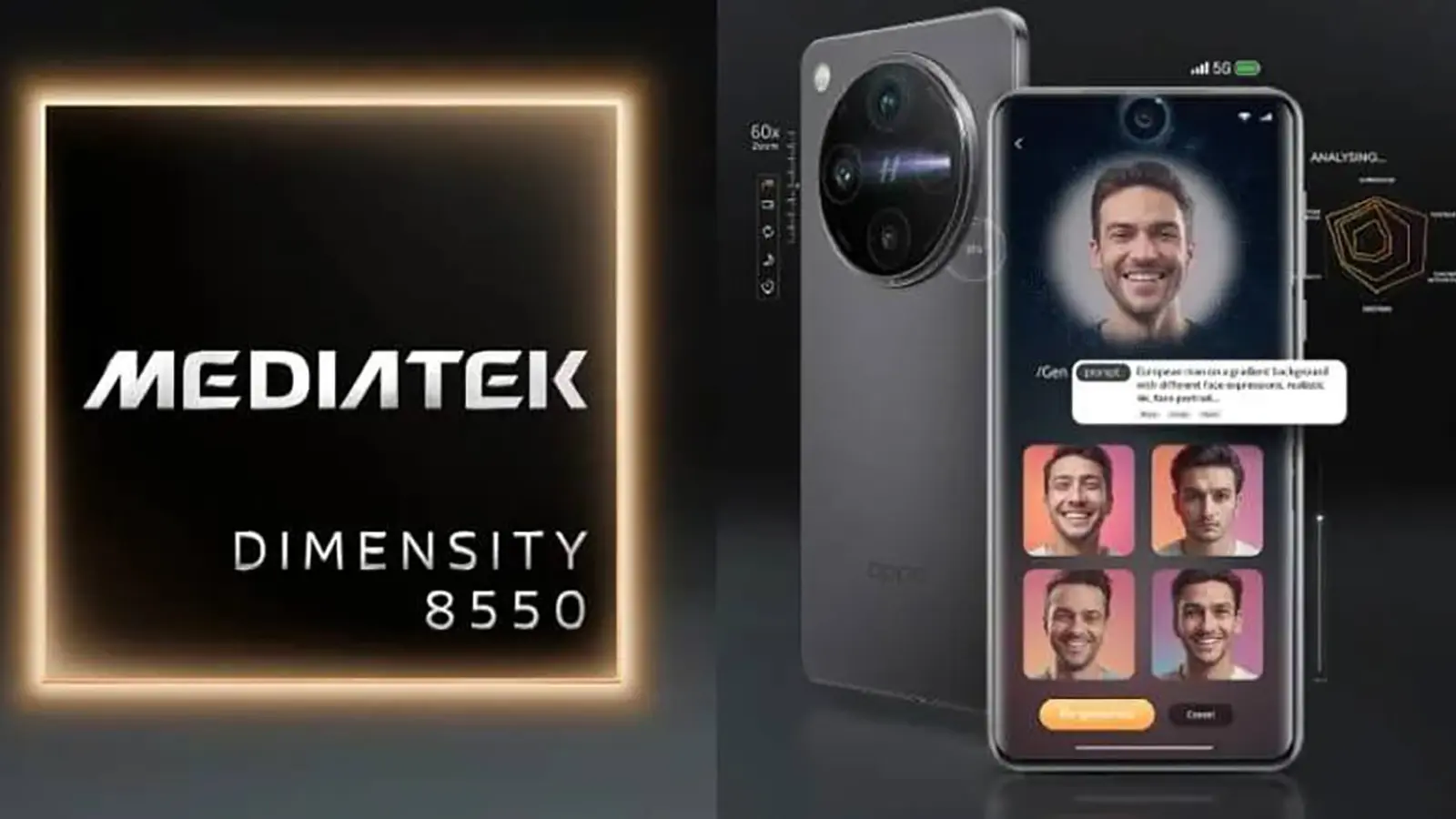
Phones getting smarter isn't news. Running a full conversational model locally is. MediaTek's new Dimensity 8550 quietly bridges that gap: it's an evolution of the 8500 platform, but with one headline feature that could matter far more than a few megahertz of clock speed.
Think of the LLM Booster as the on-device interpreter for large language models. Designed to accelerate local inference, it brings support for Google's Gemini Nano V3 — a compact model that, crucially, is intended to run on the handset itself rather than in the cloud. That shift cuts latency, preserves privacy, and reduces reliance on persistent network access. In short: fewer trips to the server, more instant responses.
Under the hood the 8550 stays familiar. It's still built on TSMC's 4nm node and keeps the NPU 880 for neural tasks. The chip uses an all-big core layout of eight Cortex-A725 cores: a peak core hitting up to 3.4GHz with a generous 1MB L2, a mid cluster of three A725s at up to 3.2GHz with 512KB L2 each, and four efficiency A725s at 2.2GHz carrying 256KB L2. Short version: predictable, strong single-thread performance and steady multi-core throughput.

Graphics and media capabilities haven't been left behind. The Mali-G720 MC8 handles displays up to 1440p at 144Hz, while the video engine supports 4K encoding at 60fps and an AV1 decoder for modern streaming efficiency. Memory and storage lanes are forward-looking too — LPDDR5X at up to 9,600Mbps and UFS 4 compatibility — which matter when you want to feed on-device models with data fast.
Connectivity checks the boxes most users expect: an integrated 5G modem with dual SIM dual active, Wi‑Fi 6E, and Bluetooth 5.4. Everything here reads like a mid-to-upper-tier mobile platform, but the real story is the new software synergy. With LLM acceleration and Gemini Nano V3 support, manufacturers can ship features that previously required cloud hooks: smarter assistants, local summarization, privacy-first transcription, and on-device code generation, to name a few possibilities.
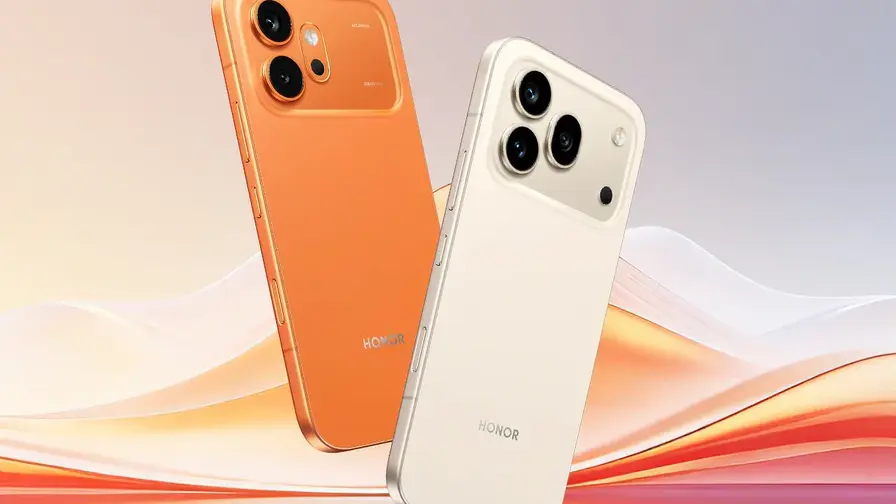
The first handset to adopt the Dimensity 8550 is the China-bound Honor 600 Pro, so expect initial demos and regional launches before wider availability. Will every phone maker embrace on-device LLMs? Not instantly. But hardware like this nudges the industry toward a future where advanced AI lives on your device, not just in a data center.
The practical takeaway: the Dimensity 8550 isn't just an incremental silicon refresh — it's a nudge toward genuinely useful, private, and responsive on-device AI.

Leave a Comment
Comments
No comments yet. Be the first.