

3 Minutes
What changed and why it matters
The Academy of Motion Picture Arts and Sciences has quietly announced it will no longer host special theatrical screenings of Oscar-nominated films exclusively for its members. The decision, disclosed in the Academy’s January bulletin and first reported by The Hollywood Reporter, marks the end of a long-running practice that put members in Los Angeles, New York, San Francisco Bay Area and London front-row for many awards contenders.
For decades these in-person screenings were part ritual, part industry concierge service—an opportunity for members to see films on the big screen in curated, low-pressure settings. But attendance has been trending down for years, especially after the Academy launched its private online service, the Academy Screening Room, seven years ago. With most members now able to stream screeners at home, the Academy says turnout for post-nomination screenings has dropped dramatically and each event costs thousands of dollars to stage.
Why some members are upset
Not everyone is convinced that a streamed screener replaces a theatrical experience. Several members argued that spectacle-driven films—think big-budget, effects-heavy titles like Avatar-like tentpoles or gothic epics in the vein of Frankenstein—lose impact on small screens. Fans and some critics point out that judging cinematography, sound design and production value often requires the communal, calibrated environment a theater provides.
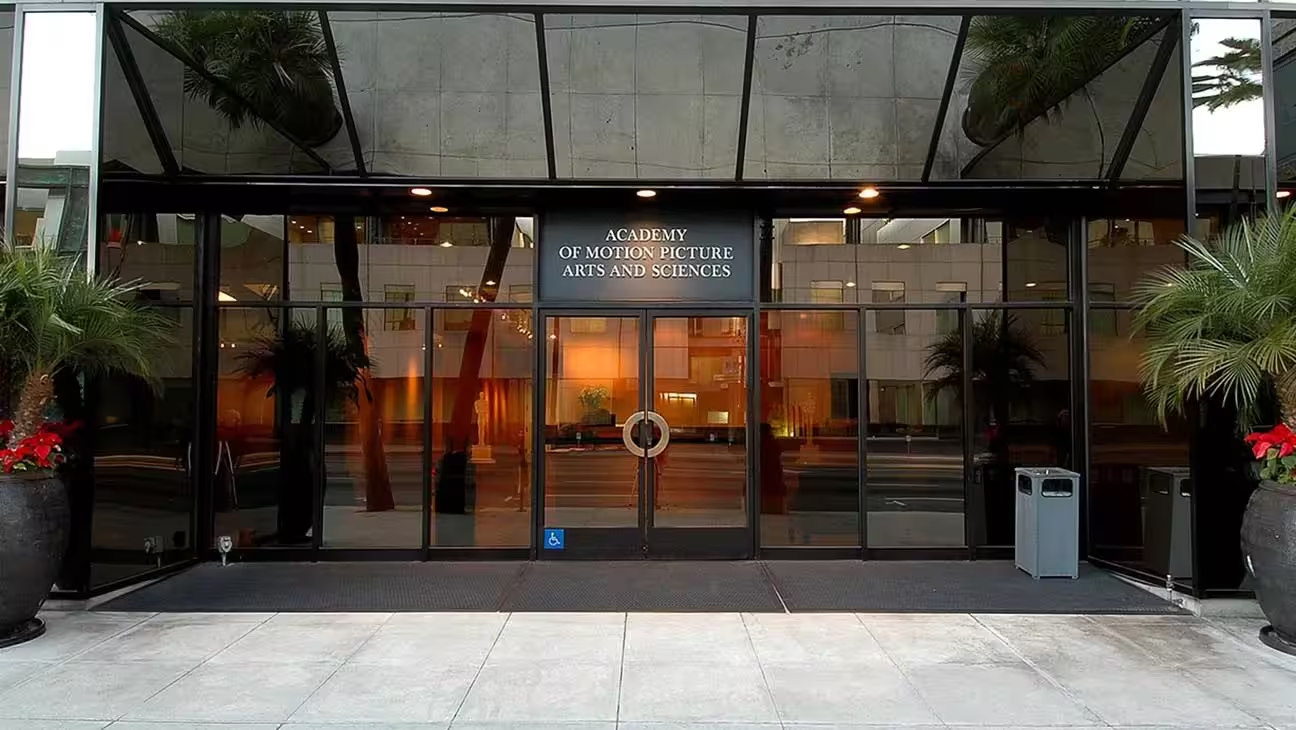
Yet the Academy counters that members already have many ways to see films on the big screen before nominations roll out: public releases, studio-hosted FYC (For Your Consideration) screenings, festival prints and the Academy’s own earlier-season showings. The choice to cut theatrical member-only shows is framed as a resource-saving move in an era of tightened budgets and digital convenience.
Wider context and industry impact
This decision sits inside broader industry trends: streaming has reshaped awards-season logistics, and studios are increasingly relying on digital screening rooms and targeted FYC campaigns. The move could accelerate a cultural shift where awards campaigning becomes more virtual and less anchored by communal theatrical rituals. That said, there is still appetite for in-person events—studios continue to host star-studded screenings and Q&As that draw press and industry attention.
Compared to earlier eras when in-theater screenings were essential for critics and voters alike, today’s hybrid ecosystem favors convenience. Still, some longtime members argue the trade-off risks undervaluing films designed for theatrical spectacle.
Critical voices and fans are already debating whether this change dilutes the Oscars’ theatrical ethos or simply aligns the Academy with modern viewing habits. One practical upside: savings could free funds for other member services or diversity and preservation initiatives.
In short, the Academy’s move reflects shifting viewing habits and financial pressures—but it also reignites a perennial question for cinephiles: can pixels ever fully replace the power of a darkened theater? The answer may depend largely on the film in question and the priorities of the voters.














Leave a Comment
Comments
No comments yet. Be the first.