
3 Minutes
A pebble from the Sahara, lighter than a paperback, might be the last witness to a planet that no longer exists. NWA 12774 — a roughly half-kilogram meteorite found in 2019 — carries mineral fingerprints that point to something far larger than the asteroids we know.
Angrites, the rare family to which NWA 12774 belongs, make up less than a tenth of a percent of meteorite finds. They are also ancient: the oldest igneous rocks we have, born within a few million years of the first solids in the solar nebula. Those facts alone invite a question: what kind of body could produce such unusual, high-pressure magmas so early on?

To answer that, a team of petrologists and geochemists took the meteorite apart at microscopic scale. Electron microprobe measurements, high-resolution X-ray maps and a new geobarometric model were used to read the pressure and temperature history locked into its crystals. The clues were in the clinopyroxene: unusually aluminum-rich grains that typically crystallize under substantial pressure.
Small asteroids simply don’t generate that kind of internal squeeze. Instead, the mineralogy points toward formation deep inside a large, magmatic interior — a bona fide protoplanet. The researchers combined crystal evidence with calculations of core mass and mantle density to place a lower bound on the parent body's radius: about 1,000 kilometers.

But the crystal textures — sharp, chemically pristine and apparently dredged from a shallow magma reservoir — suggest something even grander: a body perhaps 1,800 kilometers across, slightly larger than Earth’s Moon, and conceivably up to 3,300 kilometers in radius, approaching Mars-sized dimensions.
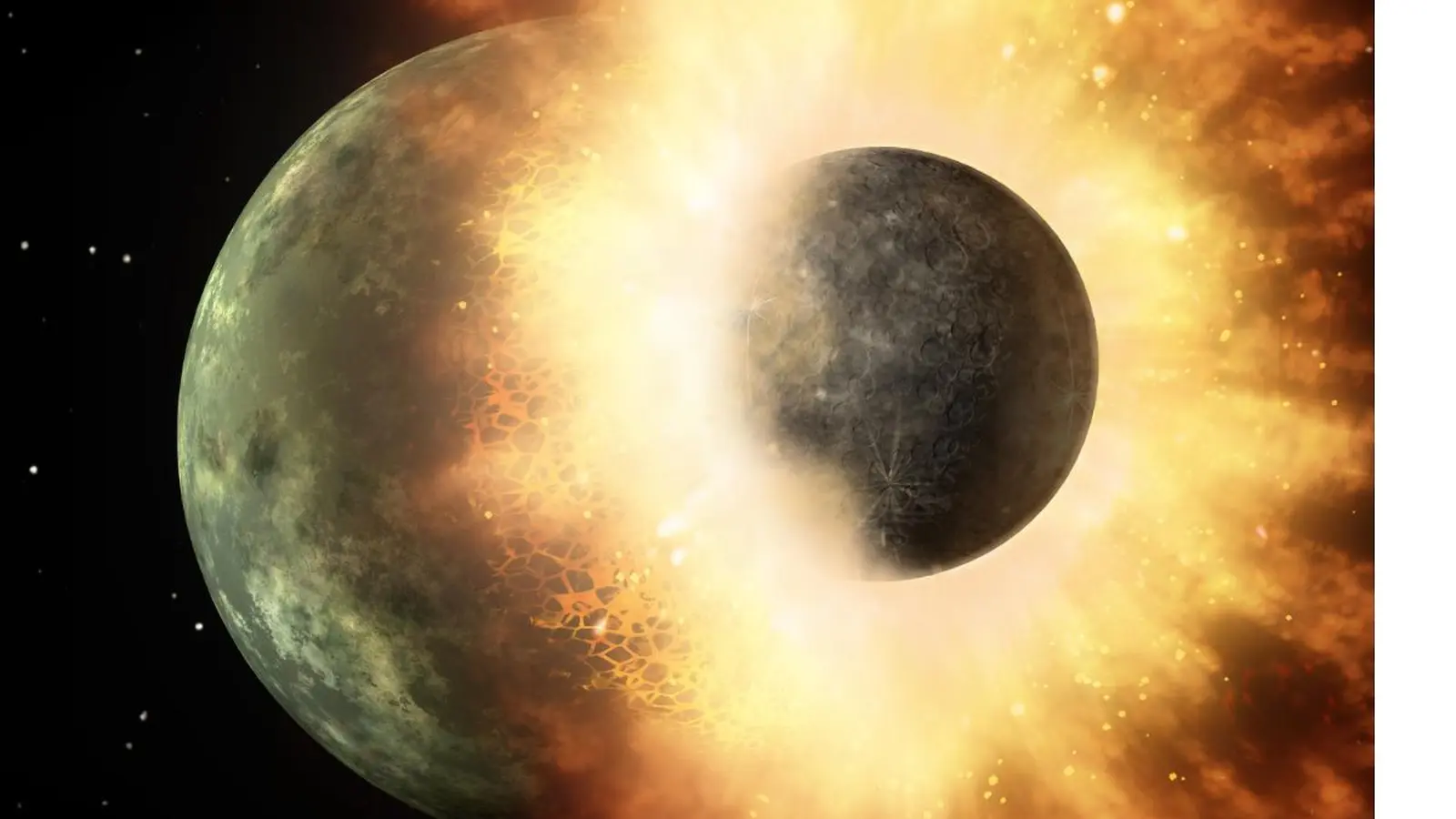
How does a planet that big disappear? There are two main suspects. One is violent collision: early solar system dynamics resembled a demolition derby, where planetary embryos smashed and sprayed debris across the system. The other is gravitational sabotage — a young, migrating Jupiter could have destabilized orbits and shredded growing worlds. Either way, pieces of the unfortunate protoplanet survived as meteorites and, billions of years later, landed on Earth.

The broader implication is intriguing. If a single, half-kilo rock can reveal a once-mighty world, how many more stories lie in meteorites yet to be studied? Many specimens sit unexamined in collections and drawers, their chemical memories waiting for fresh techniques and curious eyes.
We are still piecing together the cast and choreography of our solar system’s earliest acts. Each fragment, every exotic crystal, nudges that picture into sharper relief and nudges us to ask: what other vanished worlds are hiding in plain sight?


Leave a Comment
Comments
No comments yet. Be the first.