
3 Minutes
Flip over a damp log on a summer walk and a dark tide of cockroaches pours out—brief, chaotic, and strangely purposeful. They swarm, cluster, and vanish into crevices as if guided by an unseen script. What looks like instinct is often a choreography written by the group itself.
That choreography—what researchers now call a kind of collective memory—doesn't live inside any single insect. It lives in the pattern of their contacts. In a 2023 PLOS One study led by social ecologist Mariano Calvo Martín at Université Libre de Bruxelles, scientists showed that American cockroaches (Periplaneta americana) can behave as though they remember a previous choice, even when no individual carries that memory.
The experiment was deceptively simple. Two identical shelters sat side by side; one bathed in red light (which appears darker and thus more attractive to the roaches), the other lit green. As expected, most animals clustered under the red glow. Then the team flipped the switch: the occupied shelter turned green and the empty one became red. Individuals reacted the way you'd expect—moving toward the darker option. Groups, however, sometimes did not.

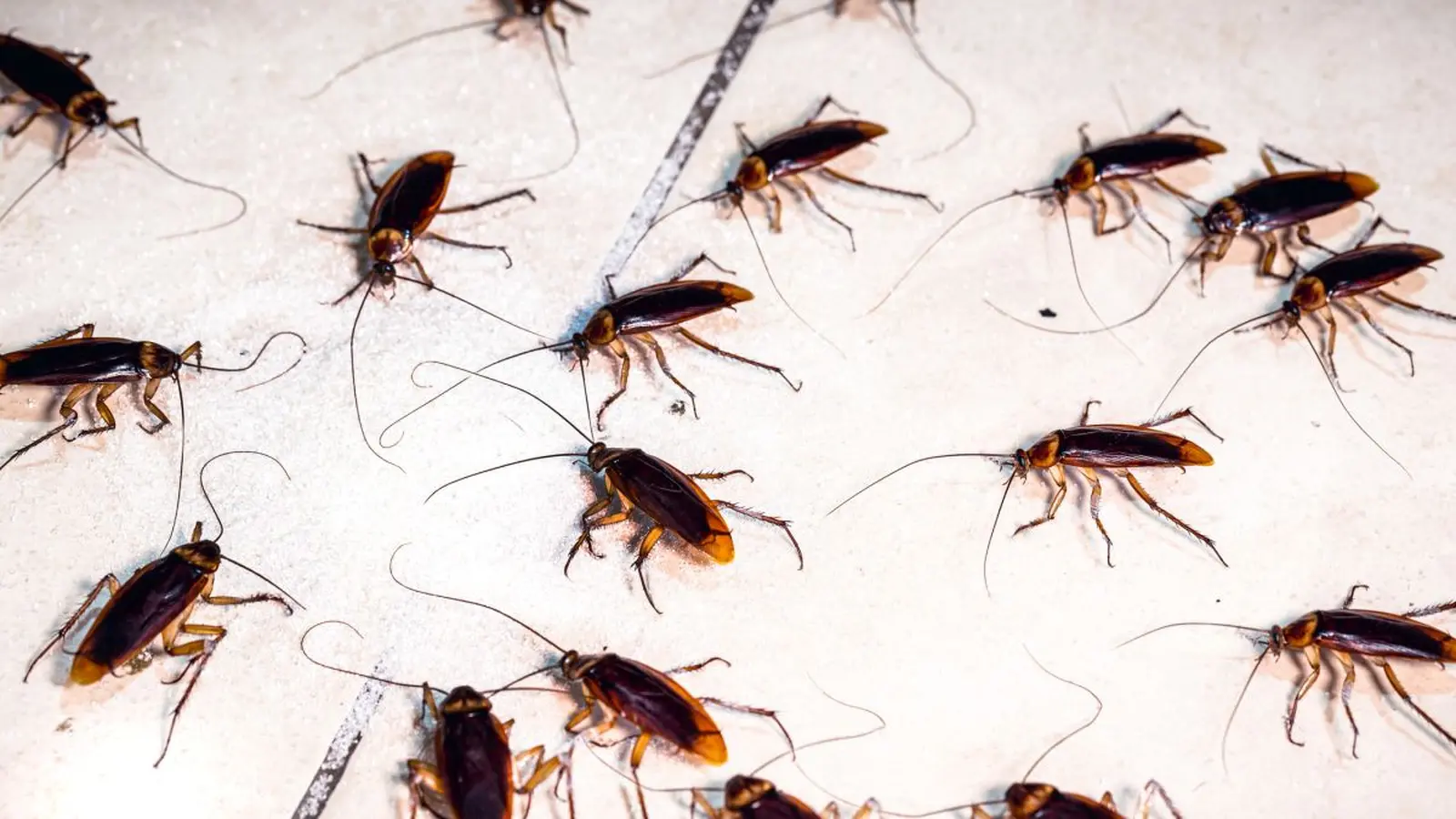
A photograph of the experiment.
When enough roaches had already piled into a single shelter, the social pull of their neighbors outweighed the fresh environmental cue. The cluster stayed put. The group’s behavior resembled a memory of the original choice, even though no insect had been given any instruction to “remember.” In their words: the memory was stored in the social structure itself.
Computer simulations reinforced the point. Virtual roaches were coded with just two tendencies—an individual preference for red and a bias to linger where others had gathered. Nothing in the model endowed any agent with past recall. Still, the same lock‑in emerged. Simple social rules, repeated across a network of interactions, can produce surprisingly persistent outcomes.
The takeaway is blunt: collective memory can be an emergent property of social ties, not a repository inside individuals.
Why does this matter beyond the world of bug biology? Because similar dynamics govern many collective decisions. Schools of fish, flocks of birds, ant colonies and bee swarms all depend on local interactions to pick routes, roosts and foraging sites. Human groups, too, can fall into patterns that endure long after the original reasons for those patterns have faded.

Each graph tracks one group of cockroaches. After the researchers swapped the shelters' lighting, some groups continued occupying the same shelter, behaving as though they 'remembered' their original choice.
There’s a trade‑off baked in. Social stickiness makes a group robust—resistant to transient disruption and able to maintain coordination—but it can also trap the group in maladaptive choices when the environment changes permanently. The same mechanism that shields a roost from momentary disturbance can become inertia when flexibility is needed.
The cockroach study reframes collective memory as structural memory: not a museum inside individuals, but a scaffold of repeated interactions that holds information. That perspective opens fresh questions. How common is structural memory across species? Which social architectures favor adaptability over lock‑in? And what can engineers or urban planners learn from the way tiny insects glue themselves to a decision?
Next time you watch a cluster of animals—or a crowd of people—pause and ask whether what you see is habit, memory, or the echo of countless small, neighborly choices replaying in the moment.


Leave a Comment
Comments
No comments yet. Be the first.