
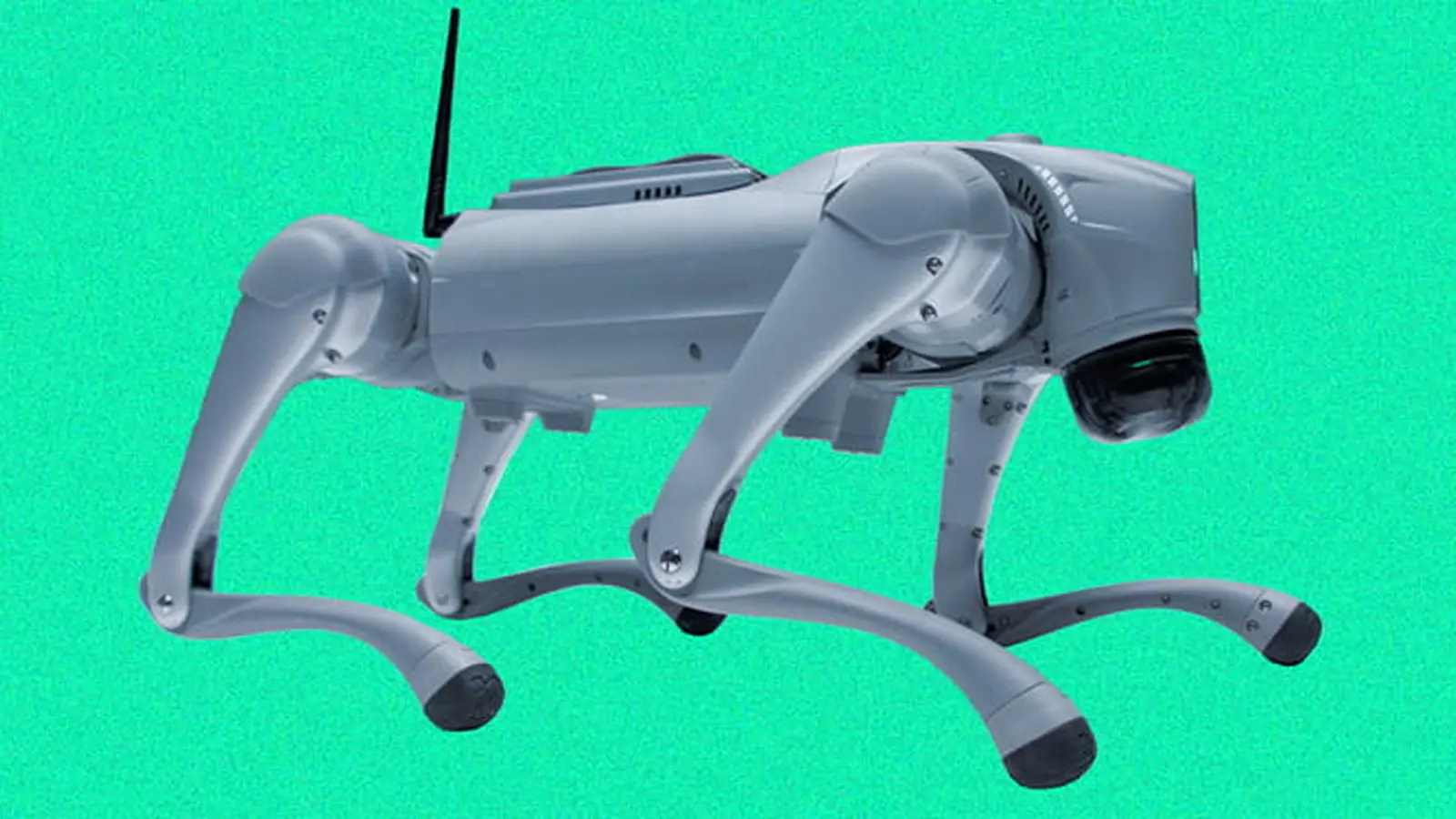
Imagine a small pack of human brain cells steering a robotic dog across a map. It sounds like science fiction, but a team in Australia has turned that image into a laboratory reality — not with clever software, but with living neurons grown directly on a chip.
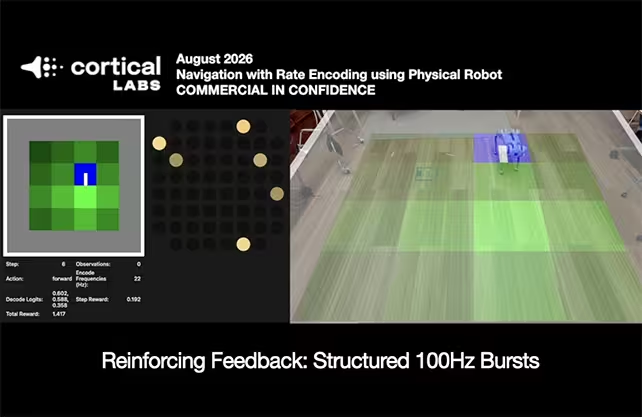
Cortical Labs wired a petri-dish brain to a four-legged robot, then used two-way electrical signaling to turn neural activity into motion. Stimulate the neurons one way and the robot takes a step forward; stimulate them another way and it turns. Over time, feedback from the robot altered the firing patterns of the cultured cells, creating a primitive loop of sensing, decision and action.
It’s a simple task: guide the robot to a target on a basic map. Yet the simplicity is deliberate. The experiment demonstrates a broader idea — that biological substrates could offer energy-efficient, adaptable control strategies that silicon-based systems still struggle to match. The human brain excels at low-power, flexible problem solving. Could chips grown from neurons inherit some of that talent?
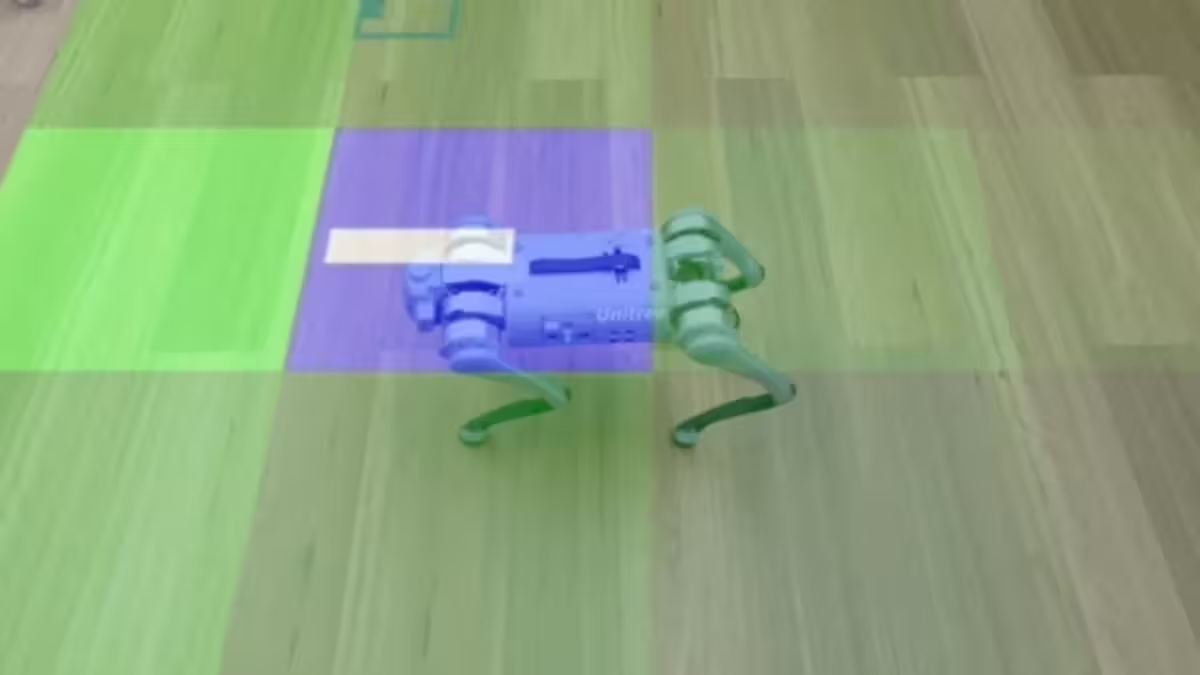
Brett Kagan, co-founder and CEO of Cortical Labs, calls the robot dog a tangible way to show what biological systems might do beyond the lab bench. The point isn’t flashy acrobatics. It’s decision making in unpredictable, real-world conditions — the sort of context where traditional robots, despite incredible motor skills, can be brittle.
The team didn’t invent this in a vacuum. Cortical Labs previously coaxed neuron clusters to play classic video games like Pong and Doom inside virtual environments. Now they have moved one step into the physical world. The principle is the same: electrical patterns stimulate the culture; the culture sends back signals; feedback shapes future behavior. That loop is the rudiment of learning.
Partners at Honda Research Institute Europe ran a parallel demonstration inside a virtual grid, training an agent to seek rewards by tuning electrical stimulation and observing the chip’s responses. Across more than 4,000 hours of interaction, researchers tested nearly 1,300 different signal combinations to tease out what produces useful behavior. It was painstaking and empirical — a lot of trial and error, and a lot of patient tuning.

Why go to this trouble? Neuron-based chips promise advantages that matter for field robotics: energy efficiency, robustness against novel situations, and the potential for individualized adaptation. Instead of preprogramming every contingency, a biological controller might learn from a few experiences and generalize in ways current algorithms find difficult.
That promise comes with a long list of challenges. Growing neurons on silicon is only step one. Communicating reliably with living tissue, training it reproducibly, and understanding how these assemblies store information are active research problems. Johnson Zhou, a research software engineer at Cortical Labs, emphasizes that the bottleneck isn’t biology alone but the whole interface — how to speak to neurons, and how to interpret their answers consistently.
There’s also the question of scale. The current chips use small neuronal populations and take time to produce measurable results. To be useful outside the lab, these systems must scale up and learn faster. Researchers want to know what kinds of memory these neuron-based systems can form, how long that memory endures, and whether learned responses can be transferred or generalized.
Daniel Tanneberg at Honda Research Institute Europe points out the dual nature of the work: difficult but potentially transformative. Biological computation is messy, yes. But with messiness comes flexibility. If neurons can be harnessed at scale, they might power autonomous agents that behave more gracefully in the messy, imperfect world humans inhabit.
The navigation experiments have been shown at NeurIPS 2026 and posted on arXiv, though they have not yet completed peer review. For now, the robot dog remains a controlled demonstration — a glimpse of hybrid machines that pair the mechanical precision of robotics with the adaptive flair of living tissue.
Will these neuron-driven chips ever move beyond demonstrations to fielded systems? That depends on whether researchers can tame variability without killing the very qualities that make biological systems interesting: adaptability, resilience and low energy use. The question is provocative — and the work under way will determine whether biology becomes a new kind of computer hardware or a niche curiosity in robotics.


Leave a Comment
Comments (1)
Are we really wiring tiny brains into robots now? cool but also kinda alarming… how consistent are these cultures, and who decides limits?