

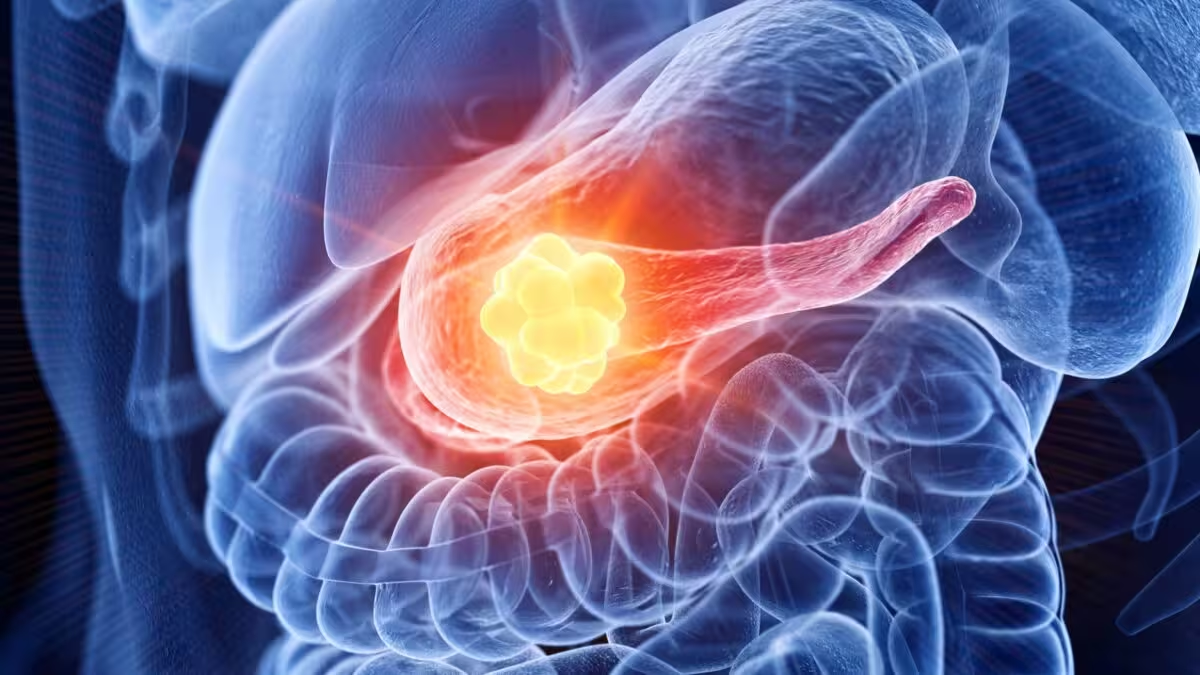
Pancreatic cancer rarely leaves room for optimism. Tumors hide deep in the abdomen, recur often, and stubbornly resist most therapies. So when a new vaccine stirs the immune system into action, it jabs interest where hope is thin.
Researchers at the Mayo Clinic tested a vaccine called camupepimut in a randomized phase 2 trial aimed at a single, notorious target: KRAS. This gene, when mutated, drives roughly nine out of ten pancreatic ductal adenocarcinomas. Hit KRAS, and you may, at least in theory, undercut the cancer’s survival tactics.
The trial enrolled 144 patients who had already undergone surgery and chemotherapy and showed no visible disease on scans. Ninety-six received the vaccine; forty-eight did not. The headline finding was not a cure, but a provocation: the vaccine awakened T cells.
Nearly every patient given camupepimut mounted a measurable T-cell response against mutated KRAS.
Of the 90 vaccinated patients who could be assessed immunologically, 98.9 percent developed increased T-cell activity targeting KRAS mutations. In more than 80 percent of those patients, the response was more than ninefold higher than before vaccination. Short sentence. Big jump.
Those numbers matter because immune responses can be more than laboratory curiosities; they sometimes translate into longer survival. But caution is required: the trial did not show a statistically significant difference in disease-free survival between the vaccinated and control groups. That leaves a central question unanswered — can this immune awakening change the disease’s trajectory?
Ben George, the study’s first author and a medical oncologist at Mayo Clinic, puts it plainly: the team has shown proof-of-concept. They taught the immune system to recognize seven common KRAS mutations by delivering peptide snippets that prime T cells in lymph nodes. The immune system listened. Whether it will act decisively enough to stop recurrence is still being tested.
The vaccine’s design is deliberate. By focusing on a handful of recurring KRAS variants, camupepimut aims for a broadly applicable, off-the-shelf approach—unlike personalized mRNA vaccines tailored to each patient’s tumor. That makes manufacturing and distribution simpler, but it may also mean the immune attack is less bespoke.
Plans are already underway for a phase 3 trial that will tweak the regimen: additional booster doses and combinations with other cancer therapies are on the table. That strategy echoes recent success in melanoma, where a personalized mRNA vaccine combined with standard immunotherapy cut the risk of recurrence or death by 42 percent in a phase 3 study. Immune responses, in that case, translated into clear clinical benefit.
For pancreatic cancer, the path forward includes multiple avenues. A personalized mRNA vaccine aimed at pancreatic tumors is also advancing in trials. So far, researchers report that seven pancreatic cancer patients who developed immune responses to that mRNA vaccine remain alive and well; one patient diagnosed at 66 received nine doses and is now 72.
What this new phase 2 study gives us is a map, not a destination. It shows that the immune system can be trained to spot KRAS mutations in people who have just finished standard treatment. It does not yet show that training is enough to keep tumors away for good. But in a disease where recurrence is common and options are limited, provoking a near-universal immune response is a meaningful step.
Published in Nature Medicine, the trial invites a practical question: how do we turn a powerful immune ripple into a sustained tide? The answer will shape upcoming trials and, possibly, the future of vaccines in pancreatic cancer.


Leave a Comment
Comments
No comments yet. Be the first.