
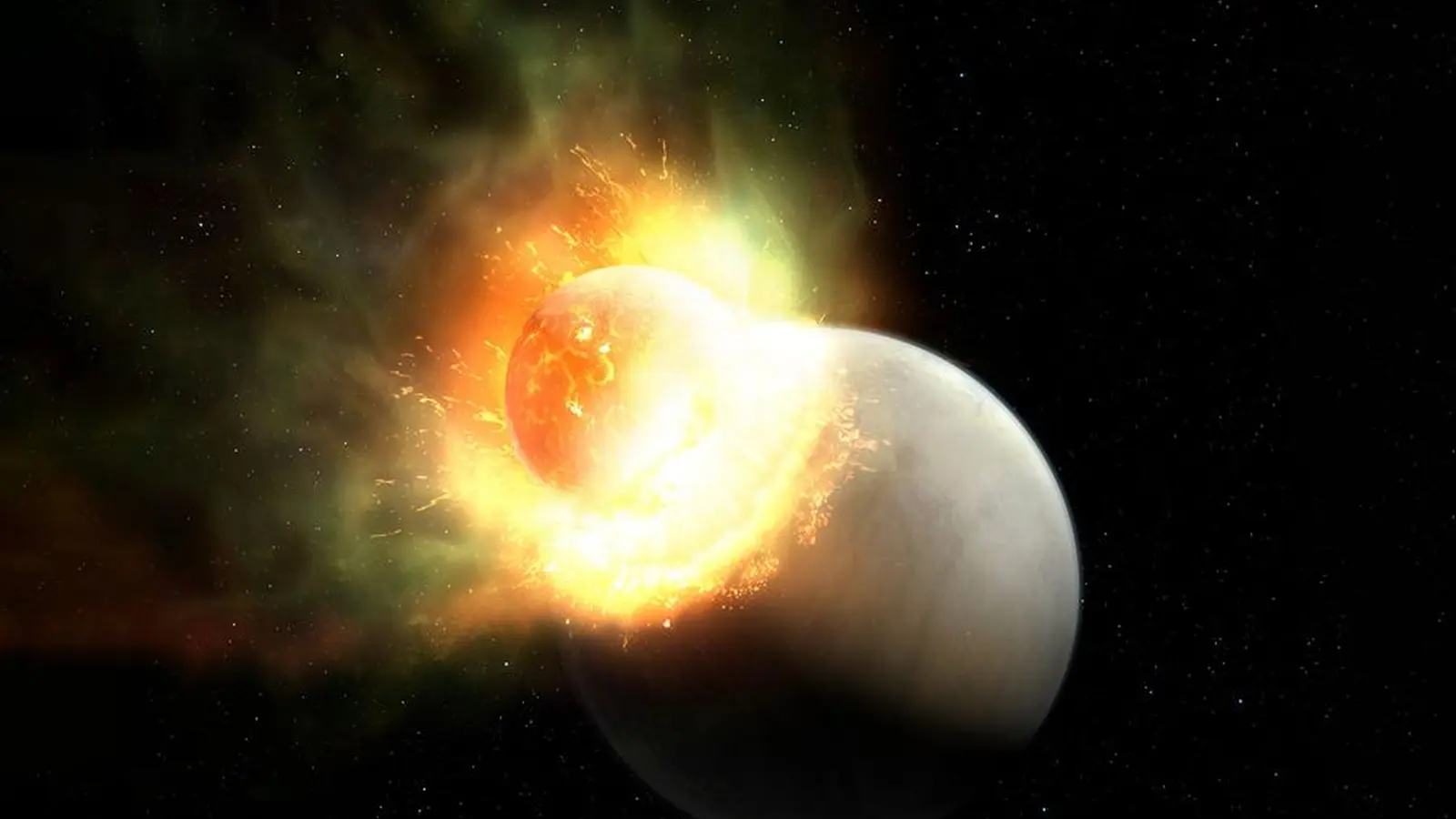
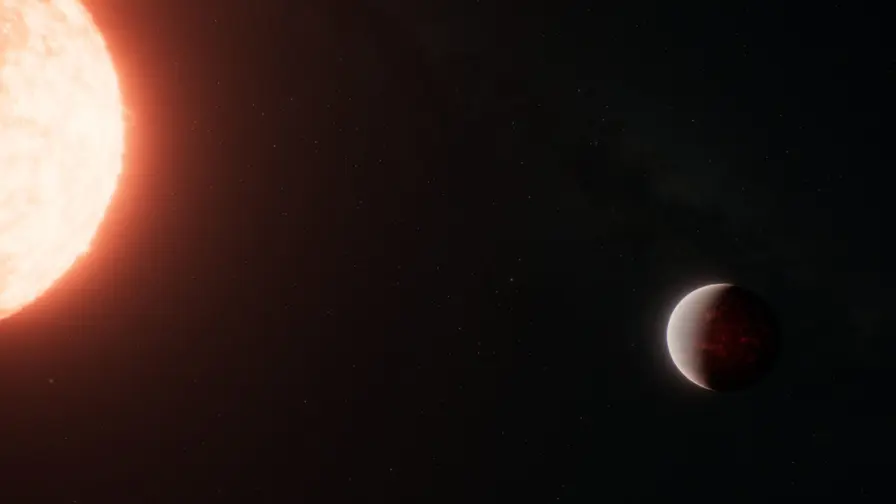
Imagine a world so near its star that its surface should be an endless ocean of molten rock. Instead, the James Webb Space Telescope found TOI-561 b wearing an almost mirror-like veil—reflecting roughly three quarters of the starlight that falls on it.
About 280 light-years away, an international team monitored the planet for 37 hours, spanning nearly four orbits. By tracing subtle changes in brightness and thermal emission as the planet circled its star, researchers led by Prof Lisa Dang (University of Waterloo) and Dr Anjali Piette (University of Birmingham) used a phase-curve technique to compare the scorching dayside with the dark nightside. The nightside was simply too cool to hide the missing heat. The implication was stark: most of the incoming starlight never reaches the surface.
Why would a tiny, blisteringly hot rocky world reflect so much radiation? The leading answer comes from climate simulations. High, bright clouds made of silicate minerals—materials like silicon dioxide and magnesium silicate—could form above a global magma ocean, scattering and sending back stellar light before it can bake the ground. Think of it as a planetary sunscreen, made of rock.
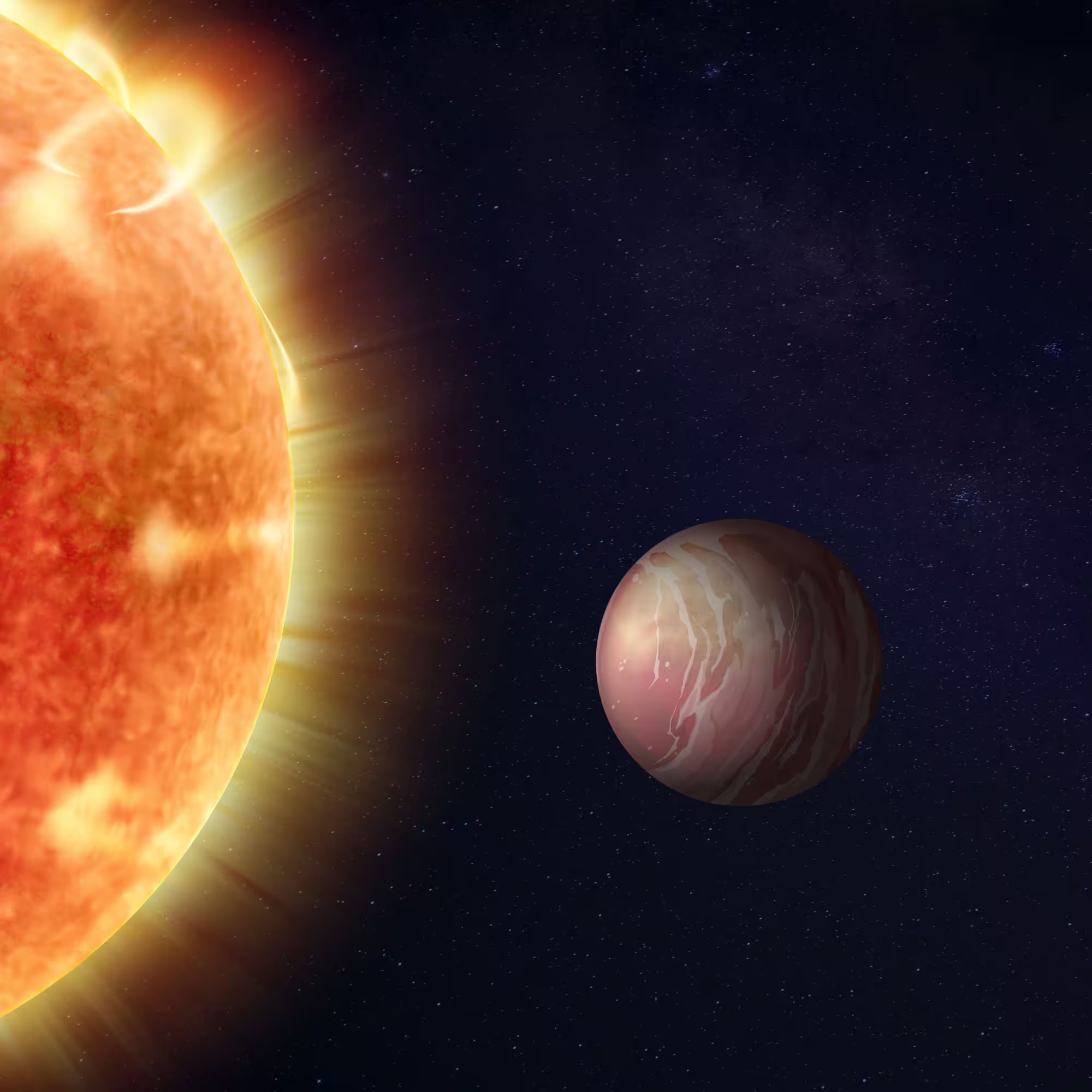
Does that mean TOI-561 b has a true atmosphere? The observations suggest an envelope of gas thick enough to redistribute heat around the planet rather than letting it pile up only on the dayside. What that gas is composed of remains unresolved. One option resembles an extreme version of Venus: a dense, carbon-dioxide-rich layer. Another evokes Io, with sulfur-dominated gases driven by volcanic outgassing. Neither scenario promises temperate conditions; both point to an alien, highly corrosive chemistry.
And herein lies the puzzle. A planet this close to its star should have lost light gases aeons ago under relentless radiation and stellar winds. Yet TOI-561 b appears to have retained—or replenished—an atmosphere substantial enough to affect its energy budget. One plausible mechanism is continuous supply from below: a molten interior venting gases into the sky, effectively making the whole world a slow, planet-wide volcano. Strange. But possible.
The next step is spectral sleuthing. Webb observations at longer infrared wavelengths could pick out molecular fingerprints—signatures of CO2, SO2, silicate vapor, or other exotic species—and distinguish between competing models. If volcanic activity is the culprit, we might even detect the chemical marks of fresh outgassing.
TOI-561 b does more than defy expectations for a single oddball. It forces us to widen our sense of how atmospheres can survive on the most hostile rocky exoplanets. If mineral clouds and magma-fed replenishment are real, planetary evolution may follow stranger paths than we've imagined. What story will the next Webb spectra tell?

Leave a Comment
Comments
No comments yet. Be the first.