

Imagine shaving 30 percent off a mouse's daily calories and watching its cells quietly pick up fewer genetic errors. Strange, compelling, and a little hopeful.
Researchers scanning vast stretches of the mouse genome report that a modest calorie cut reduced multiple classes of DNA mutations — single-letter swaps as well as insertions and deletions — but not uniformly. Some organs showed clear wins. Others barely budged.
Using ultra-accurate sequencing, teams from NYU Langone, University Hospitals Cleveland, UT Southwestern and the NIH mapped mutation patterns across tissues in animals fed roughly 30 percent fewer calories than their free-eating counterparts. The work, published in Cell, steps beyond single-gene snapshots to survey how genetic damage accumulates across entire genomic landscapes.
The liver responded most strongly. Kidney and brain cells were less affected. Why the difference? One leading idea involves where and how DNA is repaired. Regions of the genome that are highly active — the neighborhoods packed with genes the cell uses every day — already receive intense repair attention. Quiet stretches, the genomic back alleys where genes sit idle, showed the largest drop in mutation burden when calories were restricted.
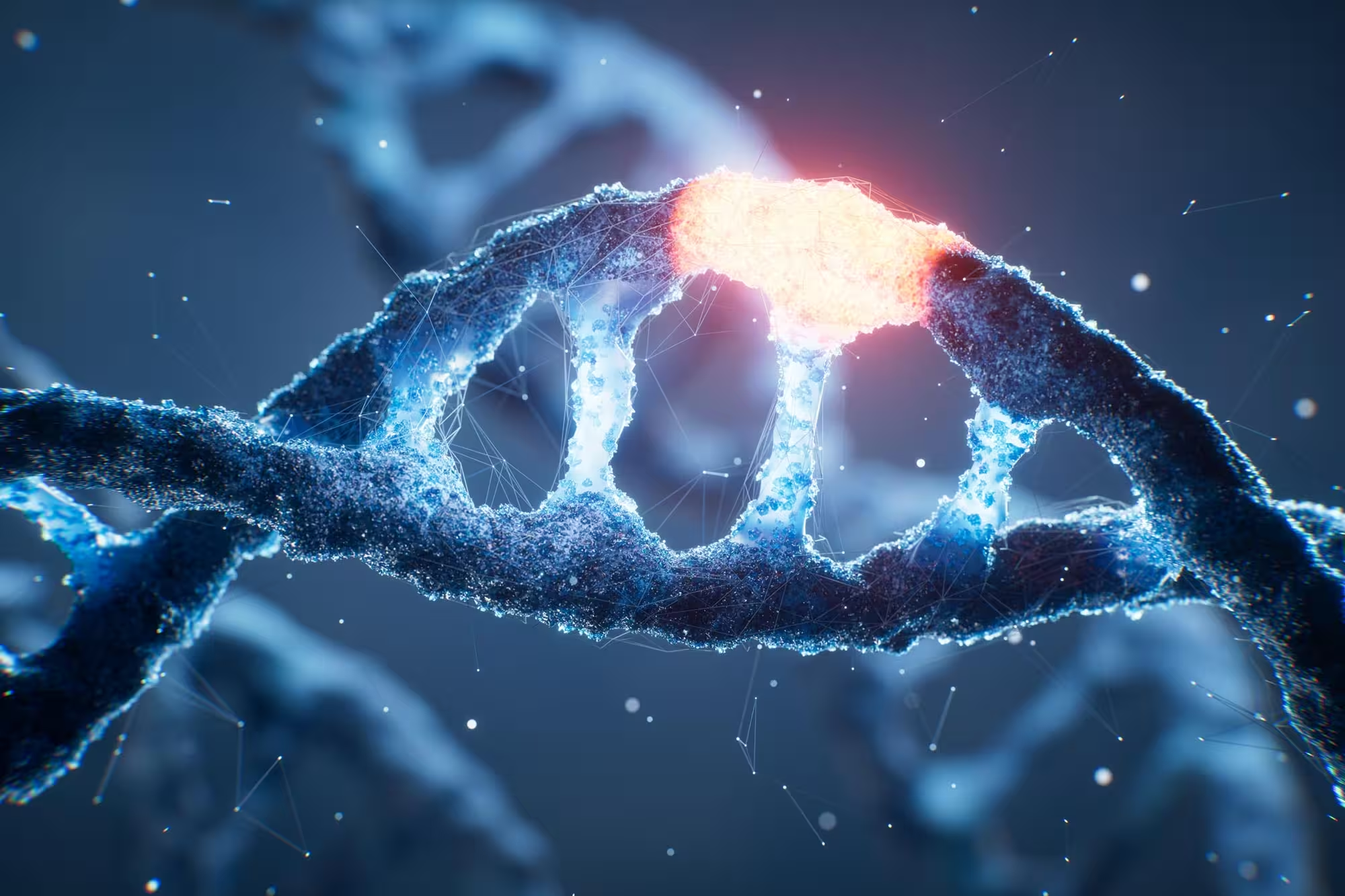
Less damage in low-activity regions. More or less the same in busy regions. It's an unexpected asymmetry, says Dr. Jonathan Shoag, who co-led the study, and it hints that calorie restriction shifts the balance of damage and repair in a way that isn't uniform across the genome.
Calorie restriction is not a magic bullet. In many animal models it extends healthy lifespan and slows age-related decline, but imposing a long-term 30 percent cut on humans is impractical and risky. Which raises a better question: can we capture the molecular benefits without the extreme diet?
That’s the path the authors want to follow. If specific metabolic or repair pathways change with reduced intake, scientists could target those pathways pharmacologically or with milder lifestyle adjustments. Dr. Gilad D. Evrony, a senior author on the paper, emphasizes the broader implication: fewer mutations may translate into lower risk for cancer and other age-linked diseases — provided the same mechanisms apply to humans.
The study relies on a carefully established mouse cohort and collaboration across labs that specialize in circadian biology and caloric restriction. Still, the leap from mice to people is large. The team plans to profile other diets, tissues and cell types to identify the molecular levers behind the effect. Only then can researchers test interventions that mimic the benefits without forcing extreme eating patterns.
For now, the result reframes calorie restriction as more than a blunt tool for lifespan extension; it’s a probe that reveals how diet alters the very fabric of the genome. And that invites a question scientists and the public will want answered: could we one day reduce the tide of genetic damage without shrinking our dinner plates?


Leave a Comment
Comments
No comments yet. Be the first.