
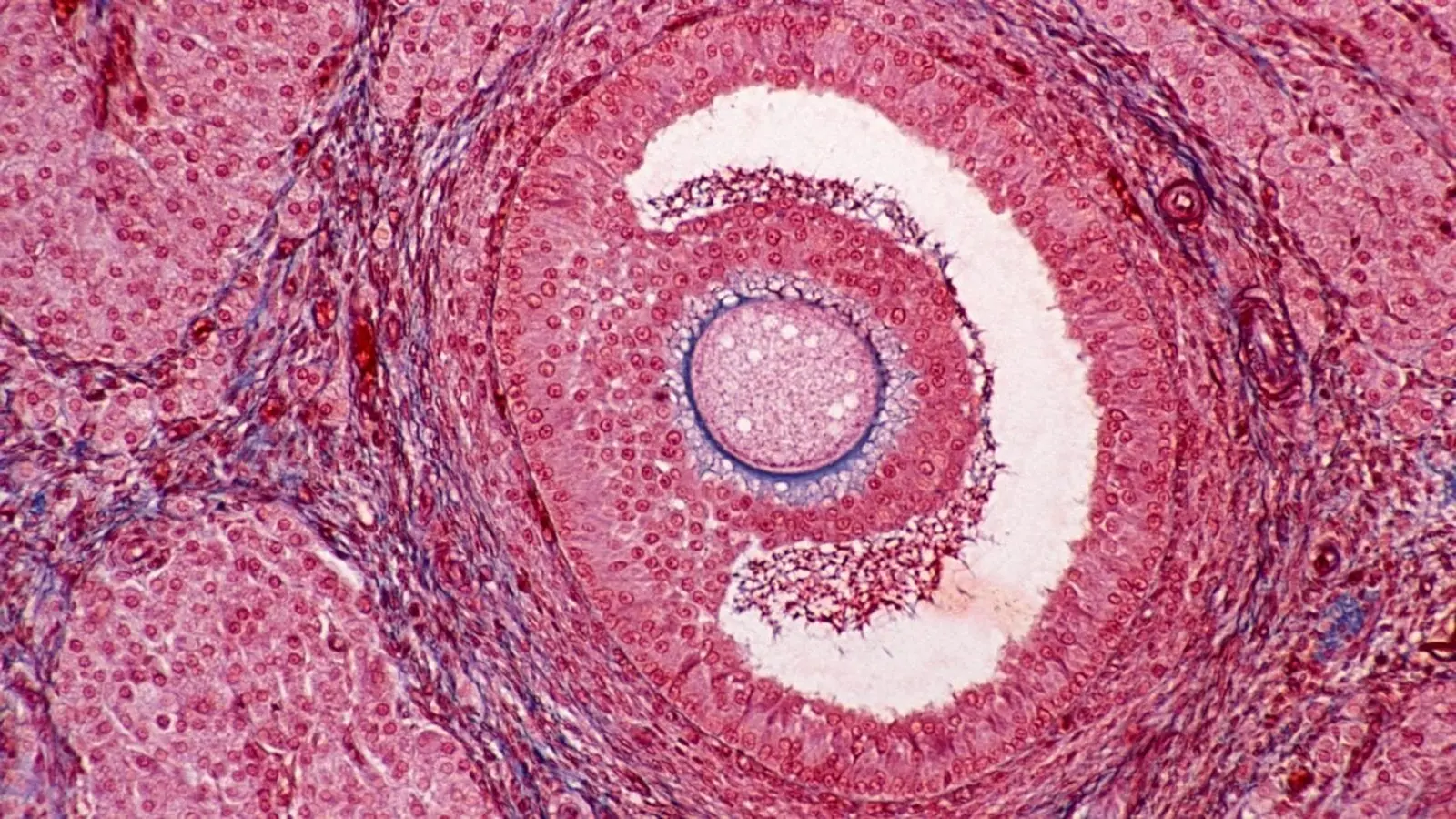
Can a morning run actually nudge the biological clock that governs fertility? New experiments in mice suggest the answer might be yes — and that a pill could one day stand in for the pavement.
Researchers at Guangzhou Medical University put female mice on a month-long treadmill program and watched their ovaries more closely than ever. Compared with sedentary controls, the active mice kept more primordial follicles — the dormant eggs that form a finite reserve and cannot be replaced. They also maintained higher levels of anti-Müllerian hormone (AMH), a protein clinicians use to estimate ovarian reserve.
Then the study took an intriguing turn. Scientists administered AdipoRon, an experimental drug that activates adiponectin receptors, to another group of mice. These animals showed reproductive benefits strikingly similar to the treadmill cohort. Untreated mice largely stopped reproducing by about 12 months of age; AdipoRon-treated mice continued having offspring into month 15.
Short sentences. Big implication. If a month of exercise or a targeted compound can preserve primordial follicles, the pathway behind that protection becomes a tempting target for interventions.
The molecular link appears to be adiponectin, a hormone-like peptide that rose in the ovaries of exercising mice. When researchers knocked down ovarian adiponectin, the protective effect of exercise on primordial-follicle loss dropped by roughly 76 percent. That’s a large chunk of the benefit tied to one mediator.
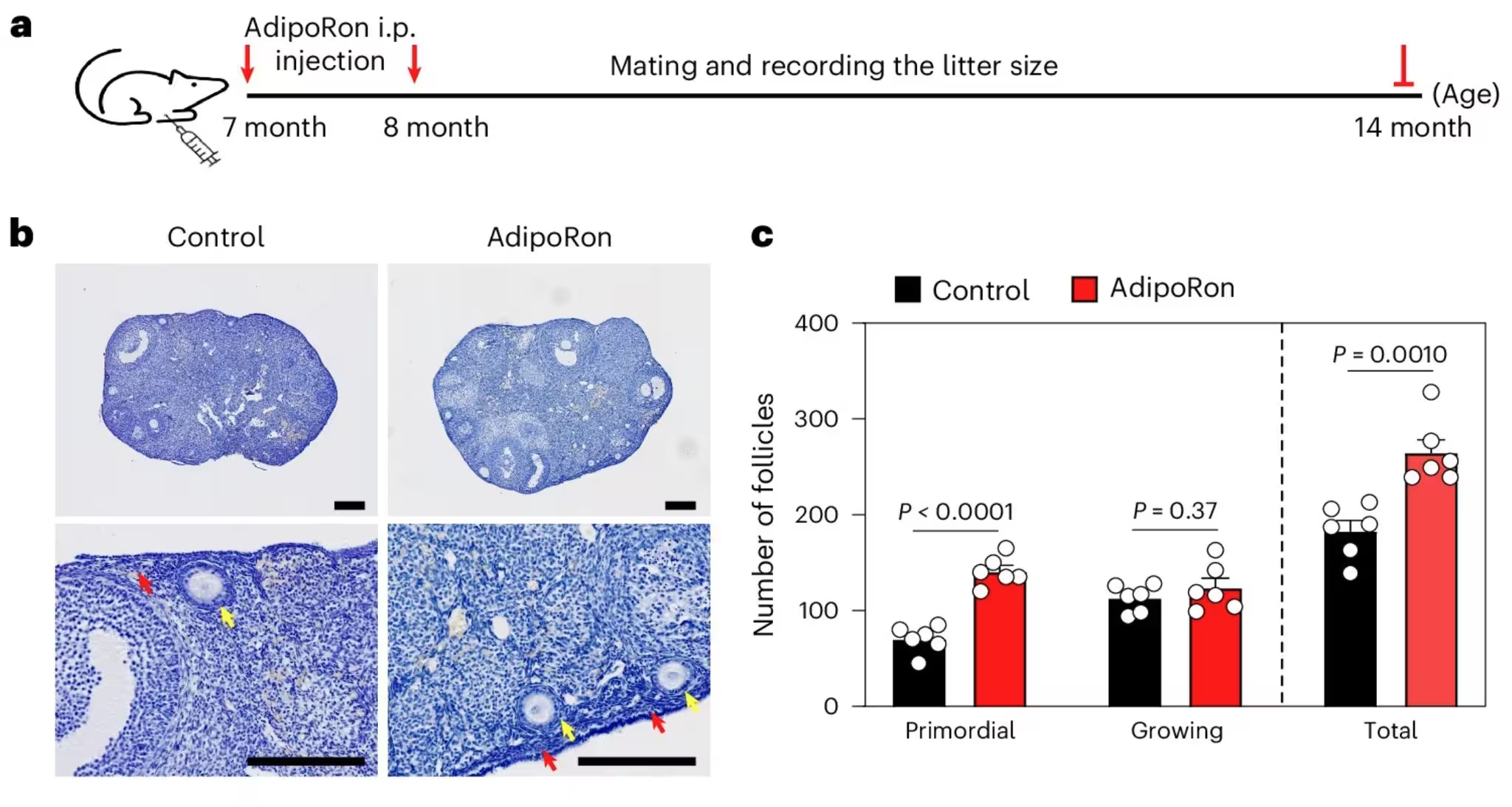
Female mice treated with AdipoRon for one month, beginning at seven months of age, retained significantly more primordial follicles than untreated mice. The drug also increased the total number of ovarian follicles, but not the number of growing follicles.
Human data offer supportive, if not definitive, signals. Across two large cohorts from the UK and the US, premenopausal women reported higher activity levels than postmenopausal women, and in the UK sample higher activity correlated with a slightly later age at menopause. In genetic analyses of nearly 147,000 UK Biobank participants, carriers of either of two adiponectin-linked variants tended to reach menopause about a month later than others — a small shift, but directionally consistent with the animal work.
“This is a well-performed, very exciting addition to the field,” says Philipp Scherer, a biochemist who was not involved in the study. The paper, led by Biao Li, Nana Zheng and Tong Luo and published in Nature Aging, frames adiponectin as a primary — though not exclusive — mediator of exercise’s ovarian benefits.
There are reasons for caution. AdipoRon remains preclinical. Mouse reproductive aging is not a perfect mirror of the human experience. And the difference in menopause timing seen in human genetics is modest. Long-term randomized trials would be required to prove that exercise or an adiponectin-mimicking drug can safely delay ovarian aging in people.
Still, the convergence of behavioral, pharmacological and genetic evidence points to adiponectin and physical activity as promising leads for preserving ovarian reserve and extending reproductive lifespan.
Whether the future brings a prescription to protect fertility or simply firmer advice to lace up and move, this research reframes exercise as more than heart and brain insurance — it may be a way to forestall one of the body’s earliest ticking clocks.


Leave a Comment
Comments
No comments yet. Be the first.