
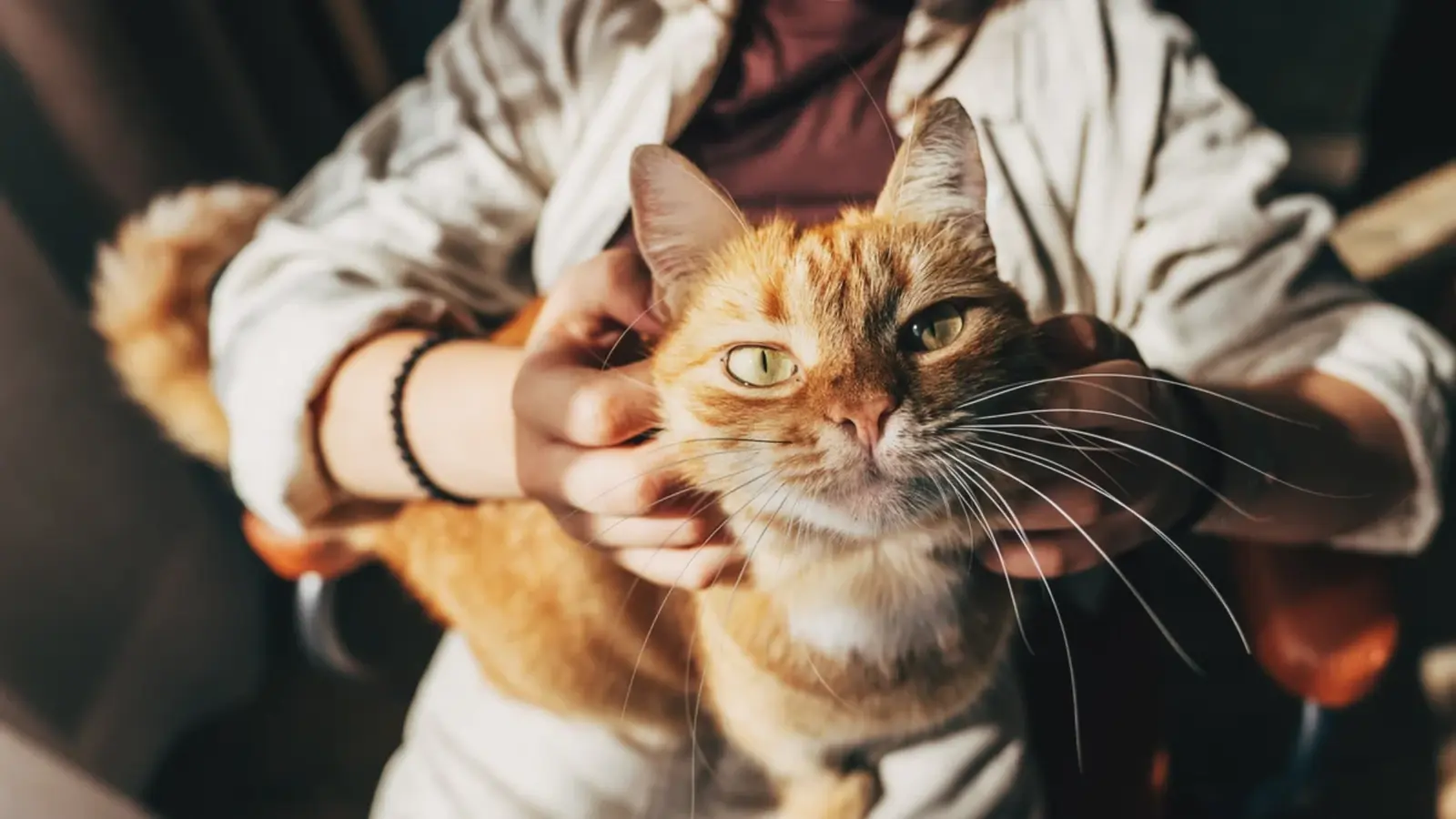
You sink into the couch. Your cat pads over, presses its head into your hand, and starts to purr. Small. Ordinary. But beneath that soft weight, something biochemical may be at play.
Researchers in Japan have found hints that cats and their owners can mirror one another’s hormone levels — not in dramatic rhythms, but in subtle averages that suggest a shared physiological tune. The team, led by Saho Takagi of Kyoto University and published in iScience, compared oxytocin and cortisol in household cats and their humans and turned up links worth a second look.
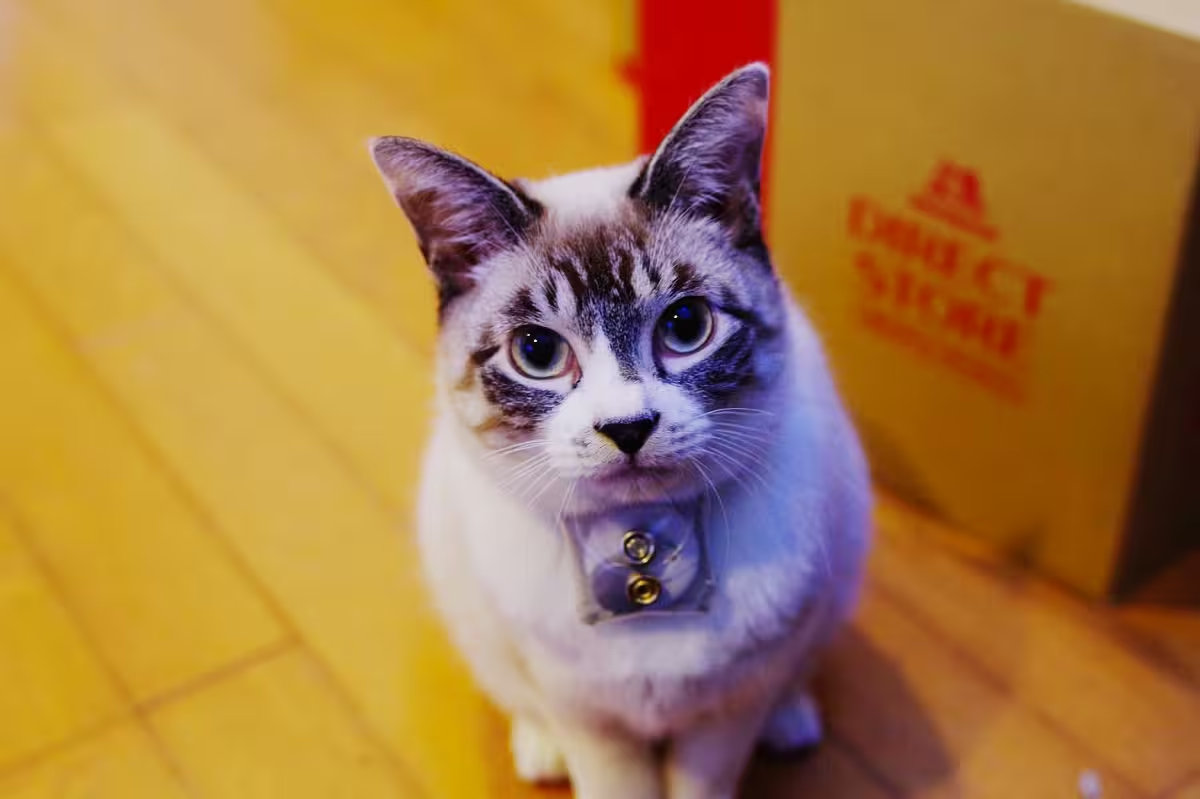
Oxytocin, the so-called social hormone, rose in tandem across some owner–cat pairs: households where people had higher oxytocin tended to include cats with higher oxytocin, too. Cats with higher oxytocin levels were also connected to owners who reported fewer negative emotions and, in some analyses, lower cortisol. A gentle chemistry, perhaps. An invisible handshake between species.
How might that happen? Petting is the obvious suspect. "I think this may be because oxytocin rises in both the owner and the cat through the petting-and-being-petted interaction," Takagi told ScienceAlert. But the study stops short of proving petting is the cause. Correlation, not causation. Timing and context matter.
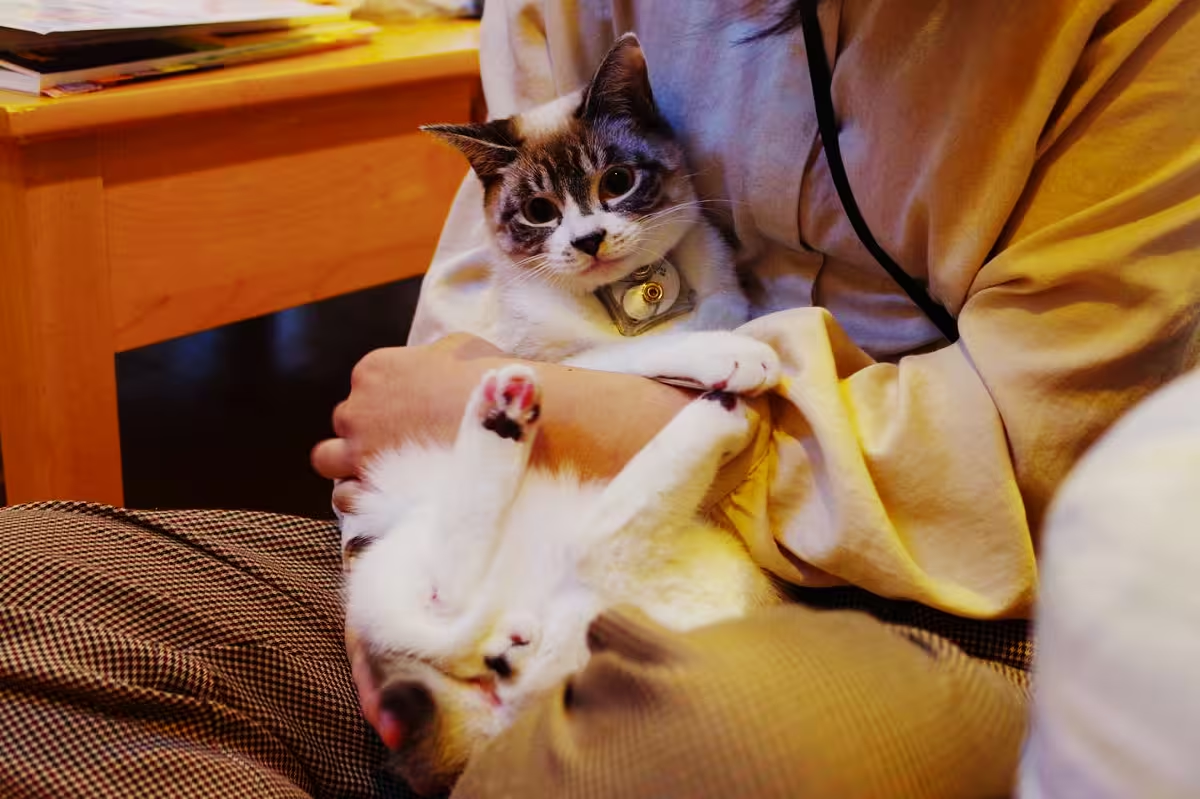
Details matter here. The researchers recruited 19 owners and 29 cats; the hormone comparison used urine collected from 24 cats and 17 owners. Each subject’s hormone value was averaged from three urine samples. Tiny Bluetooth beacons on collars logged proximity between cat and owner, and owners completed a questionnaire about mood over recent weeks. A separate behavioral test asked whether a cat would approach a person sitting inside a marked circle — owner or stranger — and higher-oxytocin felines were likelier to step forward.

But the picture has caveats. Oxytocin and cortisol are not direct happiness or stress meters. Oxytocin also governs childbirth and lactation; cortisol naturally swings during the day. Human urine was collected in the morning; cat samples came whenever they could be retrieved. Those timing mismatches could obscure links, especially for cortisol, which follows daily cycles. When data were adjusted by household — to account for owners with multiple cats — only the associations with confusion and anxiety held up statistically.
Methodological differences also complicate comparisons with other work. A 2019 dog study reported matching cortisol patterns between dogs and owners using hair and fur measurements, while a 2025 cat study showed salivary oxytocin rising in securely attached cats after free interaction with their people. Each technique captures a different slice of physiology and time.
Small sample size and participant skew are further limits: most owners in this study were women, and several analyses were exploratory rather than preregistered. The devices that tracked distance could not tell whether a close encounter involved stroking, staring, or shared silence. A cat curled up on the lap and a cat nudged for scratches look the same to a Bluetooth beacon.
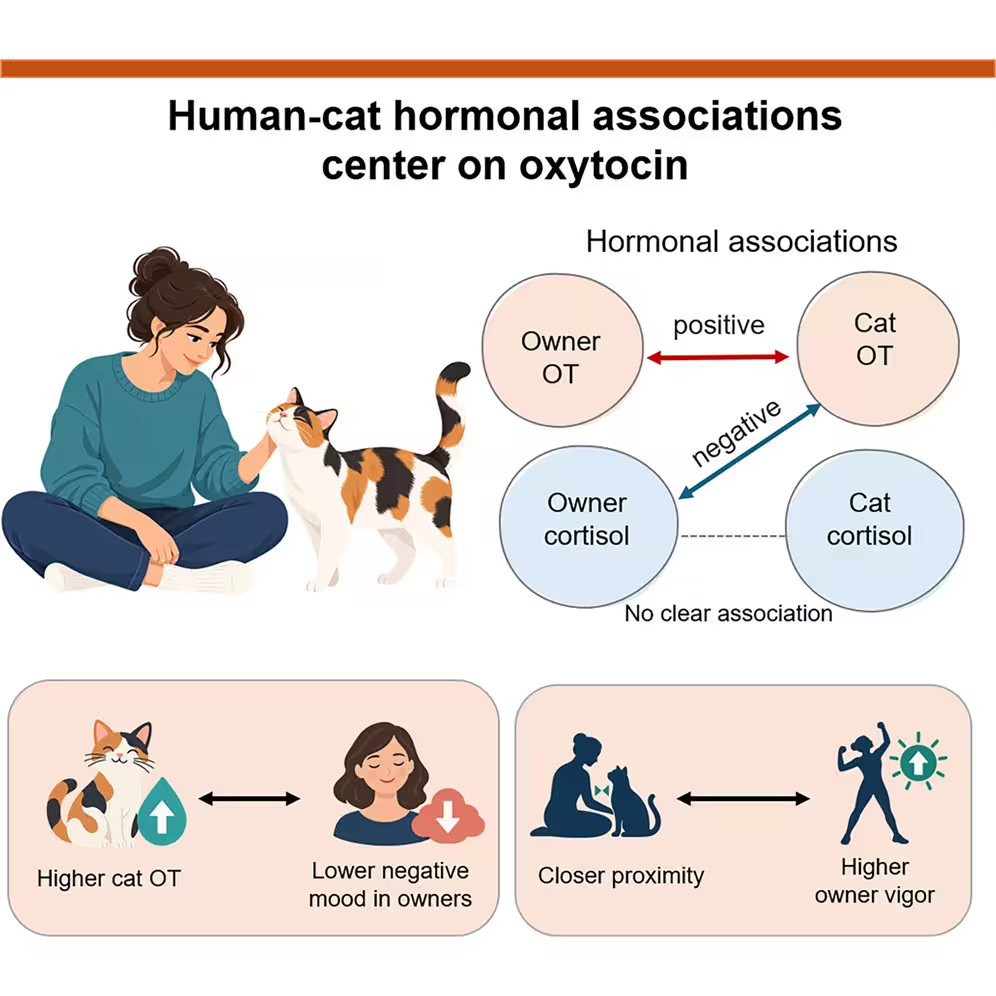
So what’s the takeaway? The study opens a window onto a biochemical aspect of the human–cat bond without claiming to have mapped the whole room. It suggests that shared oxytocin levels and proximity relate to owner mood, and it lays out clear next steps: repeated, time-aligned hormone measures taken before and after specific interactions, larger and more diverse samples, and behavioral recordings that separate sleep-from-stroke.

Our pets are familiar companions and — possibly — subtle partners in our physiology. The question now is not whether cats are affectionate, but how moments of touch and closeness ripple through two very different bodies. Who will be the first to measure oxytocin before and after a single, deliberate petting session and settle the matter?

Leave a Comment
Comments (1)
Whoa, cats syncing hormones? that's wild. Petting seems likely, but tiny sample size and timing differences make me skeptical. plz replicate