
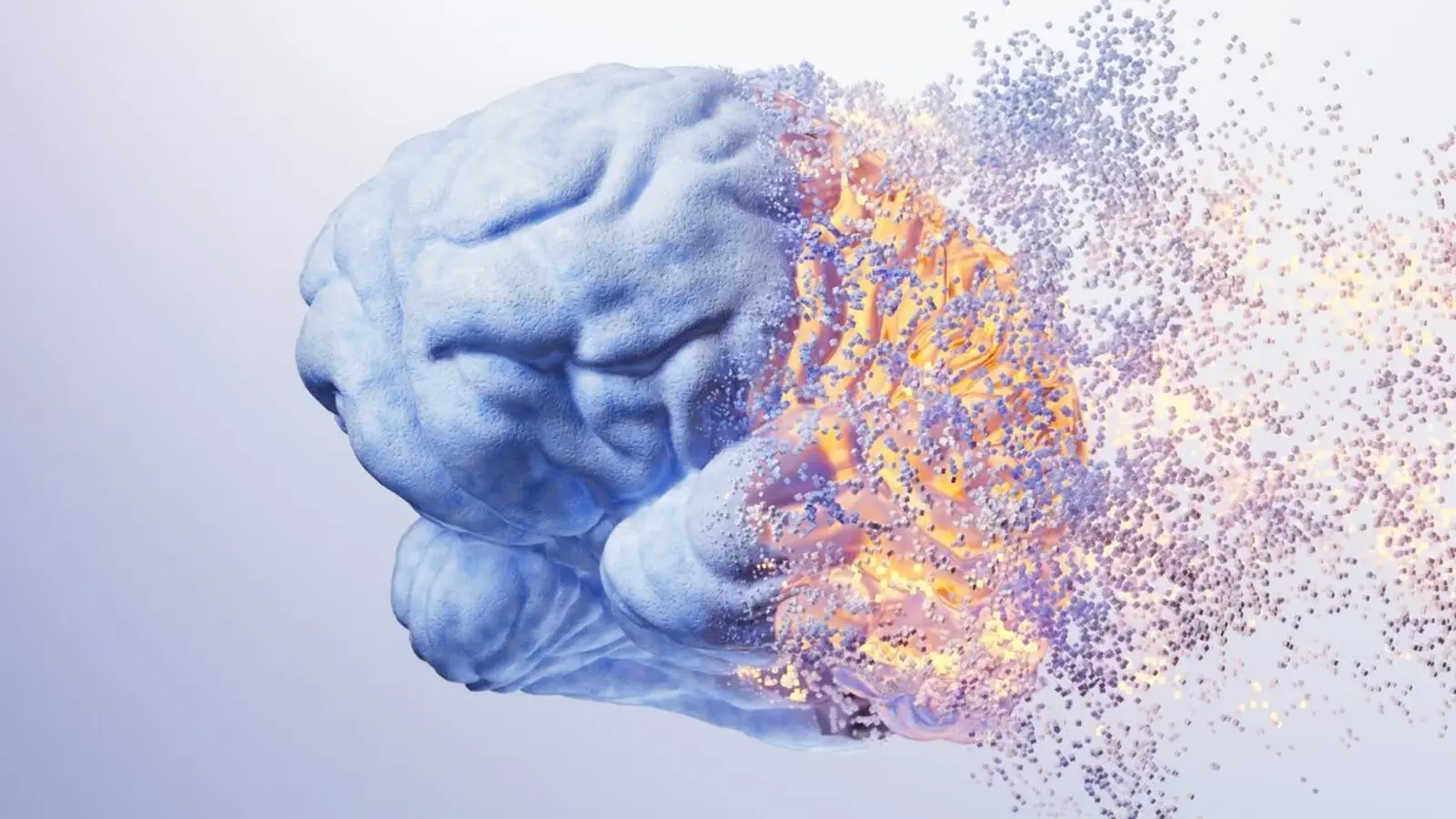
Imagine the brain's inner scaffolding being quietly gnawed away while you read this. A sip, one too many, or a weekend binge — and the damage begins at a level most people never see: not neurons first, but the immune cells that tend them.
Researchers at the Cleveland Clinic have traced a surprising pathway by which alcohol harms the brain. Published in Immunity, their mouse experiments reveal that alcohol rapidly rewires microglia, the brain's resident immune sentinels, and sends them into a destructive mode where they dismantle the extracellular matrix (ECM) — the protein lattice that holds neurons and synapses in place.
Microglia are not mere janitors. They patrol, prune, and protect, sensing threats and remodeling connections as needed. What this team watched, in living animals using two-photon microscopy, was microglia changing shape within roughly an hour of ethanol exposure. Branches retracted. Surveillance zones shrank. Activity spiked. Short-term exposure nudged them into a different state; repeated dosing pushed them further.
And then something striking: microglia began to engulf and digest components of the ECM. The matrix didn’t just fray — it was actively consumed. When ECM proteins disappear, synapses lose their anchor. Neuronal communication falters. The animals showed synapse loss, motor impairment and deeper sedation, linking structural breakdown to functional decline.
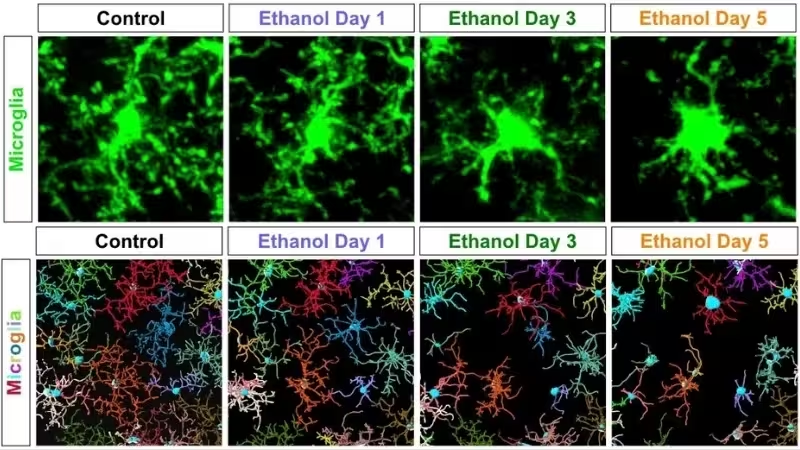
Experiments showing how alcohol use negatively affects the brain's microglia immune cells over time.
To probe cause and effect, the investigators switched off MyD88, a protein that helps immune cells mount responses. In mice whose microglia lacked MyD88, alcohol caused far less microglial remodeling, far less ECM dismantling and noticeably milder neuronal damage and sedation. Flip the script again: enzymatically degrade the ECM in those same MyD88-deficient mice, then expose them to alcohol, and the synapse loss and motor deficits return. The implication is blunt and direct — microglial activation of ECM breakdown is a causal route for some of alcohol's toxic effects on the brain.

The study stops short of declaring this human-proof, but it reaches toward it. The authors examined postmortem brain tissue from six individuals with alcohol use disorder and found markers consistent with ECM disruption, suggesting that similar microglia-driven processes may occur in people who chronically abuse alcohol.
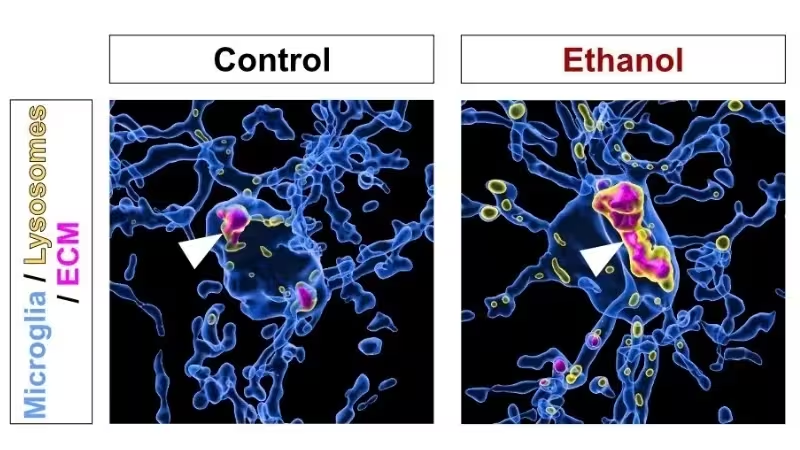
A graphic representation of extracellular matrix damage (ECM) caused by microglia after alcohol exposure, with the image on the right depicting the immune cells (blue) engulfing an ECM component (pink) into its digestive compartments (yellow).
Why does this matter beyond academic interest? Because ECM integrity is foundational to brain stability. Break it, and circuits become unreliable. The identification of MyD88 as a linchpin in this pathway points to a tangible target for intervention. Block the signal, protect the matrix — and you might blunt alcohol-induced synapse loss. Or perhaps more broadly, you could temper neuroimmune mechanisms implicated in other disorders.
There are caveats. These results come from controlled mouse models that mimic binge- and high-intensity drinking. Human brains are more complex, with decades of lifestyle, genetics and co-morbid conditions layered in. Still, the idea that immune cells actively drive structural degradation reframes alcohol damage from a neuronal-only problem to a neuroimmune one. It adds urgency to efforts that aim not only to limit drinking, but to preserve the brain's cellular architecture.
The Cleveland Clinic team is already pursuing ways to shield the ECM or to modulate microglial behavior, hoping to turn this mechanistic insight into therapies. If successful, such strategies could stretch beyond alcohol, offering new lines of defense in diseases where the matrix and immune crosstalk go awry.
So next time someone dismisses a 'harmless' drinking session, remember: the brain’s scaffolding is not immune to excess. Protecting it may require treating immune signaling as part of the equation.

Leave a Comment
Comments
No comments yet. Be the first.