
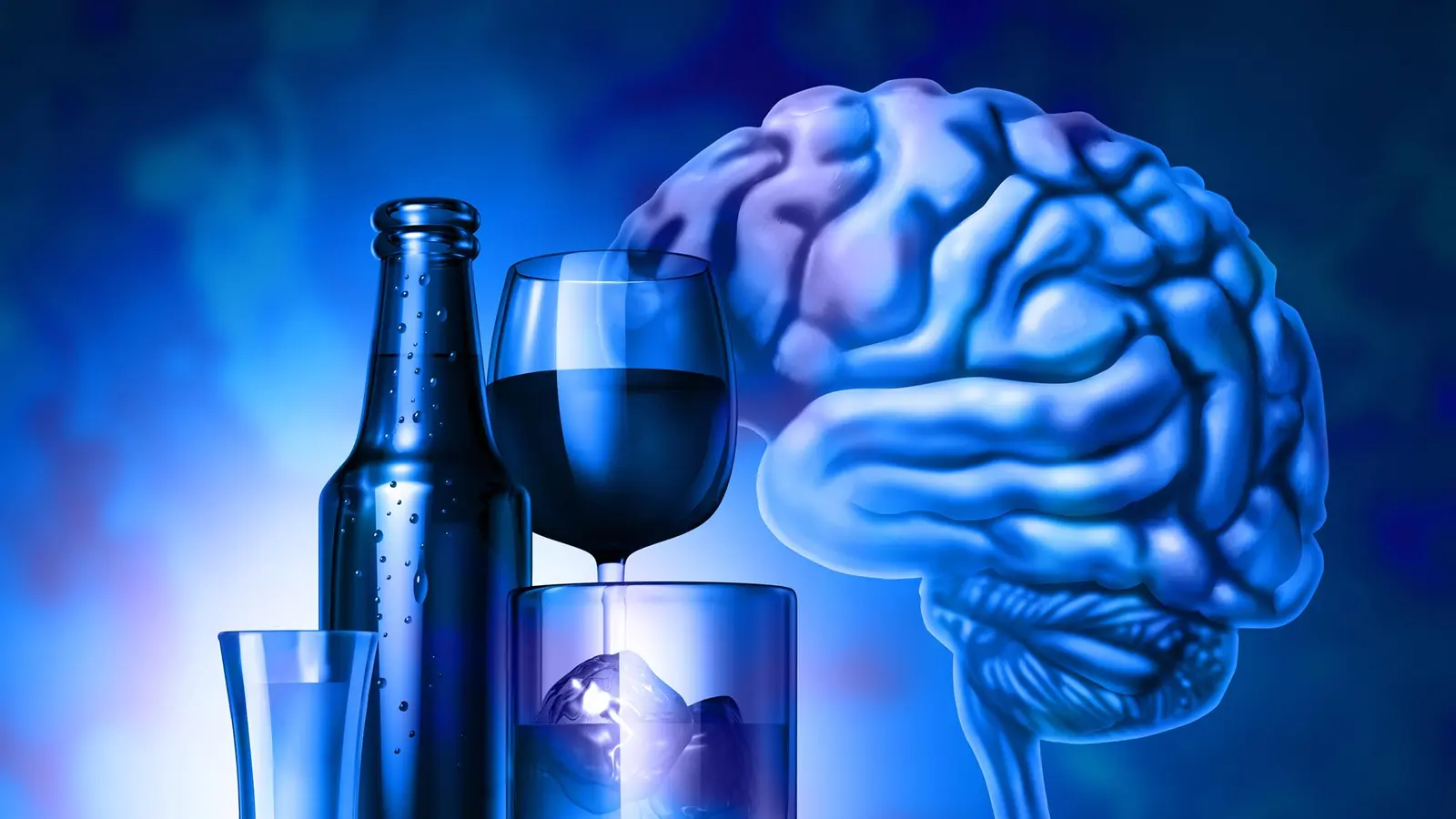
Give a mouse long-term access to alcohol, take the alcohol away, and something unexpected can happen: a subset of animals returns to drinking with a stubborn, almost reckless intensity. Short of an epiphany, there’s a brain signature that appears to precede this behavior — a signal that could help explain why stopping alcohol doesn’t always break the cycle.
Researchers at UMass Chan Medical School followed mice that had freely consumed alcohol for weeks, then forced them into abstinence. When those animals were later reintroduced to the drinking context, some treated the spout like a promise they intended to keep. Even when the researchers made the alcohol taste progressively worse by adding quinine, those mice continued to drink. They chose the bitter option. They drank more of it than mice that had never been taken through the enforced break.
What stood out was not only the behavior but the brain activity tied to it. The team tracked neurons in the bed nucleus of the stria terminalis, or BNST — a compact, deep-brain region long associated with anxiety, stress responses, and addiction-related behaviors. Mice that went on to show this aversion-resistant drinking had BNST activity more than twice as high as their abstinence-exposed peers who resisted the bitter alcohol.
Even more striking: that extra BNST activity showed up before the animals ever tasted the quinine-laced alcohol again. The signal was present when the mice were merely returned to the place where they used to drink. In other words, the brain seemed to announce a vulnerability to relapse before the behavior itself appeared.

The BNST is located deep near the center of the brain.

These results are small-c conservative in scale — mice, not people — but the implications are large. Could a similar neural signature be detectable in humans leaving a period of sobriety? If so, clinicians might someday use brain-based markers to identify individuals at higher risk of relapse and tailor interventions accordingly.
The public-health backdrop makes such work urgent. Alcohol-related mortality climbed sharply in recent years, and in 2024 deaths tied to alcohol were about 4.5 times higher than deaths attributed to opioids. Drinking is common: more than 80 percent of Americans aged 12 and older report consuming alcohol at some point, and roughly one in ten will develop an alcohol use disorder — a group that now numbers nearly 30 million people in the U.S. alone. Treatments exist, and abstinence remains central to many strategies, but clinicians still lack reliable tools to predict who will fall back into harmful drinking.
At the moment, the BNST finding raises as many questions as it answers. Which cell types inside the BNST are driving the signal? What neurochemical or circuit changes push that region into a hyperactive state during abstinence? The mechanisms remain unresolved. Animal neuroscience has new tricks — genetically targeted manipulations and precise recordings — and the team plans to use these to tease apart whether the BNST actively causes the compulsive drinking or simply reflects other upstream changes.
There’s also movement toward translation. Jennifer Blackford and colleagues are measuring BNST activity in people with alcohol use disorder who are in early abstinence to see whether the same pattern appears in human brains. If parallel results arise, the BNST might move from a laboratory curiosity to a candidate biomarker for relapse vulnerability, one that could be tested in clinical trials alongside behavioral therapies and medication.
Practical hurdles remain. Brain imaging in humans is noisy and expensive; BNST sits deep and small, which makes it hard to study with standard scanners. Even if a signal is detectable, clinicians will need validated thresholds and interventions that alter outcomes when high risk is identified. Still, the mouse findings provide a rare, testable lead: abstinence not only improves health but can reshape brain circuits in ways that sometimes prime a return to drinking.
Science rarely hands us simple stories. Here is one: a forced break from alcohol can leave a neural echo in a tiny brain region, an echo that may presage compulsive drinking when the chance to drink returns. The next step is to see whether that echo resonates in human brains — and whether hearing it early can change someone’s path.

Leave a Comment
Comments
No comments yet. Be the first.