
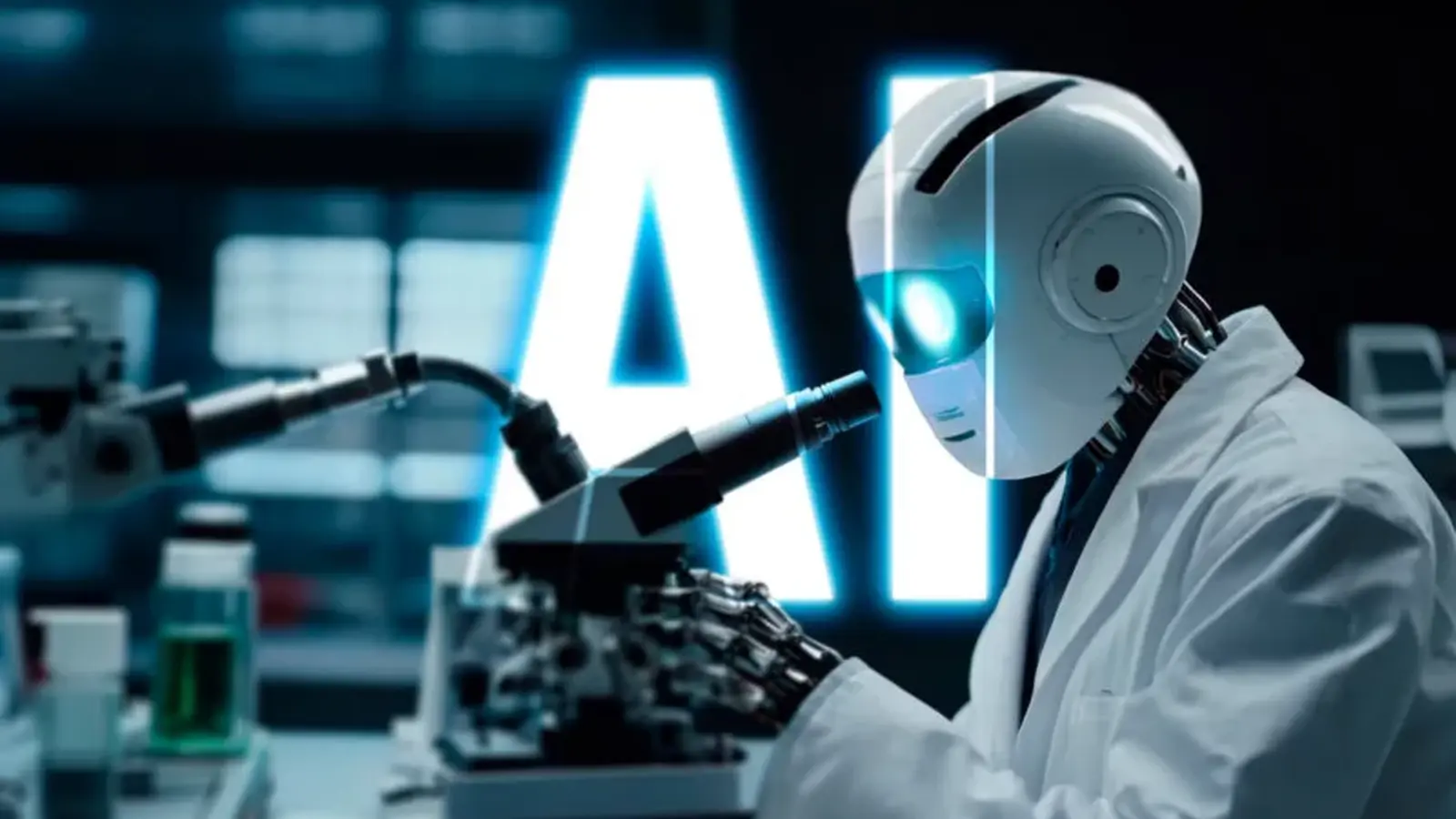
Picture a laboratory that thinks for itself: it proposes questions, sketches experiments, tells robot arms what to do, reads the results and then changes its own mind. No single human is repeating that loop step by step. The machine is.
Researchers in Sweden have stitched together large language models, enormous experimental databases and physical robotic manipulators into a closed-loop system that can carry a scientific inquiry from idea to evidence with minimal human intervention. It sounds like science fiction. It behaves like a tireless junior researcher that never sleeps.
The team fed the system roughly 60,000 recorded links between phenotypic traits, physiological states and metabolic markers in baker's yeast (Saccharomyces cerevisiae). From that dense web of relationships the AI produced nearly 2,000 testable predictions about how nutrients shape cell growth and stress resistance. Short, sharp hypotheses emerged from long, messy datasets.
How does the cycle actually run? First the AI suggests promising biological questions. Then it designs experiments and converts those plans into step-by-step instructions a robotic platform can follow. The robots perform the assays. The AI parses the output, checks which predictions held up and rewrites failed hypotheses for another round. Iteration becomes continuous rather than episodic.
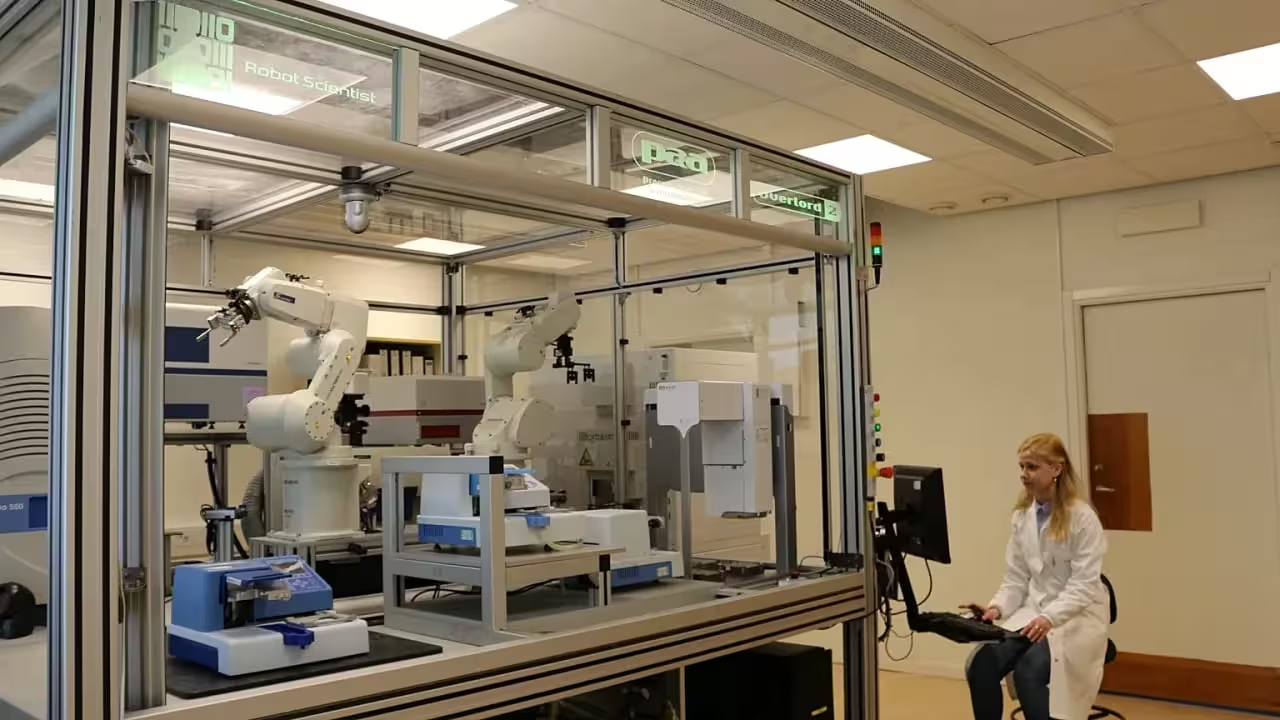
This AI scientist doesn't just assist—it's generating new scientific claims and revising them based on fresh experimental evidence.
Eugenia Tiukova, a researcher at Chalmers University of Technology and one of the study's authors, says the dataset was far too large for humans to explore exhaustively. The system, she explains, filtered through the noise to surface biologically meaningful questions, propose tests and then evaluate results to refine its understanding step by step.
Ross King, the paper's senior author at the University of Gothenburg, frames the advance as part of a broader shift toward automation in discovery. He and his colleagues argue that AI-driven platforms working alongside human researchers could accelerate progress in biology, medicine and biotechnology by shortening the time spent chasing and validating complex hypotheses, and by making better use of scarce laboratory resources.
The benefits are practical. Automated pipelines can reduce human error, limit experimenter bias, and make protocols more consistent—improving reproducibility. But the researchers are careful to stress that machines will not replace scientists. Human judgment remains essential for setting priorities, interpreting results in broader contexts and overseeing ethical boundaries.
What this work does show is a new choreography between silicon and human curiosity: robots and models handle the labor of exhaustive testing; people steer the compass. If a laboratory can revise its own questions after every experiment, what new kinds of science will that agility unlock?


Leave a Comment
Comments
No comments yet. Be the first.