
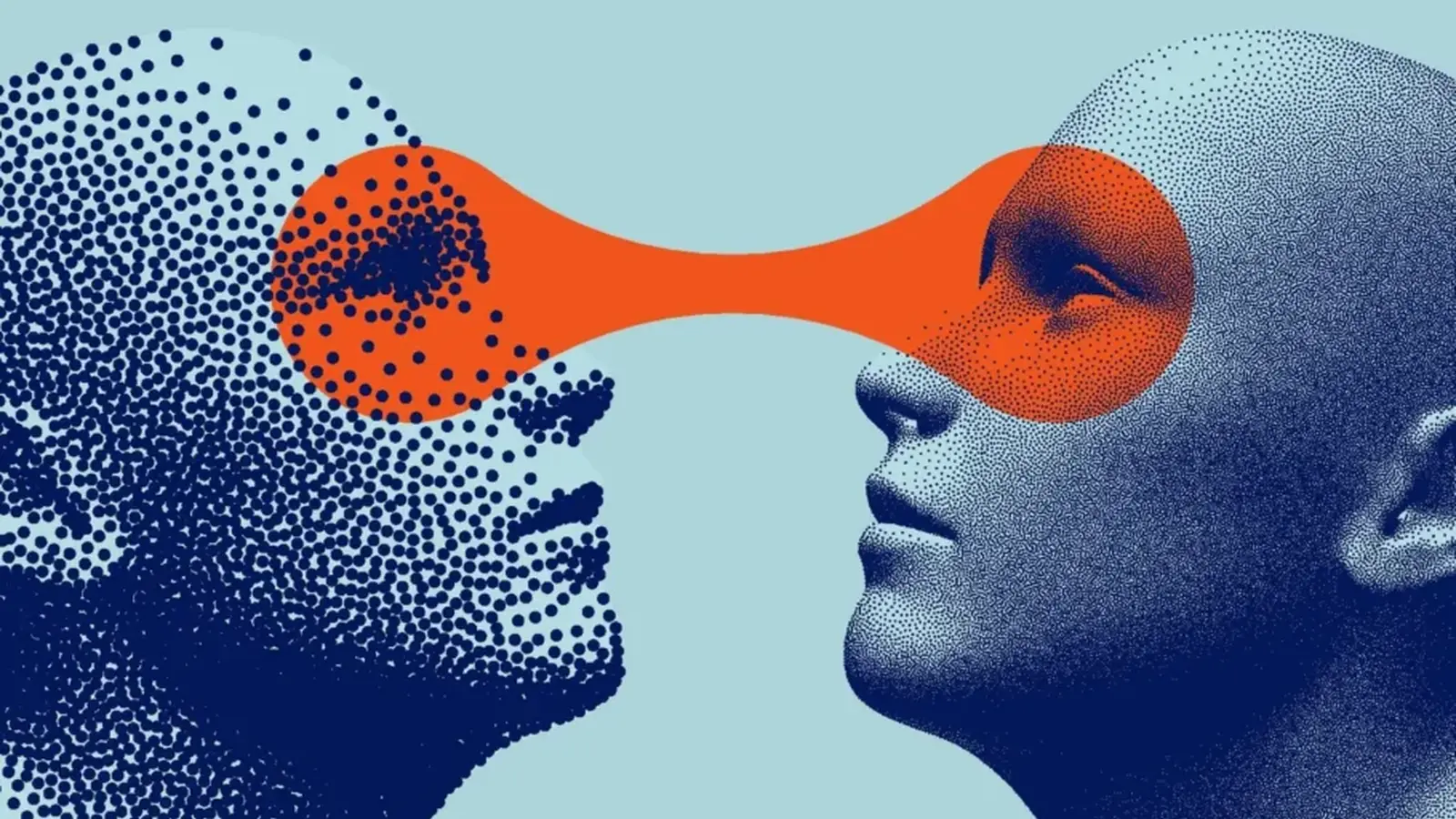
Imagine a home robot that knows you meant water, not coffee, before you say a word. The latest work from KAIST in collaboration with Microsoft brings that scenario closer: a brain–computer interface that listens to electrical whispers from your brain and tells an AI whether it misunderstood your goal or the way to reach it.
The team calls the approach Neural Value Alignment (NVA). It relies on EEG to pick up tiny neural signatures that appear when reality diverges from our brain’s prediction. The brain constantly forecasts what will happen next; when those forecasts are wrong, characteristic responses show up in the EEG. Researchers focused on two such signals: reward prediction error (RPE) — the brain signaling that the final outcome isn’t what you expected — and state prediction error (SPE) — a mismatch between the method taken and the method you anticipated.
Think of a simple act: lifting a cup. That motion could mean drinking, washing, moving, or handing it to someone. Watching the movement alone doesn’t tell you the real intent. If a robot brings coffee when you wanted water, that’s an RPE — the target was off. If the robot fetches water but walks to the sink to fill a glass instead of grabbing the bottle beside you, that’s an SPE — the goal is right but the chosen method differs.
In experiments the researchers found distinct EEG patterns for RPE, SPE, and their overlap. Deep-learning models were trained to classify those patterns in real time so the system can infer whether the mistake lies in the goal, the method, or both — and then change course without any verbal correction from the user. The decoded neural feedback is fed into what the team dubs a Human–AI Synergy Algorithm based on Neural Value Alignment, allowing the AI to pivot its behavior on the fly.
This makes silent, instantaneous correction possible: the machine adapts to your expectations even when you don’t speak up.
Possible uses are broad. Household and industrial robots could become less frustrating to work with. Self-driving cars might account for a driver’s unspoken intent. Medical and rehabilitation robots could better accommodate people with speech or motor deficits. Adaptive learning platforms might sense when a student’s mental model diverges from the lesson and respond accordingly.
The results appear in IEEE Transactions on Cybernetics, and they sketch a future in which machines don’t just follow commands — they read the gap between what we expect and what they deliver, then close it.
What happens when technology learns to correct not only our actions, but our expectations? The conversation is just beginning.


Leave a Comment
Comments
No comments yet. Be the first.