
What if a diagnosis didn’t have to be a life sentence? For a surprising number of younger adults with type 2 diabetes, researchers have found a way to push the disease into remission — at least for the short term.
In a randomized trial spanning three centers in Canada and the United Kingdom, a team led by Kaberi Dasgupta at McGill University enrolled 96 adults with early-onset type 2 diabetes and obesity. The average participant was 38 years old. None were on insulin. The experiment was simple in design but demanding in practice: an 800–900 calorie daily diet combined with structured, supervised exercise for the first 12 weeks, followed by a transition to weight-maintenance eating and independent training for another 12 weeks.
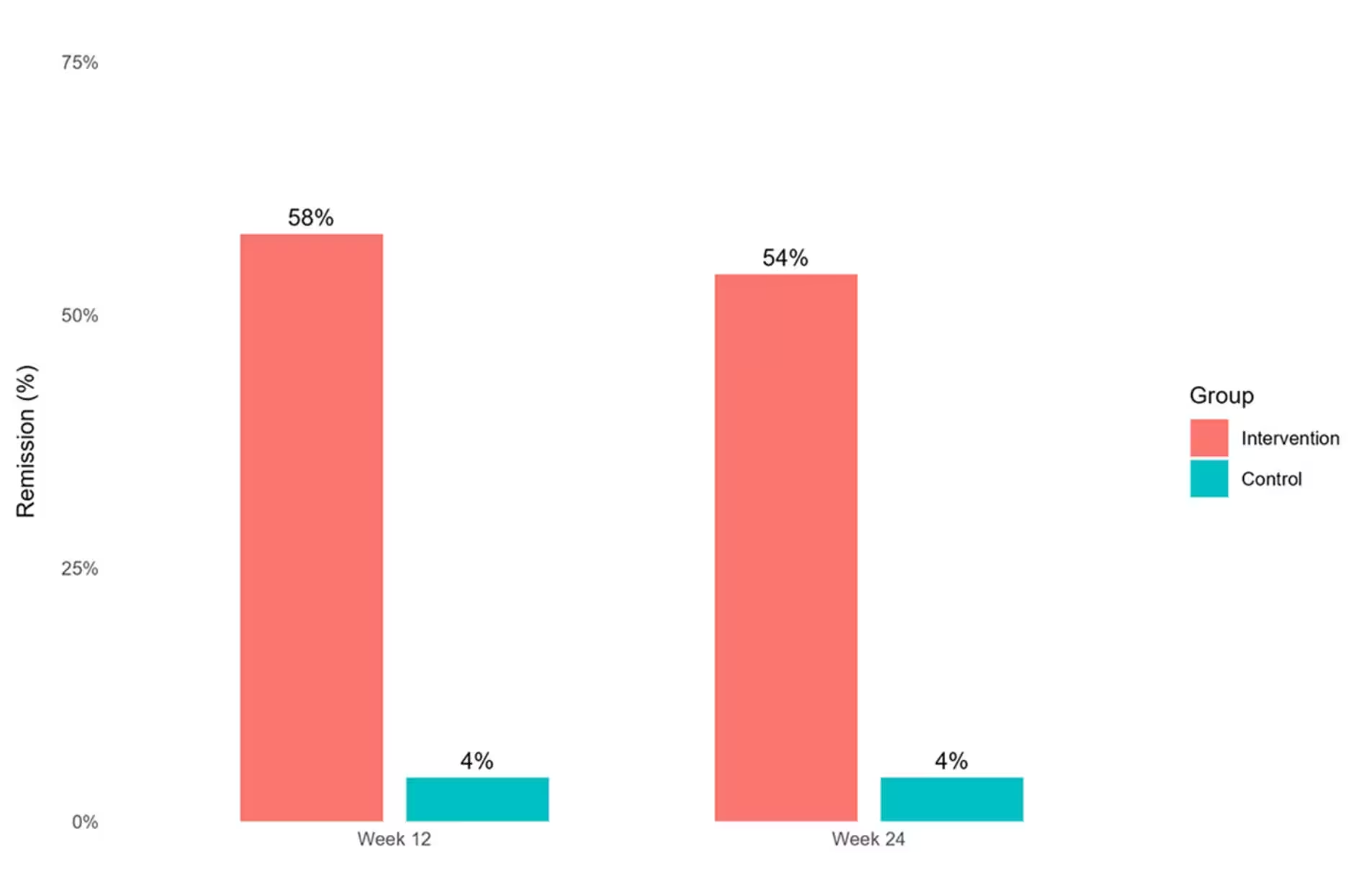
The results were striking. After 24 weeks, 27 of 50 people in the diet-plus-exercise group achieved remission of their diabetes. In the control group, which continued usual care, only two people reached remission. No glucose-lowering drugs drove these changes. The message was clear: behavior, carefully guided, can change biology.
But remission was only part of the story. Participants on the intervention lost substantial fat mass while preserving muscle strength and lean mass — an important distinction. Fast weight loss often strips away muscle, and muscle is central to metabolic health. It’s where most glucose is burned. Keep the muscle, the researchers argue, and you preserve the body’s ability to respond to insulin and to stay active.
Cardiovascular measures improved too. The intensive group posted about a 10.3 percent gain in respiratory fitness relative to body mass, and saw reductions in resting blood pressure and heart rate. Imaging suggested healthier left ventricular shape and structure compared with controls. People also reported feeling less distress about their diabetes and a better quality of life. That psychological shift matters: motivation and confidence often determine whether changes stick.
Why focus on early-onset disease? When type 2 diabetes appears before age 45 it usually advances faster and carries higher risks of complications and premature death. Intervening early, while some metabolic reserve remains, seems to afford a better shot at reversing the course. The new trial is notable for enrolling a multi-ethnic cohort, showing the approach can work across diverse backgrounds — not just in narrowly defined populations.
The trial raises immediate, practical questions. How durable are these remissions? Twelve weeks of intense support, followed by 12 weeks of maintenance, produced notable gains — but what happens at one year, or five? Which element mattered more: the severe calorie restriction, or the structured mixture of aerobic and resistance training? The study wasn’t designed to tease those factors apart. The authors call for trials that randomize people to diet-only, exercise-only, and combined approaches to determine what each contributes.
There are biological reasons to separate the effects. Rapid weight loss can normalize blood sugar by shrinking fat stores in the liver and pancreas. Exercise, especially resistance work, helps protect muscle mass and enhances glucose uptake. Combine both, and you may get a synergy: swift reductions in metabolic fat plus preserved muscle function.
Clinicians will note practical limits. An 800–900 calorie plan is intense and needs medical supervision, especially for people on medications. The study team closely monitored participants throughout, and that level of support may not be available everywhere. Still, the trial demonstrates feasibility: structured programs with nutritional oversight and supervised sessions can be delivered in multiple centers and across ethnic groups.

For patients and physicians, the takeaway is cautiously hopeful. Lifestyle interventions remain a powerful tool — sometimes powerful enough to bring early-onset type 2 diabetes into remission without medication. Whether remission endures, or whether it can be achieved at scale and with less intensive support, are questions that demand longer and larger studies. In the meantime, this work reminds us that in chronic disease, early, disciplined action can rewrite the script.

Leave a Comment
Comments (1)
wow this actually gives me hope! 800 cal tho... sounds brutal, but remission without drugs? if true thats huge, fingers crossed