

Think of creatine as the supplement you met at the gym that quietly switched careers and started working in neuroscience. That unlikely pivot is precisely what researchers in Seville report after testing whether a compound best known for boosting muscle power can also guard the brain when the gut gets inflamed.
The team, led by neurophysiologists Alejandro Ruiz-Calero and Maria Ortego-Domínguez, published their new findings in Brain, Behavior, and Immunity. Using a rat model of ulcerative colitis, they probed how daily oral creatine affects the hippocampus, a brain region central to memory and attention. The setup was straightforward: some animals drank water containing creatine at one gram per kilogram of body weight for ten days, then colitis was induced and supplementation continued throughout the study.
The results were striking. In animals with induced colitis, creatine replenished hippocampal creatine levels, reduced inflammatory signals, and limited neuronal damage. Electrophysiological measures showed that creatine helped normalize the excitability of surviving neurons—essentially calming the electrical storm that often follows inflammation. In males, where colitis produced more severe brain changes, the protective effects were particularly obvious, suggesting sex-dependent vulnerability and response.
Oral creatine restored hippocampal stores and preserved neuronal integrity in rats with gut inflammation.
Why might a molecule famous for fueling sprints and squats influence the brain? Creatine serves as a cellular energy reservoir, buffering ATP levels during periods of high demand. While most of the body's creatine ends up in muscle, the compound is also made by the liver, kidneys, and pancreas, and it penetrates the blood-brain barrier to feed neurons and glial cells. When inflammation disrupts that delicate energetic balance, cells falter. Replenishing creatine appears to shore up neuronal energy metabolism and blunt downstream injury.
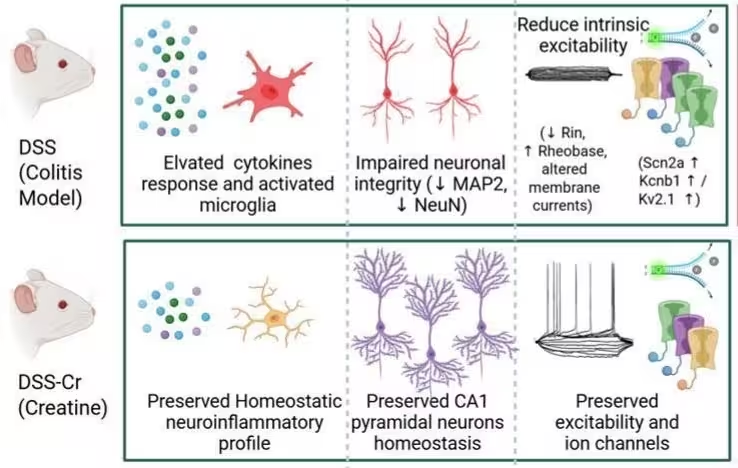
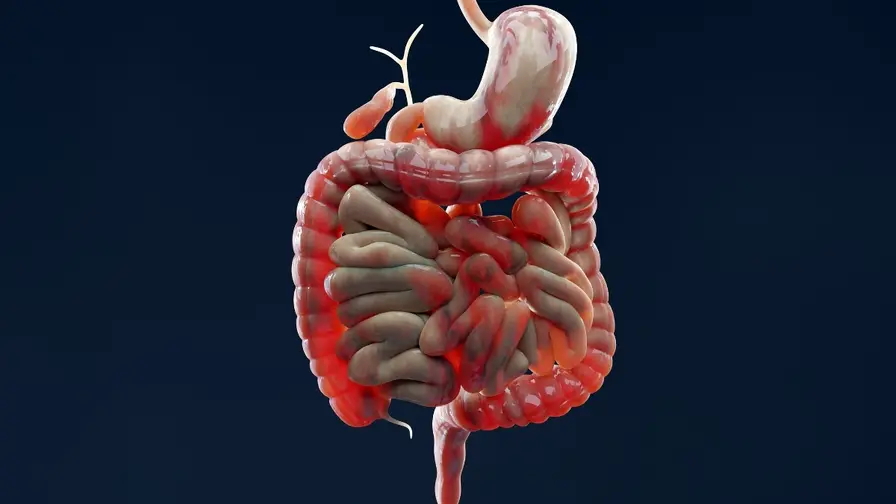
Rats with colitis without creatine supplementation (above) versus those with creatine supplementation.
This work extends earlier experiments from the same group showing creatine reduced gut inflammation itself. Taken together, the two studies sketch a picture of bidirectional benefit: less intestinal inflammation and, separately, protection of brain circuits vulnerable to systemic immune activation. But caution is warranted. These are preclinical animal studies. Rats are valuable models, but they do not prove efficacy or safety in humans.
Clinical relevance remains an open question. Inflammatory bowel disease flare-ups often come with cognitive symptoms—memory lapses, attention trouble, a fog that patients frequently describe. The Seville team proposes that creatine could be an attractive adjunct strategy to preserve cognition in people with chronic gut-brain inflammatory disorders. Yet experts who monitor the evidence urge restraint. Early human data on creatine and brain health are intriguing but far from definitive; more controlled clinical trials are needed before any broad recommendations.
The study also highlights an important nuance: biological sex may shape both the degree of brain injury from systemic inflammation and the magnitude of benefit from an intervention. That has implications for future trials; one-size-fits-all approaches may miss meaningful differences between men and women.
At a practical level, omnivorous adults typically ingest about one to two grams of creatine daily through diet, and the body produces additional amounts endogenously. Experimental dosing in these rodents—one gram per kilogram—does not translate directly to human supplements, but it offers a mechanistic proof of concept: boosting cerebral creatine can protect neurons when the gut is inflamed.
So where does this leave patients and clinicians? Not at a clinical protocol, yet. It does, however, add a useful tile to the mosaic of how systemic inflammation affects the brain and how metabolic support might blunt that harm. The next steps are logical but demanding: carefully designed human trials that measure cognition, brain creatine content, inflammatory markers, and sex-specific responses. Until then, creatine remains a promising laboratory tool with potential clinical implications—a muscle supplement that may moonlight as a neuroprotective ally, pending real-world proof.


Leave a Comment
Comments (2)
I take creatine for gains, but wow brain protection? if real this could help folks with colitis who have that brain fog. cautious optimism, tho
Is creatine really getting enough into human brains to help IBD related fog? Rats are neat, but translation is a big leap. dosing?? sex diffs??