
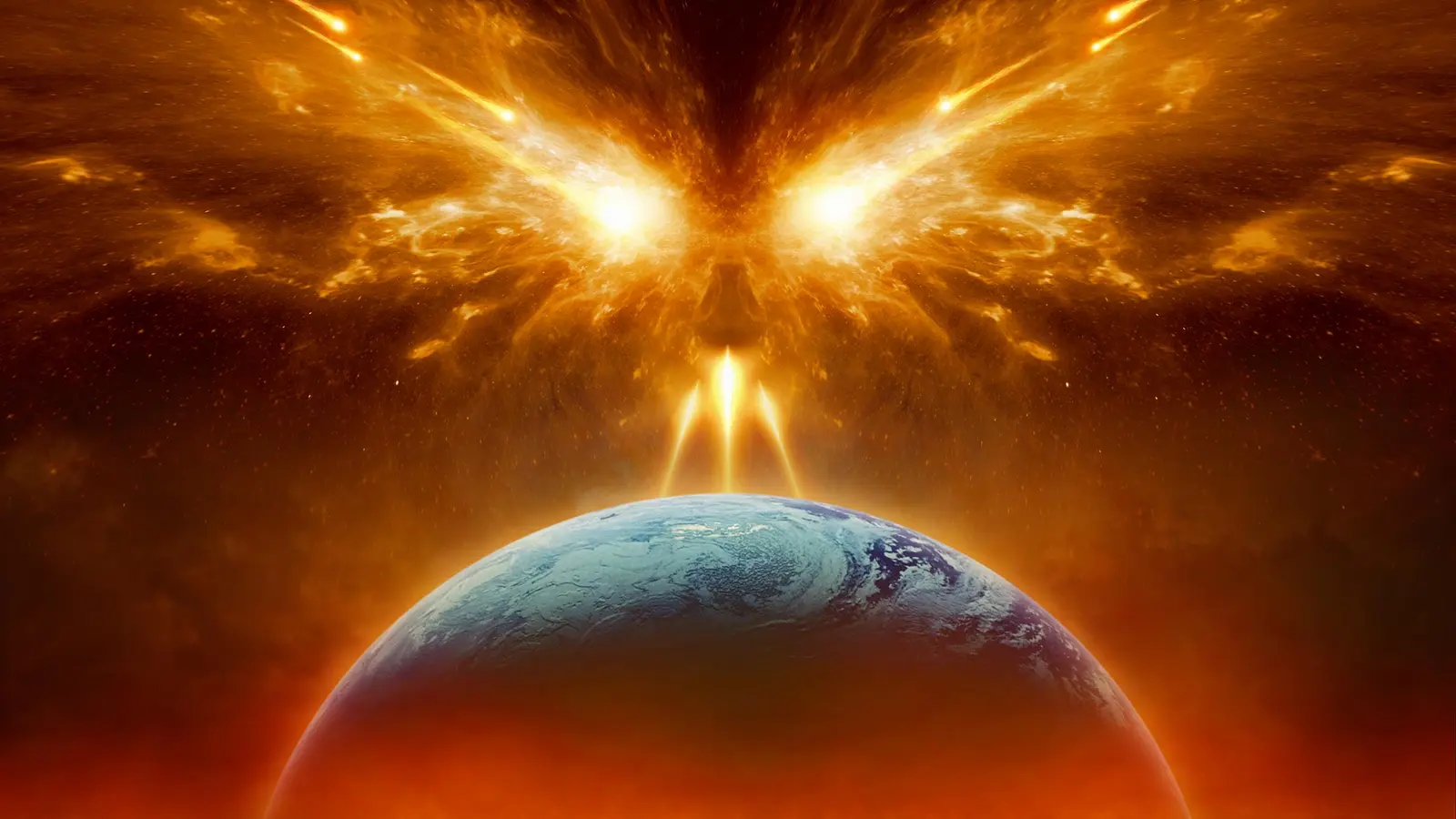
Picture a sober paper in one of the world’s leading journals announcing a date for humanity’s end. No drama, no fireworks—just a headline: Doomsday: Friday, 13 November, A.D. 2026. That was the reality in 1960, when Heinz von Foerster and two students published a mathematical projection that read more like a magic trick than a sober demographic forecast.
The claim was audacious. Their math suggested human population growth was not merely exponential but accelerating toward a vertical cliff—an apparent singularity where numbers would shoot toward infinity and, in von Foerster’s chilling line, people would be “squeezed to death.” It was provocative. It was also elegant; the model fit historical population estimates astonishingly well for a surprisingly long stretch.
Why did the paper gain such traction? Partly because of timing. The mid-20th century brimmed with anxieties about resources, food, and the limits of a finite planet. Partly because the argument tapped a simple, vivid image: a curve bending so steeply that society could not possibly cope. And partly because von Foerster was an unlikely showman—at times a stage magician—who knew how to frame a scientific narrative so it landed with maximum effect.
Yet the history that unfolded is a lesson in how predictions meet the messy, adaptive world. For decades the doomsday equation popped up in textbooks, policy debates, and even court cases. It was cited in environmental debates, used as rhetorical ammo in industrial hearings, and referenced by demographers who found the fit of the model impressive. Then, around the early 1990s, the world began to deviate from that projected cliff.
The reason was surprisingly mundane: birth rates fell. Dramatically. Fertility declined in many regions as education and urbanization spread, as contraceptives became more available, and as social and economic incentives shifted. Families got smaller. Demographic momentum continued to drive population increases for a while, but the curve bent. The forecast of a November 2026 singularity quietly slipped into obsolescence.
Does that mean the original work was worthless? Far from it. The paper did what good provocations sometimes do: it jolted the conversation. Its mathematical backbone forced researchers to confront assumptions about growth and to refine models. It shone a spotlight on the conditions that amplify population growth—and those that dampen it.
There is also a rhetorical lesson embedded in the episode. Scientists are storytellers as well as analysts. Von Foerster wrapped empirical claims in a narrative package: a crisp date, a memorable image, and a warning that compelled newspapers and public forums to pay attention. The trick worked because the substance held up long enough to fuel debate, but the oversimplified headline outlasted the nuance.
So what should a reader take away? First: mathematical elegance doesn’t guarantee permanence. Models are mirrors of assumptions as much as of data. Second: human societies change. Social norms, technology, and policy can—and do—alter demographic trajectories in profound ways. Third: sensational framing can accelerate uptake of an idea, for better or worse.
We will almost certainly wake up on November 13, 2026 with the planet very much intact. That fact does not make the von Foerster episode irrelevant. It is a case study in scientific communication, in the limits of projection, and in how human adaptability can reshape predictions that once seemed carved in stone.
In the end, the story of the 1960 doomsday forecast is less about a failed apocalypse and more about the unpredictable interplay between mathematics, media, and human behavior—one more reminder that numbers tell stories, but people decide which stories come true.


Leave a Comment
Comments
No comments yet. Be the first.