
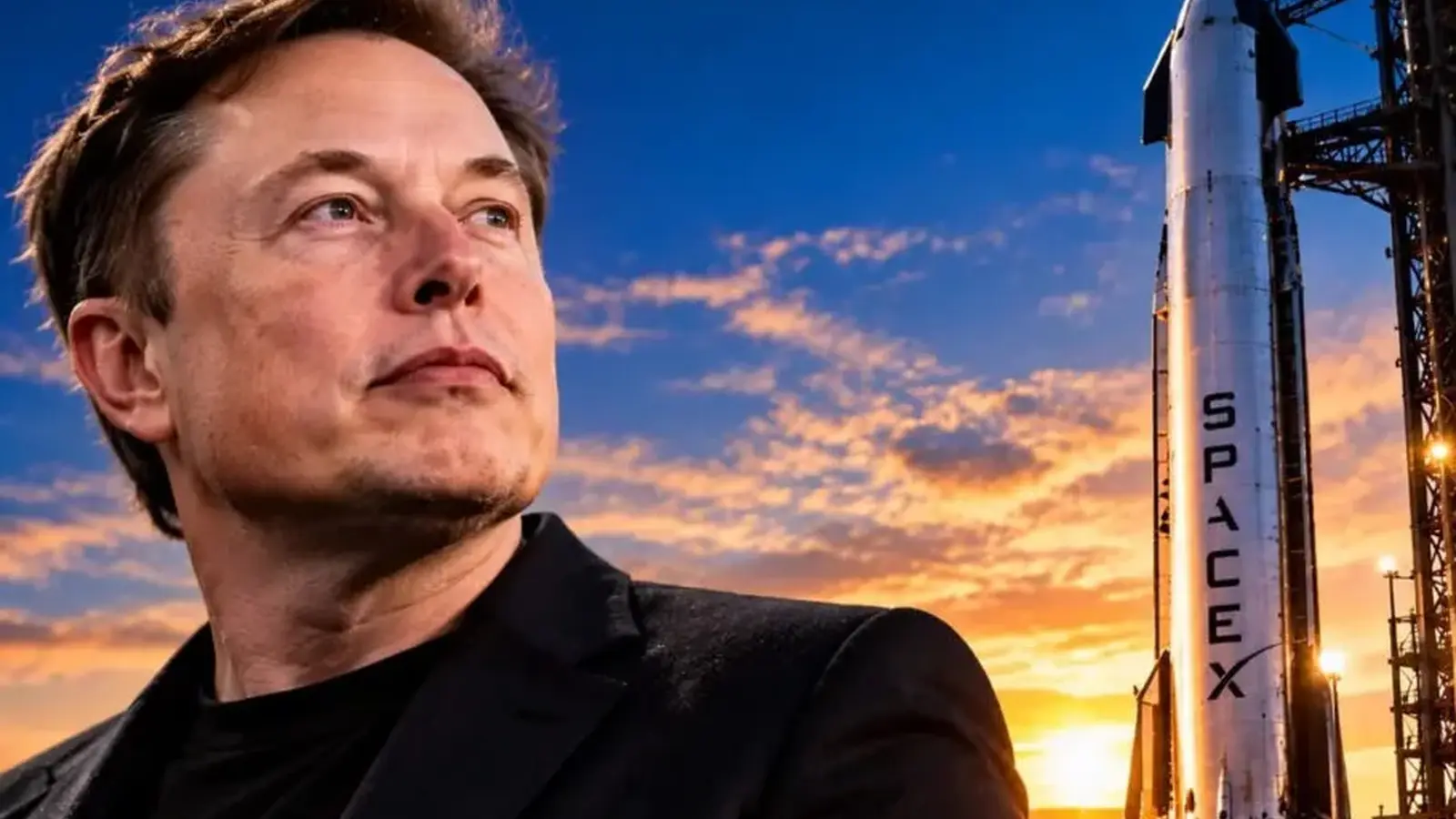
Imagine a single company swelling to a size that dwarfs the entire planetary economy. It sounds like science fiction, but Elon Musk recently sketched exactly that possibility.
On X, Musk wrote that he can see a path where SpaceX's value is "many times" greater than the current global economy. Short, provocative. Loaded with implication. And immediately, people started doing the math and asking hard questions.
For context: the IMF estimated global GDP at market exchange rates at roughly $126 trillion this year. By contrast, some market tallies placed SpaceX near $2.2 trillion at the end of trading last Thursday, a gap of about 57-fold between the current company valuation and the size of the entire global economy.
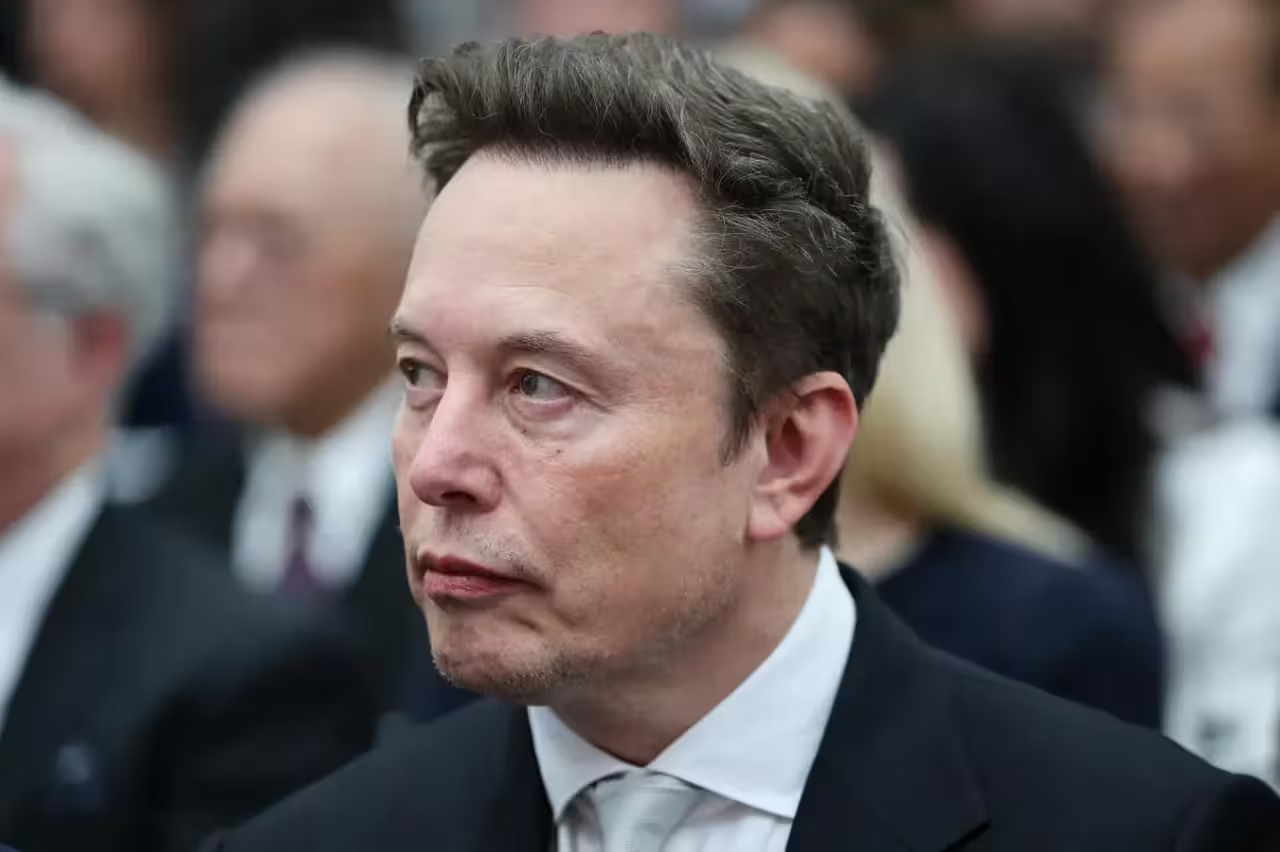
Musk's language implies a valuation not just in the trillions, but into the quadrillions — an order of magnitude that would require expanding economic activity well beyond Earth itself. Predictably, the remark drew skepticism and snark. Prominent YouTuber Zack Nelson of JerryRigEverything tweeted a curt two-word jab: "stock price manipulation," suggesting the claim could be a publicity ploy to inflate perceived value.
Musk answered that seeing a path is not the same as a promise. He said, essentially: the path exists and the probability of reaching it is not zero. A subtle hedge. A reminder that ambition and certainty are different animals.
The company’s recent results add texture. SpaceX reported about $7.8 billion in revenue for the second quarter, roughly 92 percent higher than a year earlier, while narrowing its net loss to $541 million from about $1 billion the prior year. Those figures point to fast growth — but they are tiny compared with Musk’s most audacious projection.
In August, Musk told Wall Street that internal forecasts envision annual revenues of $1 trillion by 2030, with the possibility of hitting that mark as early as 2029. But even if SpaceX reaches $1 trillion and later multiplies that income by 100 to hit $100 trillion, analysts note that figure would still be a sliver compared with valuations in the many-quadrillion range Musk hinted at.
So what would have to change for his vision to make sense? Russ Mold, investment director at AJ Bell, framed Musk’s idea plainly: the company would have to found off-world colonies or new human settlements that unlock vast stores of minerals, energy, and productive capacity beyond Earth’s constrained resources. In short: you need whole new economies.
Ipek Ozkardeskaya, senior analyst at Swissquote, pointed out the enormous caveat in that scenario — the cost. Getting people, infrastructure, and industry to other worlds is staggeringly expensive. Musk hasn’t laid out who picks up that tab, or how long the payoff horizon might be.
SpaceX’s future value depends less on rhetoric and more on turning interplanetary ambition into sustainable, profitable activity — a project that will take time, capital, and a tolerance for extraordinary risk.
Vision or hyperbole? The debate will play out in rocket launches, balance sheets, and the votes of investors. Who’s willing to buy a ticket for that long ride?

Leave a Comment
Comments
No comments yet. Be the first.