
Imagine a map of pain drawn across the human body — not by doctors, but by millions of lived experiences. That is what a sweeping global study has done, and its contours are striking: women consistently report more pain than men across nearly every part of the body.
Researchers pooled data from more than 6 million people in 118 countries, spanning ages 5 to over 100 and covering the period from 1990 to 2025. The aim was simple but ambitious: track how pain, the world’s leading cause of disability, is distributed across places and lifetimes. The result reads like a narrative of aging and gendered vulnerability.
The team divided the body into 11 regions — head, face, neck/shoulder, arm/wrist, elbow, chest, back, abdomen, pelvis, hip, and knee — and asked how often people reported pain in each area. Women reported higher rates in every one. Headache, facial pain and abdominal pain showed the largest differences. In raw numbers, roughly 40 percent of participants reported back pain, while facial pain was the rarest complaint at about 2 percent.
Patterns over the life course were nuanced. Pain tends to accumulate with age, but not all pain behaves the same. The steepest rise in many pain types happens before age 55, and overall pain prevalence reaches its highest point around age 75 and older. Yet the most disabling pain forms follow an inverted-U: climbing through midlife into early old age and then declining.
Different pains peak at different times. Headaches, abdominal pain and facial pain hit their highest rates earlier in life and then drop. Musculoskeletal troubles tell another story. Upper-body aches — neck, shoulder and elbow — peak in midlife and then ease. Lower-body burdens — back, hip and knee — steadily increase with age, becoming more common as people get older.

Intensity and distribution matter too. Severe pain tended to peak near age 50; widespread pain — the kind that spreads over large areas of the body — was most common around age 70. In short: when pain becomes most disabling doesn't always line up with when it's most prevalent.
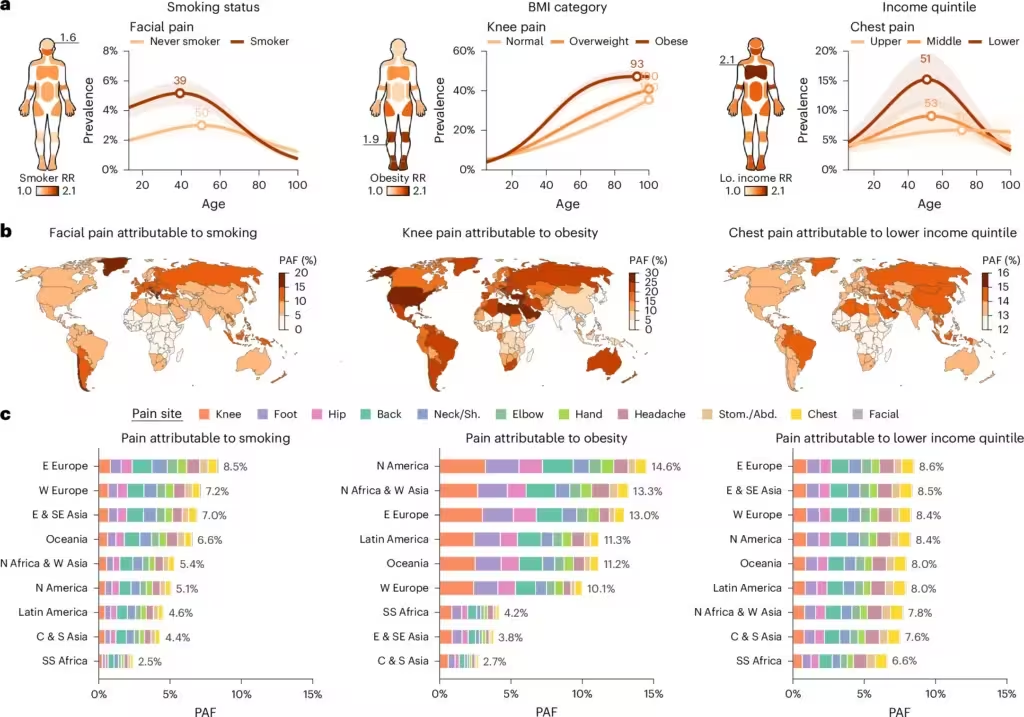
What drives these patterns? The study quantified the combined contribution of three modifiable factors: smoking, obesity and low household income. Together they explained about 18.3 percent of the global pain burden. That share varied widely, from roughly 12.6 percent in sub-Saharan Africa to 27.1 percent in Eastern Europe.
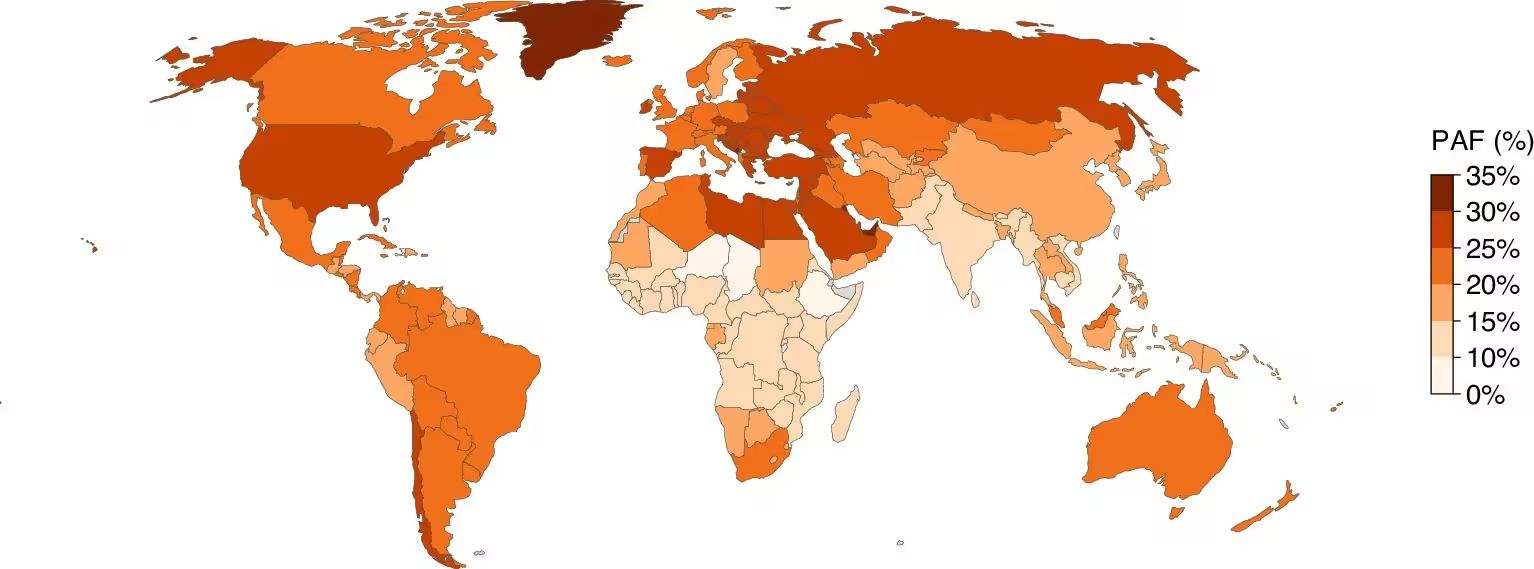
Region-specific estimates reveal different levers for intervention. For instance, smoking accounted for about 6.6 percent of pain in Oceania, 2.5 percent in sub-Saharan Africa and 8.5 percent in Eastern Europe. Obesity’s contribution ranged from around 2.7 percent in Central and South Asia to 14.6 percent in North America, with Oceania at roughly 11.2 percent. Low household income was linked to about 8 percent of pain globally, with regional variation between 6.6 and 8.6 percent.
Women reported higher pain in every one of the 11 body regions studied — a consistent and global signal that demands attention.
The findings, published in Nature Medicine, do more than catalogue differences. They point to where public health action could reduce suffering: smoking cessation, obesity prevention and economic support would likely lower a measurable slice of the pain burden. But deeper questions remain. Why do women report more pain across such diverse anatomic sites? How much is biological, how much social, and how much due to unequal access to care?

Answers will need multidisciplinary work — clinicians, epidemiologists, sociologists and policymakers — to untangle causes and craft interventions. For now, the study offers a clear, human-sized account: pain is widespread, gendered, and shaped by social and behavioral factors that we can change if we choose to do so.

Leave a Comment
Comments
No comments yet. Be the first.