
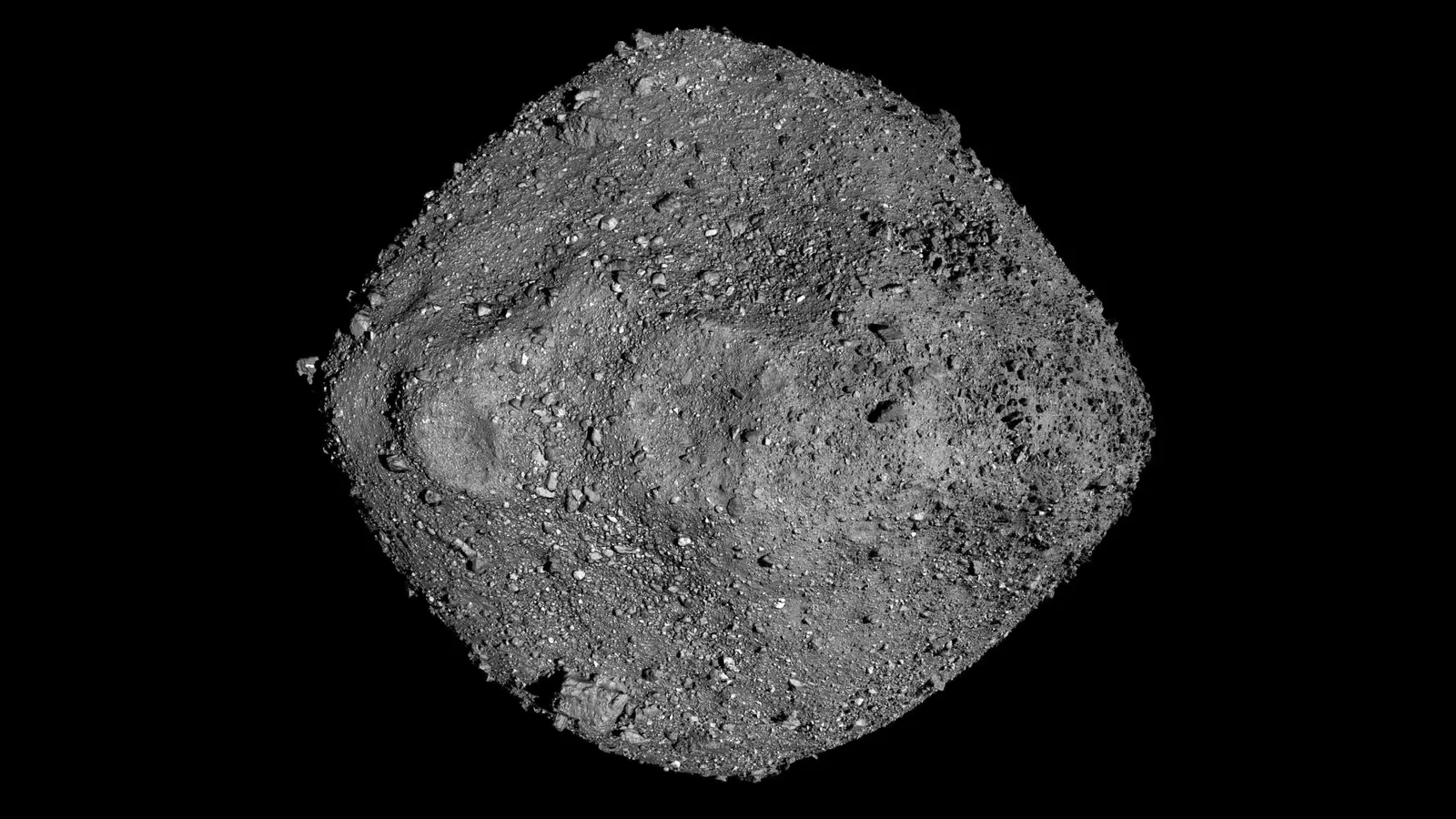
The capsule that landed in Utah in September 2026 carried something more than dust: it delivered a time capsule from the solar system's infancy. OSIRIS-REx returned roughly 120 grams of surface material from the near-Earth asteroid Bennu, and those grains have begun to rewrite where some of our most primitive building blocks likely formed.
Short answer: not out past the comets. The isotopic makeup of Bennu's material points to a birth nearer the young Sun, close to the boundary where water vapor froze into ice. That boundary, known as the water-ice line, seems to have been a mixing bowl where inner-disk dust and outer-disk ice-rich particles met and stuck together.
How did scientists figure that out? A tiny parcel of the sample, half a gram, went to ETH Zurich. There, Maria Schönbächler and her isotope geochemistry team measured the relative proportions of iron, titanium, and chromium isotopes. Isotopes act like a cosmic fingerprint. Slight shifts in their ratios lock in the signature of the reservoir where a rock first condensed out of the solar nebula.
The result was unexpected. Bennu's isotopic profile lines up closely with asteroid Ryugu and with CI carbonaceous meteorites collected on Earth. These three share a rare chemical fingerprint that distinguishes them from most other known asteroids and planetary materials. In plain terms, they seem to be cousins brought up in the same part of the protoplanetary disk.
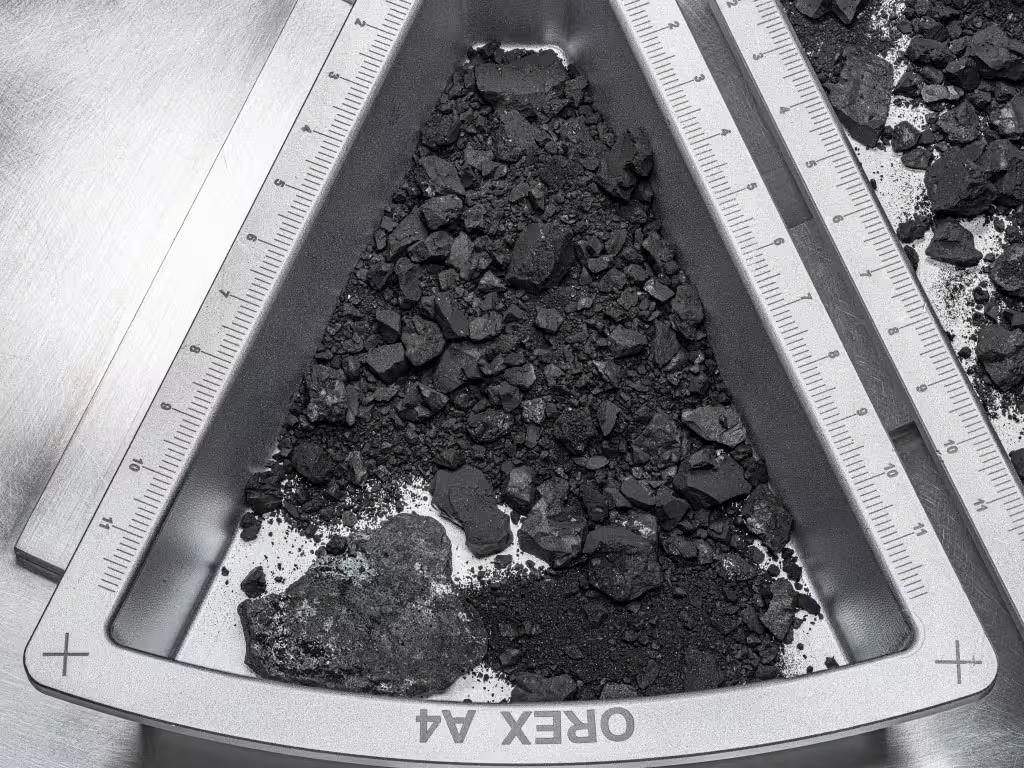
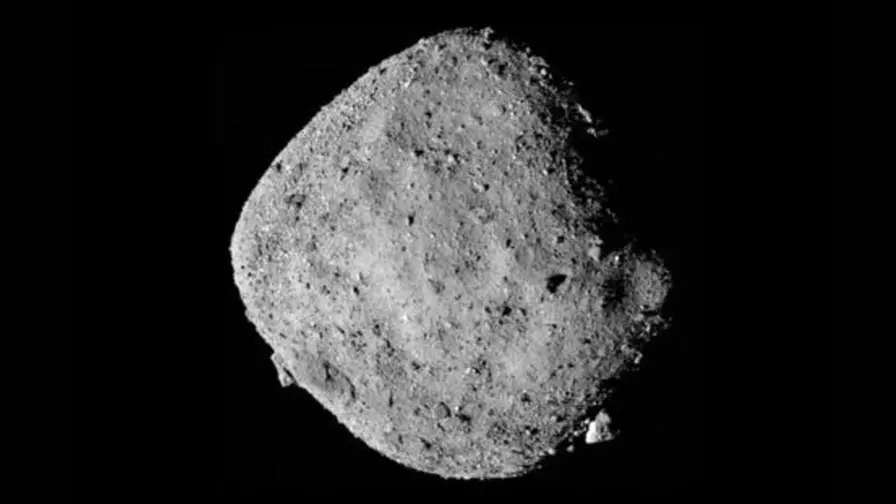
Half a gram of this material was sent to ETH: a sample from the asteroid Bennu.
Why does that push the origin story inward instead of outward? Picture the early solar disk as a layered scene: hot and rocky grains near the Sun, icy grains farther out. Where the temperature dipped enough for water to freeze, dynamics changed. Ice could glue together the tiniest dust grains and, crucially, material from both inner and outer zones could mix there. That blend fits Bennu's hybrid chemistry — neither purely inner nor purely outer solar system.
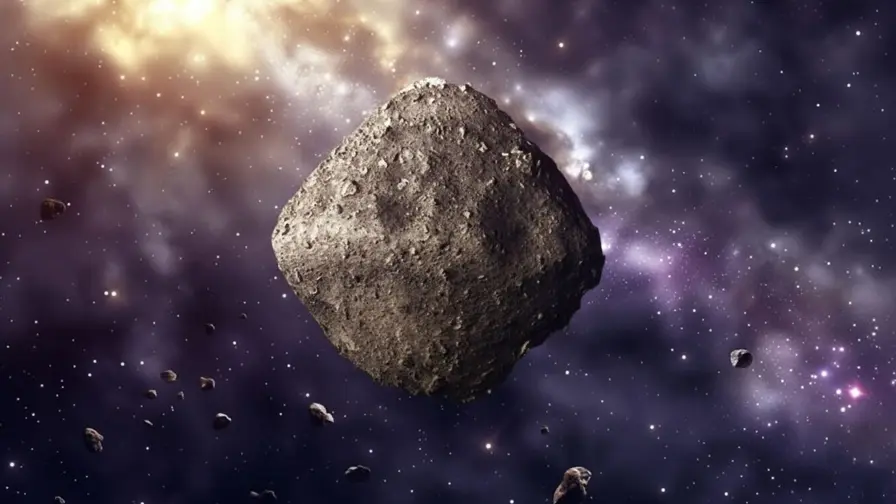
And then there was Jupiter. The gas giant grew fast, perhaps within a million years of the Sun's birth. Once massive, Jupiter could shepherd the flow of solids through the disk, acting like a sieve for coarse pebbles while letting fine dust slip past. The working idea is simple: coarse particles get blocked or trapped farther out, while fine dust threads its way across Jupiter's wake. Those fine grains, mixed from different radial zones, could accrete near the water-ice line and make bodies like Bennu and Ryugu.
Bennu may therefore represent a sample of the original elemental mix that later assembled the terrestrial planets. Short grains. Long timescales. A planetary-scale blender with Jupiter as the spoon.
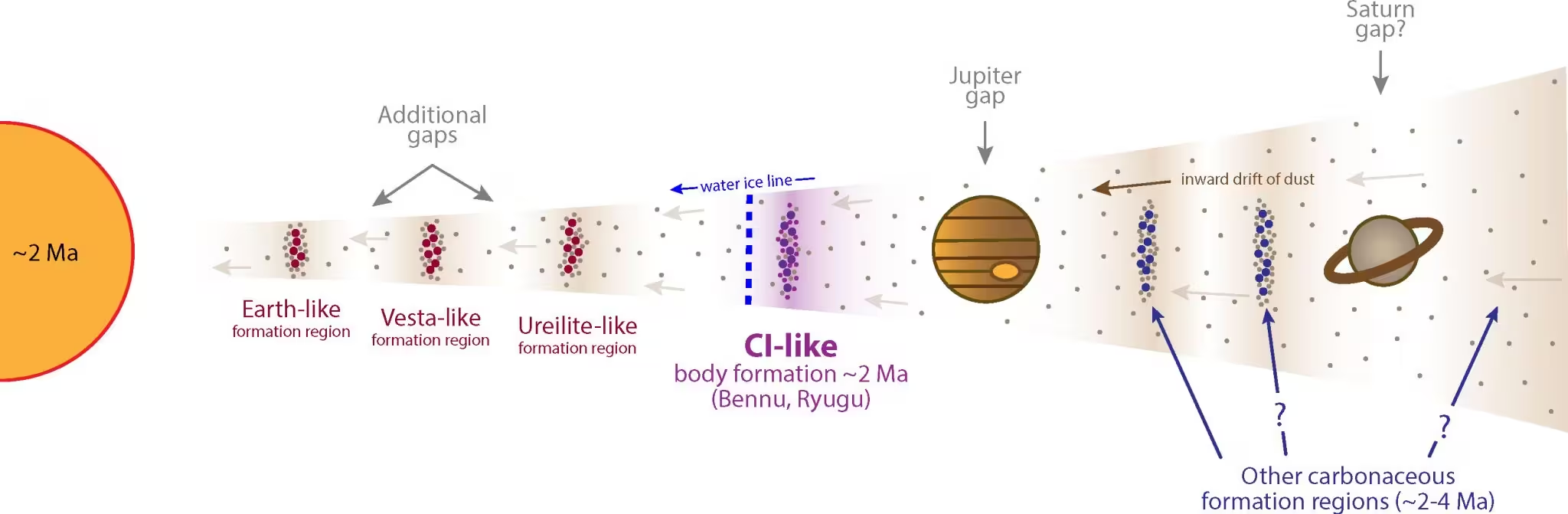
Dust rings as regions of formation for various celestial bodies in the protoplanetary disc orbiting the Sun.
That blender also helps explain why Bennu is water-rich. Ice near the boundary can vaporize and recondense locally, loading the region with water-bearing material that later becomes part of emerging asteroids. Add organic compounds, and you have a recipe that matters for questions about how Earth acquired some of the ingredients for life.
But the picture is not finished. How decisive was Jupiter's filtering action? Were Bennu and Ryugu exceptional outcomes or snapshots of a common formation pathway? The isotopic trail is compelling but incomplete. Scientists are now racing to see whether other small bodies share the same fingerprint or whether this is a quirk of only a few parent bodies.
More sample returns will help. After the Bennu analysis, Schönbächler is already eyeing a Japanese mission to Phobos, Mars' moon, with plans to request a share of its returned material for isotopic tests. That capsule won't come back until 2031, so patience remains part of planetary science.
In the meantime, those 120 grams from Bennu are doing more than fill a lab bench. They are forcing researchers to rethink where certain primitive materials formed, how planets accumulated water, and what role giant planets played in sculpting the early solar system. Questions now arrive with sharper edges, and each tiny grain brings us a little closer to answering them.

Leave a Comment
Comments (1)
whoa, tiny grains rewriting where planets got their water? mind blown. that Jupiter sieve idea is wild, if true our whole story flips. need more samples...