
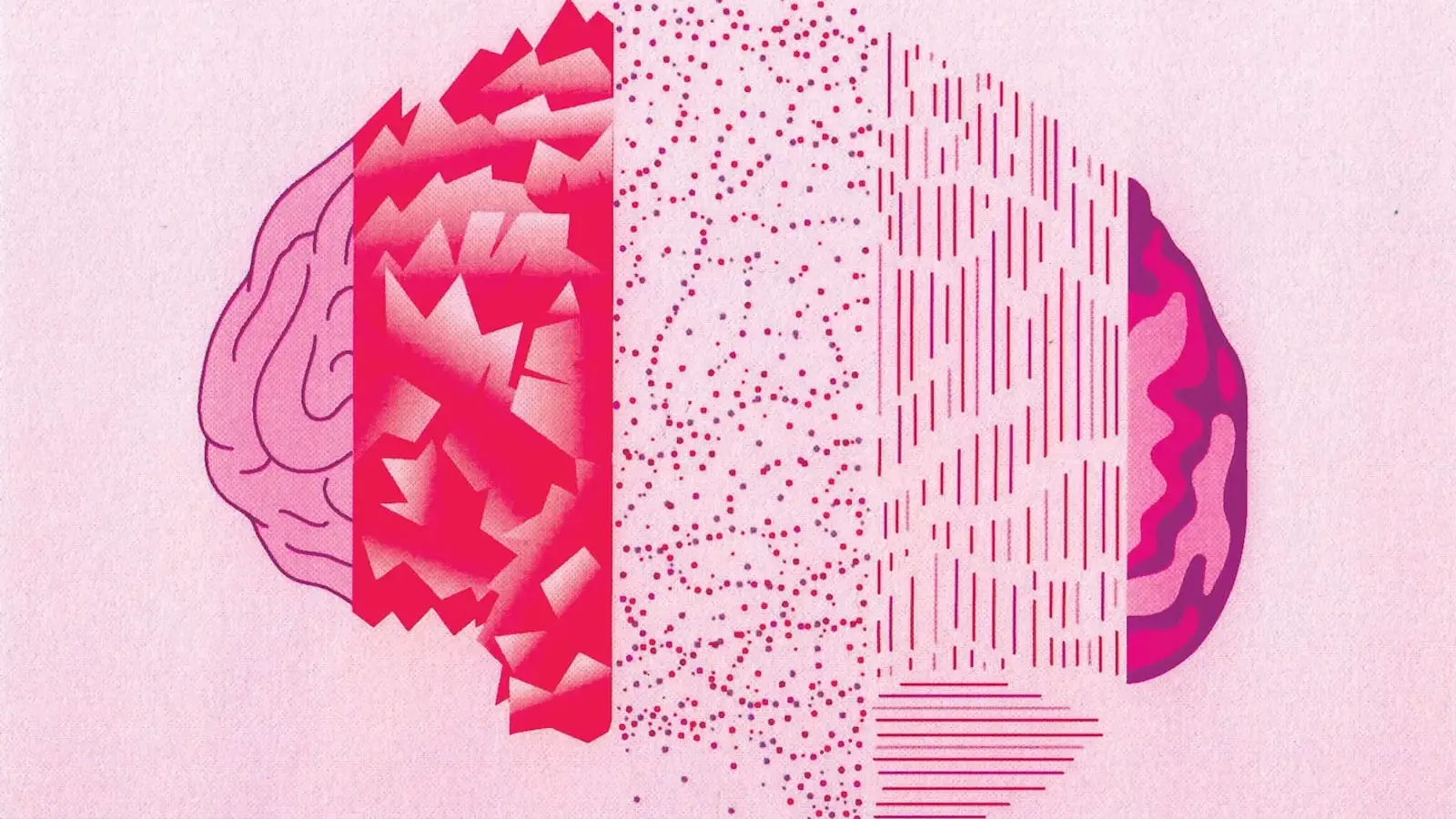
Imagine expecting a shrinkage in gray matter every time a woman's hormones shift — and finding, instead, a pause. That was the unexpected turn from a recent MRI study that tracked how the female brain remodels across three major hormonal milestones: first periods, pregnancy, and the menopause transition.
Researchers analyzed 1,095 longitudinal brain scans drawn from two large datasets, including cohorts from Leiden University and the UK Biobank. They set out to compare structural changes during menarche, pregnancy and the shift into menopause using the same analytical lens. The patterns were not the same.
Girls scanned before and after their first menstrual cycle showed widespread reductions in cortical gray matter volume. Pregnant women likewise displayed notable regional decreases in gray matter — echoing previous findings that pregnancy can trim overall brain volume by roughly four percent. But pregnancy’s shrinkage has been read by scientists not as damage but as large-scale neural reorganization: the brain rearranges itself, pruning some tissue while refining circuits.
Menopause told a different story. Women who were premenopausal at the first scan and postmenopausal by the second scan did not show the clear cortical gray matter loss that marked puberty and pregnancy. Instead, their scans implied a relative flattening of the typical age-related decline in gray matter volume. Women who remained premenopausal across both scans — and those already postmenopausal at both time points — did show the expected slow decline with age.

The menopause transition did not produce the dramatic gray matter loss seen at other life stages; it may temporarily slow the usual age‑related decline.
That is not the same as saying menopause boosts brain health. Far from it. Many women report forgetfulness, disrupted sleep, mood shifts and the infamous "brain fog" during the transition. Structural MRI snapshots can reveal changes in tissue volume, but they cannot tell us whether those differences improve cognition, increase dementia risk, or simply reflect shifts in blood flow, hydration, or neural connectivity.
Experts urge caution. Susana Carmona, who studies maternal brain health in Madrid, notes that the perimenopausal period can stretch for years. Capturing a woman’s brain at just two moments — the approach to menopause and a point after it — leaves the messy middle largely unobserved. Gradual ovarian changes and fluctuating hormones may nudge the brain in subtle, time-varying ways that two scans cannot fully resolve.
Mechanism remains an open question. Do hormonal shifts during the menopause transition ramp up neural plasticity for a spell? Or do they merely slow down cellular processes tied to typical aging? The structural data alone can’t decide. What the study does show is that the brain’s response to life-stage hormones is not monolithic. Puberty, pregnancy and menopause each leave distinct signatures.
Longer-term, denser studies are needed: repeated MRI measures across many years, coupled with detailed hormonal profiling and cognitive testing, would reveal whether the temporary stabilization of gray matter matters for memory, attention, or dementia risk. For now, clinicians and readers should resist easy headlines that either villainize or glorify menopause with respect to brain size.
Published in Nature Communications, this work reframes how scientists think about reproductive-age biology and brain aging. It also raises a practical question: if the brain pauses its shrinkage during menopause, what else might we learn by watching those pauses more closely?


Leave a Comment
Comments
No comments yet. Be the first.