
It glanced back at Earth, caught a last photograph, and then slung itself outward on a new path to Jupiter. On 28 September 2026 the European Space Agency’s Jupiter Icy Moons Explorer — JUICE — skimmed the fringes of our atmosphere and used Earth’s gravity to reshape its trajectory for the long cruise ahead.
At 13:45 CEST (11:45 UTC) the spacecraft passed just 8,640 km above the Indian Ocean. Cameras aboard recorded a rapid sequence of frames as JUICE sped away; one monitoring camera captured a striking view of our planet at 13:56 CEST, while the Navigation Camera photographed the Moon and even part of Madagascar at times bracketing closest approach.
.avif)
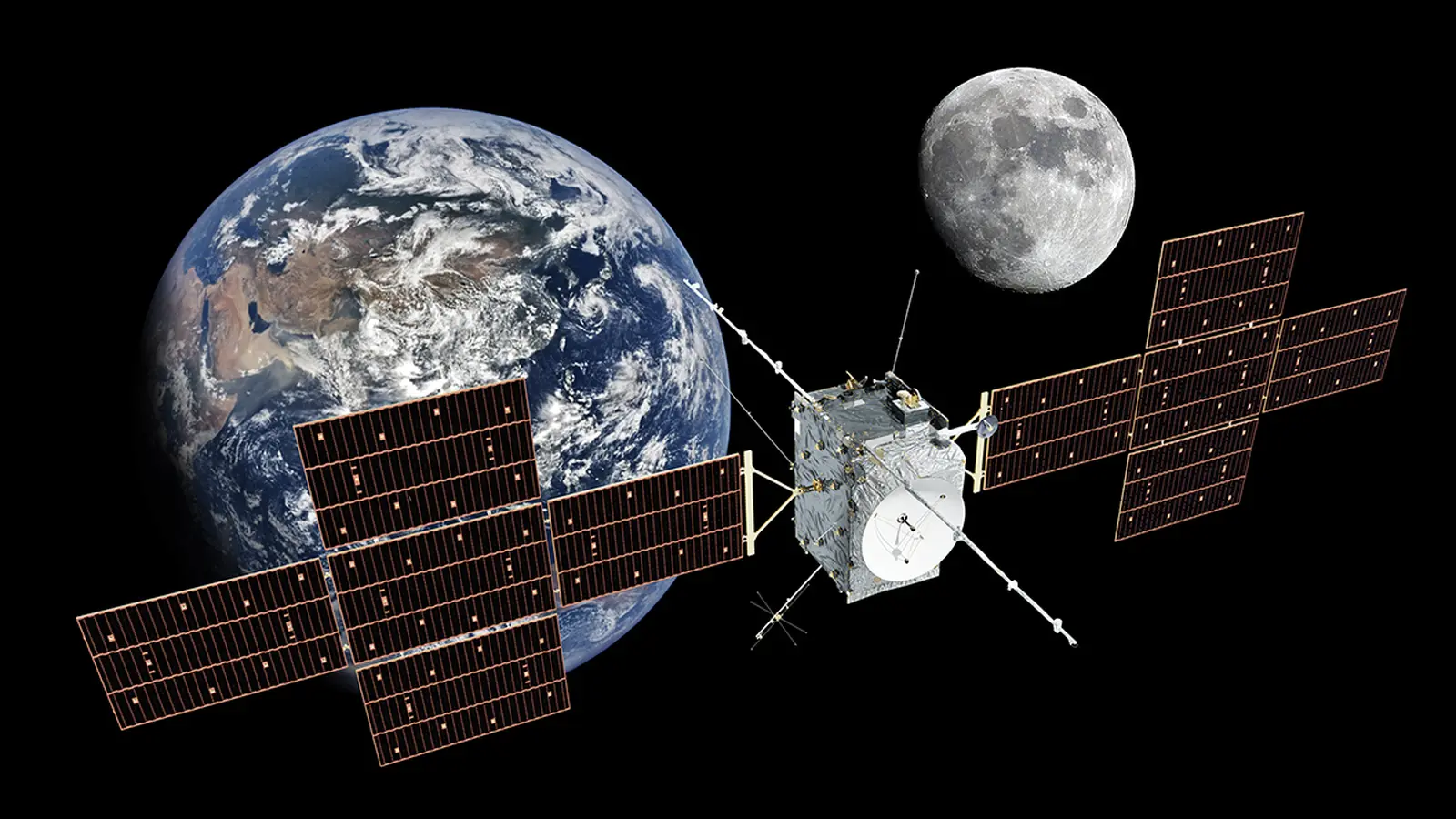
ESA’s Jupiter Icy Moons Explorer (JUICE) approaches Earth.
The gravity assist tilted Juice’s flight path by roughly 20 degrees and boosted its speed by about 3.5 km/s — a maneuver that saves precious propellant for the detailed science to come at Jupiter.
Precision was everything. Teams began heightened tracking on 17 August and tightened monitoring through 10 October, allowing controllers to exploit six pre-planned targeting opportunities while making only one small course correction in the final month. Why so careful? Because every litre of fuel saved now becomes additional observing time when JUICE reaches the Jovian system.
Beyond navigation, the flyby doubled as a practical dress rehearsal for the suite of science instruments. Earth offers a known target: spectral signatures, magnetic fields and charged-particle environments that mission scientists understand well. That makes our planet an ideal calibration yard before the more complicated and remote work begins around Ganymede, Europa and Callisto.
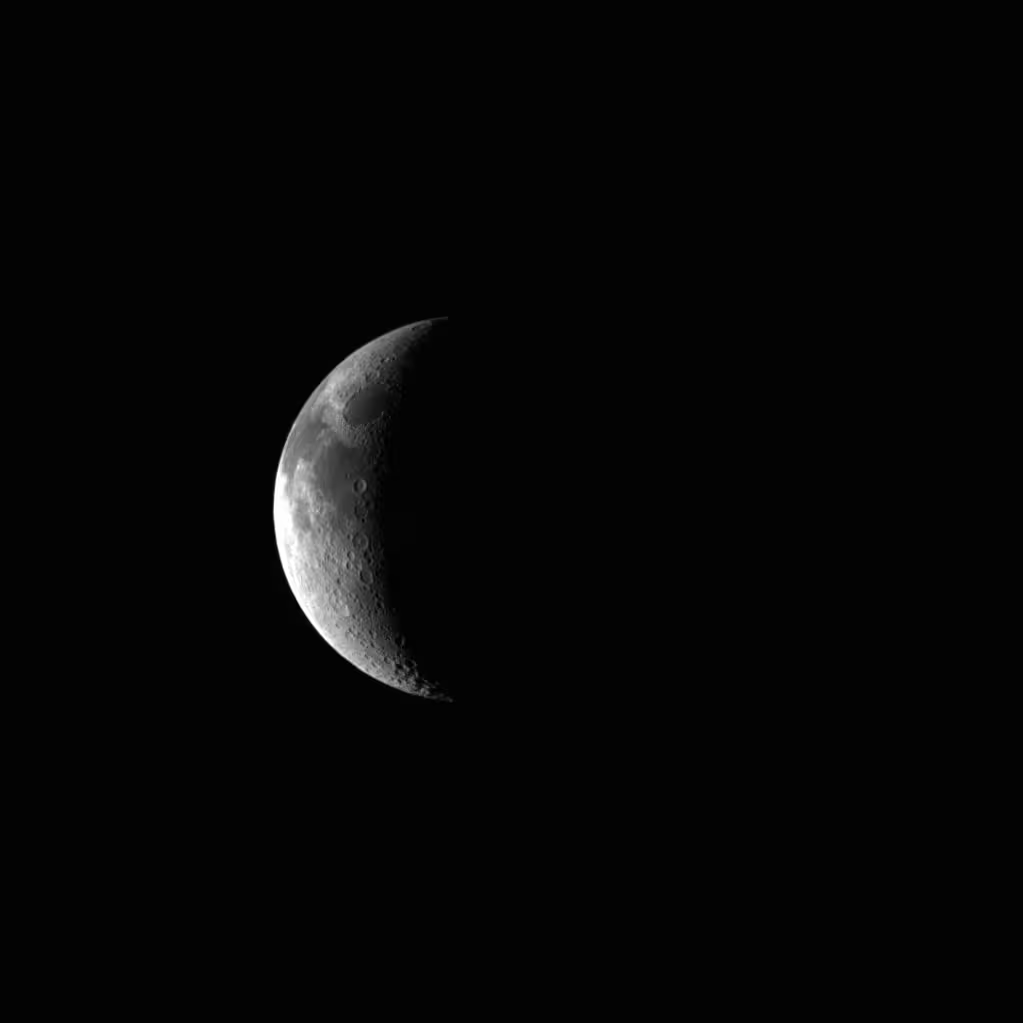
Navigation Camera (NavCam) of ESA’s Jupiter Icy Moons Explorer (Juice) captured this image of the Moon in the distance. It was taken at 03:27 CEST, about eight hours before Juice’s closest approach to Earth.
Instrument teams from ESA and partner centres choreographed the observations down to the minute, prioritizing measurements that would directly inform operations at Jupiter. Some tests had to wait; solar eclipses and battery-only periods forced choices about what to run and when. Still, the encounter provided a rare chance to validate hardware and data pipelines under real space conditions.

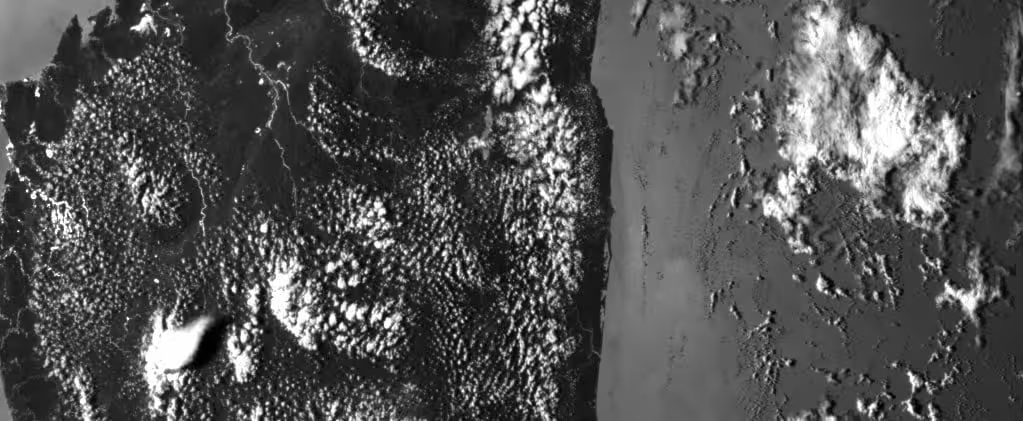
The Navigation Camera (NavCam) of ESA’s Jupiter Icy Moons Explorer (Juice) captured this image of part of the island of Madagascar. It was taken at 13:47 CEST, just two minutes after Juice’s closest approach to Earth. Juice’s closest approach was over the Indian Ocean, as the spacecraft was moving from east to west.
JUICE’s path also threaded through Earth’s magnetotail — the long magnetic wake blown away from the Sun — letting the spacecraft sample magnetic fields and energetic particles far from the planet. Simultaneous observations by the European–Chinese SMILE mission, which watched auroral and near-Earth activity, create a multi-scale view of how distant magnetotail dynamics connect to processes over the poles. That kind of coordinated, stereo-like measurement is unusually powerful for studying Earth’s space weather environment.
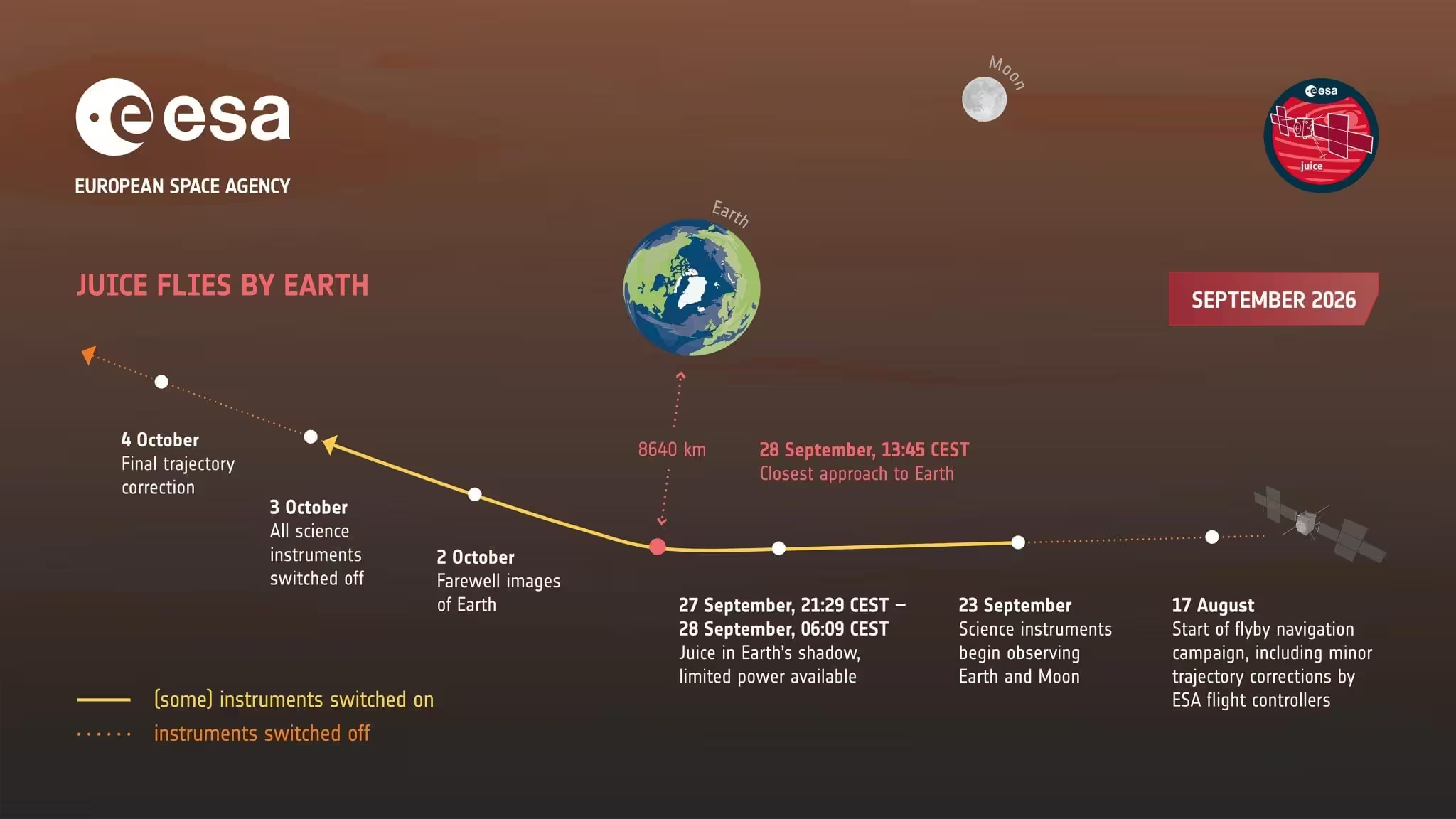
ESA’s Jupiter Icy Moons Explorer (Juice) returned to Earth on September 28, with flight controllers guiding the spacecraft close to our home planet to alter its speed and direction en route to Jupiter.
Data downlink and instrument-team analysis will take days to weeks, but scientists expect to release high-resolution images and spectra soon, including JANUS camera frames showing Earth and the Moon in crisp detail. Each dataset will be examined not just for its immediate science value, but for what it teaches operators about instrument performance en route to Jupiter.
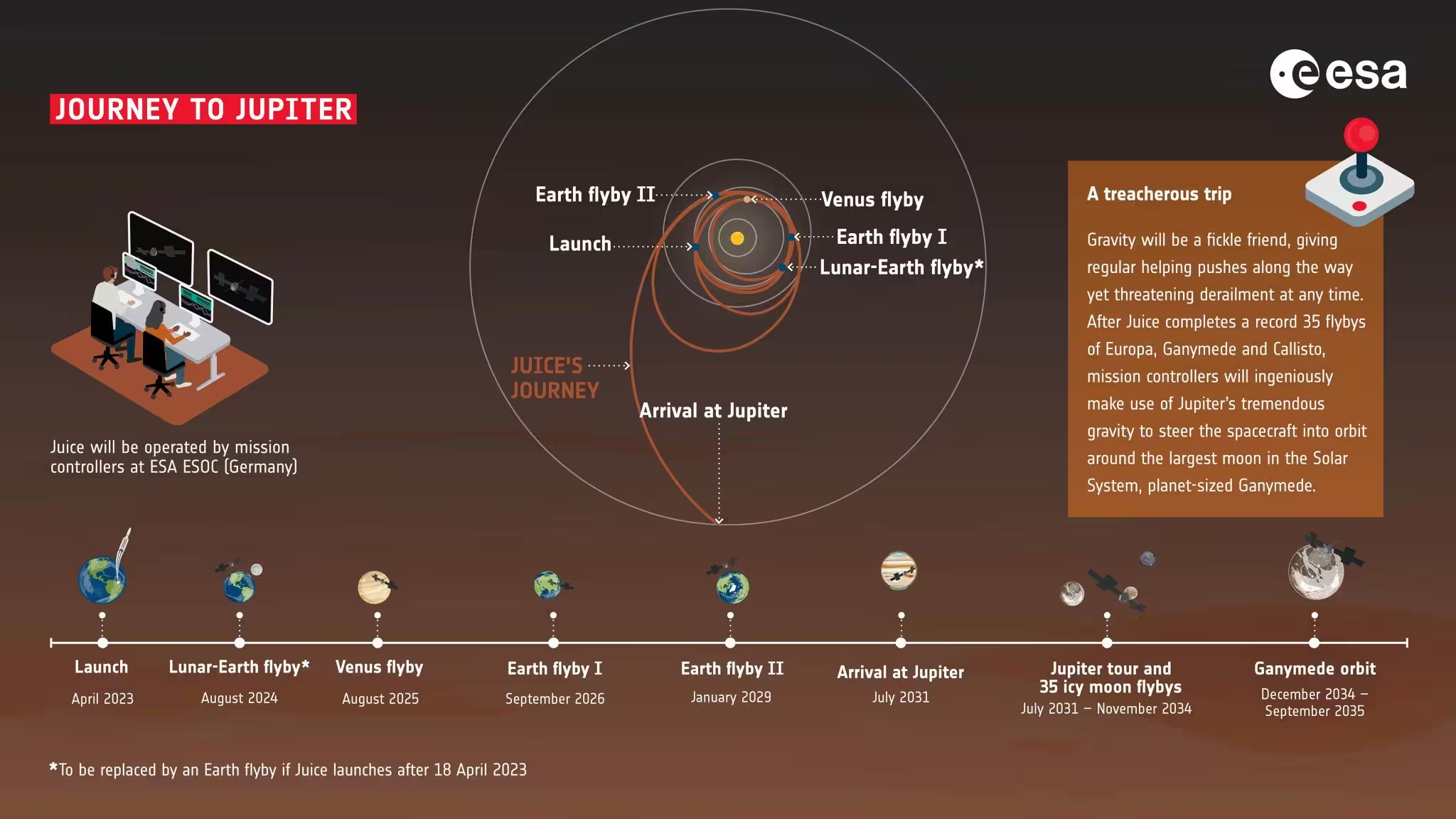
Juice will make three Earth flybys during its cruise: one of the Earth-Moon system in August 2024, one of Earth in September 2026, and once again one of Earth in January 2029. In total, Juice will spend approximately eight years cruising to Jupiter. It will reach Jupiter in July 2031, but will already begin making scientific observations six months before entering orbit around Jupiter.
JUICE’s journey is a marathon of gravity assists: three Earth flybys across the cruise — an initial Earth–Moon assist in August 2024, this 28 September 2026 pass, and a final Earth swing in January 2029 that will set the spacecraft on its final approach. Launched from Kourou in April 2023 on an Ariane 5, JUICE will arrive at Jupiter in 2031 after roughly eight years of careful navigation and observation. Once there, the mission will perform some 35 close flybys of the giant moons and ultimately enter orbit around Ganymede.
This flyby is more than a navigational nudge. It’s a concentrated rehearsal, a science testbench, and a reminder that even on a voyage to the outer Solar System, Earth is still an essential laboratory for preparing missions to explore distant worlds.


Leave a Comment
Comments (1)
wow, seeing JUICE snap Earth then head to Jupiter gives me chills. that Moon pic tho... tiny and lonely. fuel-saving math = pure genius, fingers crossed!