
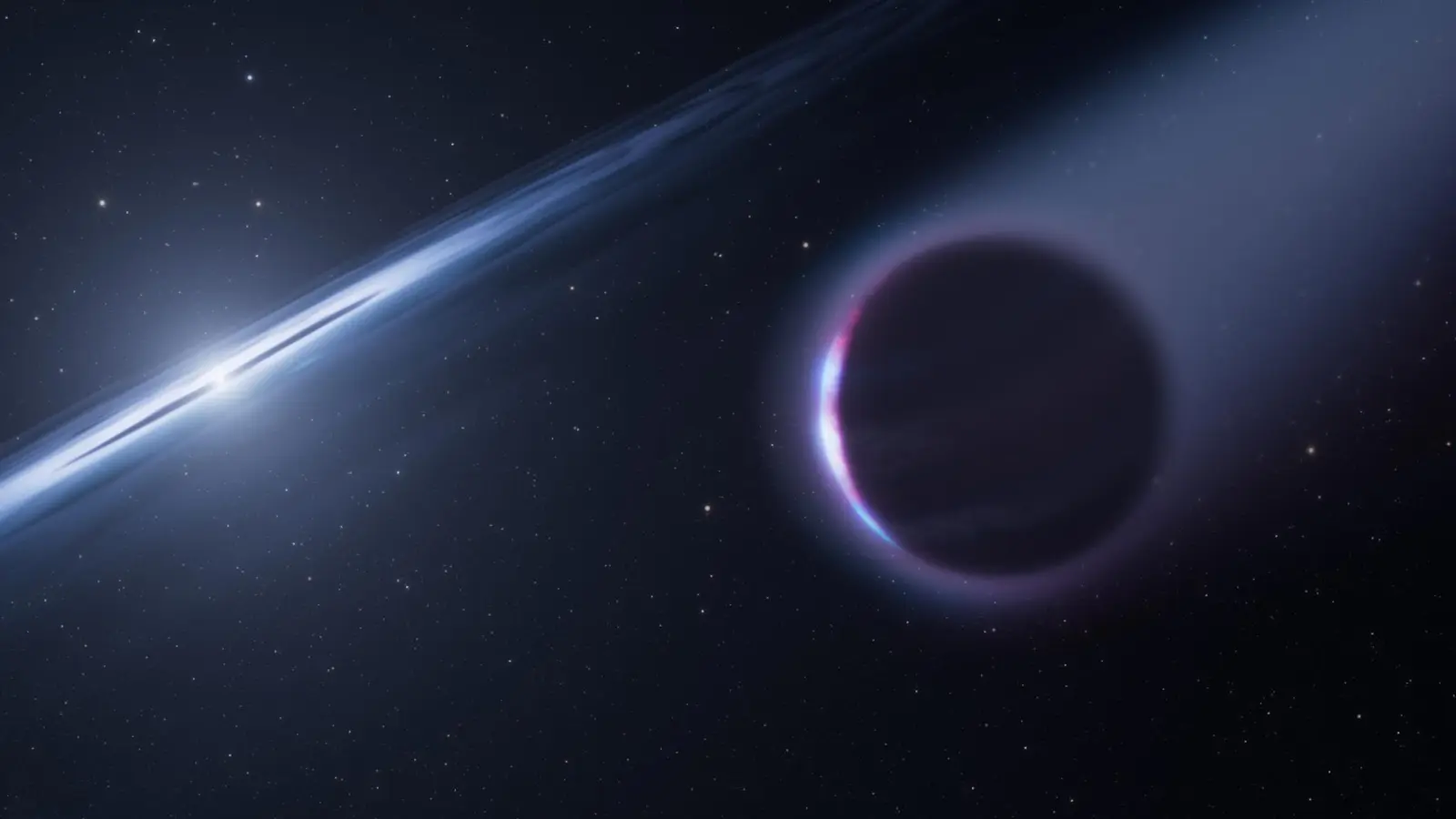
Imagine a world born from a star's last gasp. Strange, but that is exactly the scene astronomers now suspect around the white dwarf HS 0209+0832.
When Hubble trained its ultraviolet eye on this stellar remnant in 1999, the spectrum returned more mysteries than answers: roughly a hundred spectral features that didn't match known lines. For two decades those anomalies sat in the archive like fingerprints at a cold case crime scene. Recently, a fresh reexamination paired with updated atomic databases revealed a surprising culprit—strong signatures of niobium, an element rarely seen in white dwarf atmospheres.
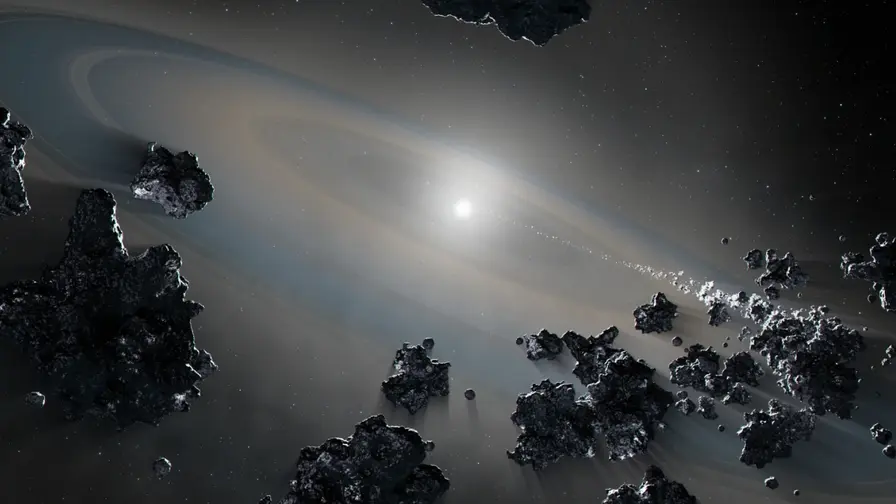
Niobium is not forged in ordinary stellar cores. It needs the extreme conditions that appear during a star’s violent death. That fact flipped the usual narrative. Instead of the white dwarf merely marking the end of a planetary story, the chemical clues imply that the star’s own ejected innards may have reassembled into something new: a second-generation planet formed after the star died.
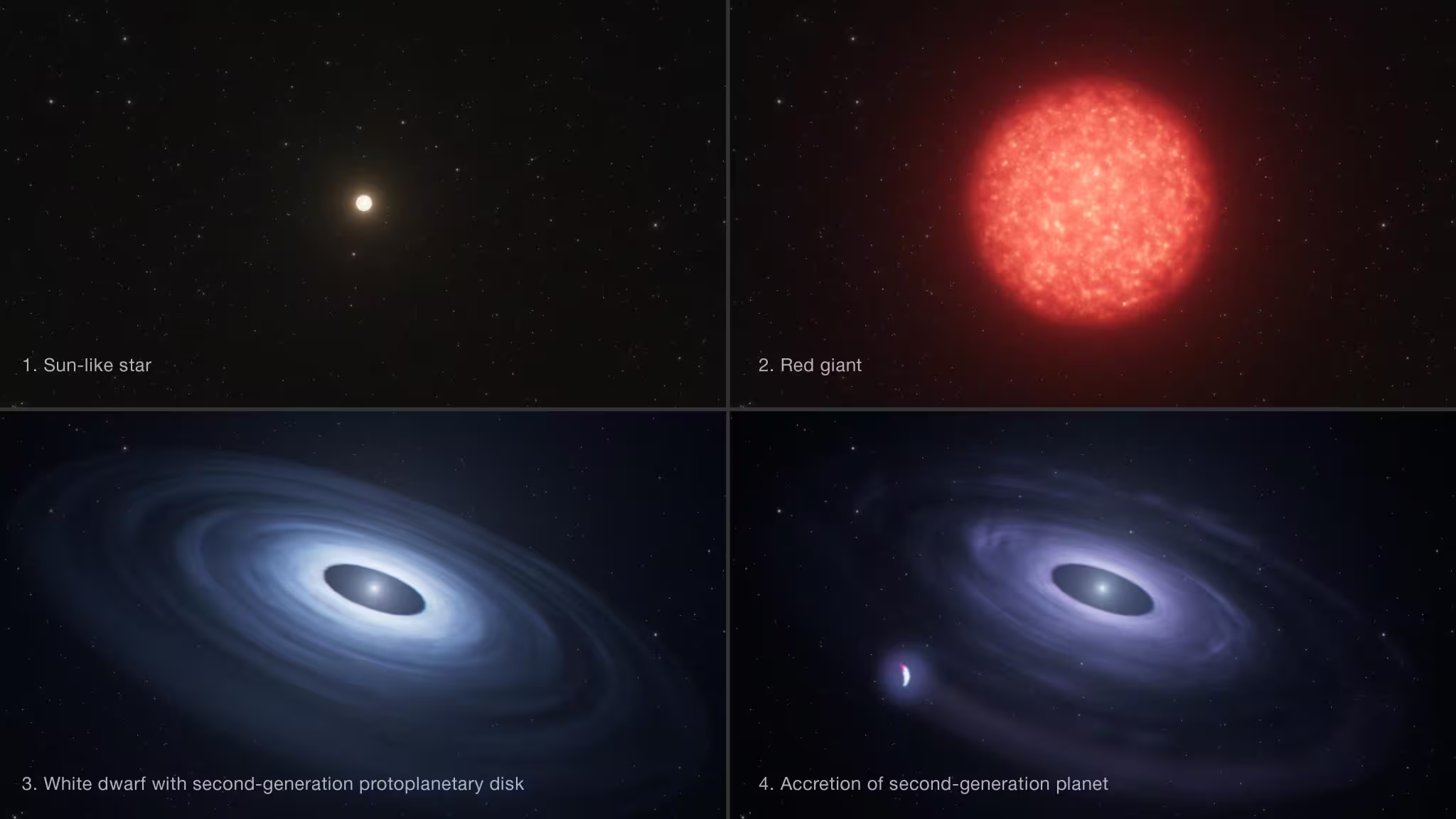
This artist’s concept, not to scale, imagines the evolution of a Sun-like star (1) into an aging red giant (2) and then a small, bright white dwarf surrounded by a disk of its expelled outer layers (3), from which a second-generation planet forms (4).
How does that work? Picture a Sun-like star puffing off its outer layers as it runs out of fuel, leaving behind a hot, dense core. Some of that expelled material can linger, cool, and clump into a disk. Over time, pockets in the disk collapse and accrete, much like the solar nebula once did. The difference is timing and chemistry. This second-generation material carries products of late-stage nuclear reactions—heavy elements such as niobium—that ordinary, first-generation planets do not inherit.
Archival data from NASA’s retired FUSE mission backed up Hubble’s finding, showing consistent niobium features. Then TESS added another piece: months of precise brightness monitoring captured recurring dimming cycles. The pattern suggests a companion circling extremely close—on the order of six million kilometers from the white dwarf, far inside where Mercury orbits our Sun.
All signs point to a gas giant roughly the size of Jupiter, but not a healthy one. The white dwarf is still very hot, and its radiation can strip a nearby planet’s atmosphere. The result: a planet shedding gas that could form a comet-like tail or a transient disk around the star. Some of that escaping material may fall back onto the white dwarf, explaining why Hubble sees niobium in the stellar spectrum now.
The tantalizing possibility is this: we may be looking at a planet born from the ashes of its parent star.
.avif)
NASA’s Hubble Space Telescope spectrum shows the unusual abundances of certain elements it found in the HS 0209+0832 system. Dips indicate where niobium, nickel, and calcium are absorbing light, so less light in that part of the spectrum reached Hubble.
That idea raises more questions than it answers. How common are second-generation planets? Do they share compositions and structures with the planets we know, or are they exotic hybrids shaped by a dying star’s chemistry? And how long can such a planet survive intense post-mortem irradiation before it either evaporates or settles into a long-term orbit around a cooling white dwarf?
The research team, led by Jamie Williams at the University of Warwick, plans to keep using Hubble to follow up, collecting more spectra to map chemical abundances over time. The work is an object lesson in the value of archival data: observations stored decades ago can reveal new science when viewed with fresh tools and new questions.
Whether HS 0209+0832 hosts a bona fide second-generation gas giant or some other exotic arrangement, the system forces us to rethink planetary life cycles. Planets might not be a single chapter in a star’s biography but part of a longer, more surprising saga—where death seeds new beginnings in the most literal sense.

Leave a Comment
Comments
No comments yet. Be the first.