
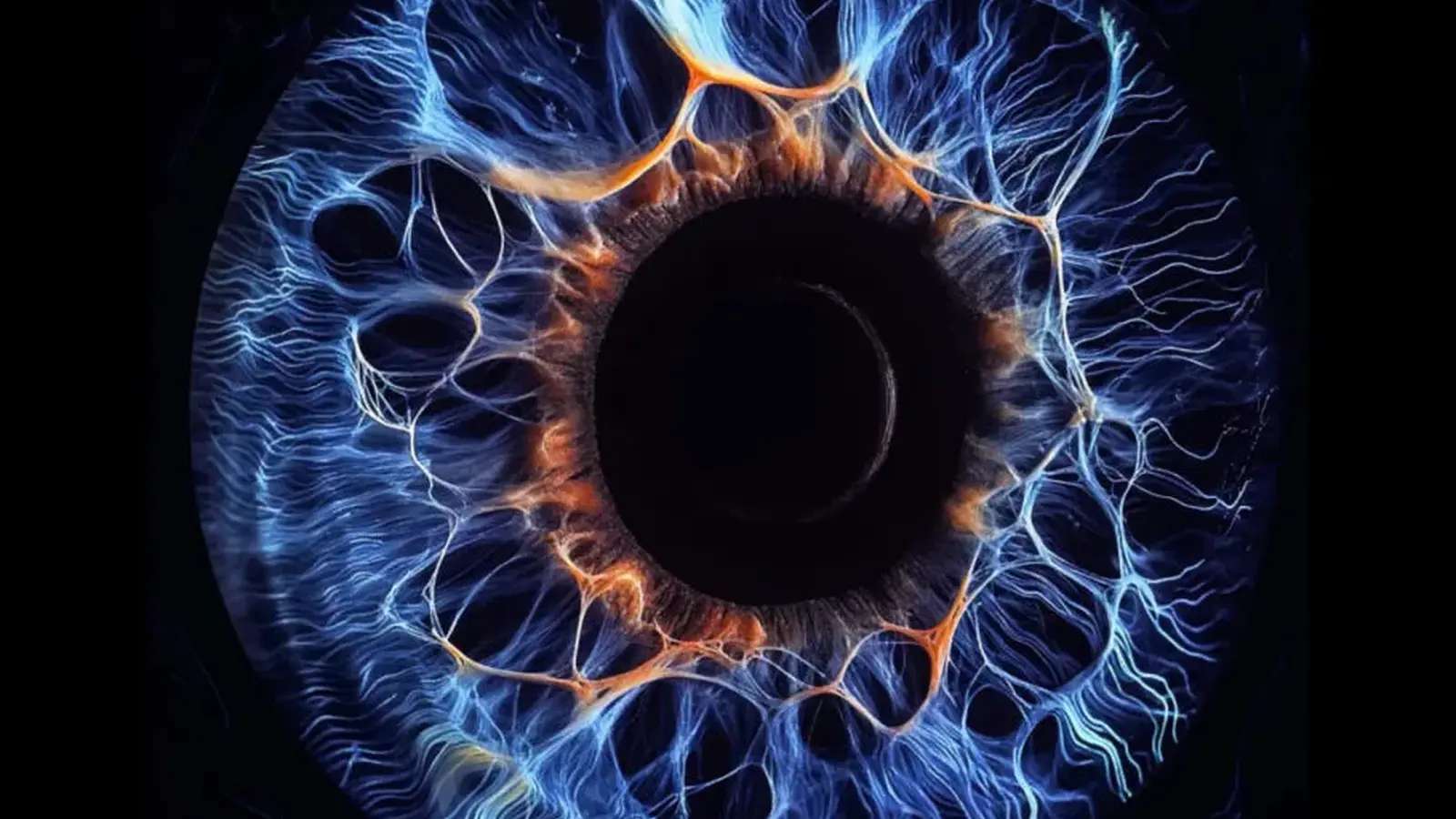
A secret plumbing system runs behind the eye. Researchers at the University of British Columbia and the University of Toronto have identified a previously unknown posterior lymphatic outflow — dubbed the POLO pathway — that channels fluid and metabolic waste from the back of the eye into the body's lymphatic network. The discovery, made in mouse models, overturns a century-old assumption that the eye's posterior tissues lacked a direct lymphatic exit.
The retina is a metabolic engine. It converts light into neural signals and, in doing so, produces a steady stream of biochemical debris. When that waste lingers, trouble follows: swelling, inflammation, rising tissue pressure. Conditions like glaucoma and age-related macular degeneration are tied to precisely this buildup. So how does a delicate tissue avoid drowning in its own byproducts? Until now, the answer was a mystery.
To trace the route of clearance, scientists injected fluorescent tracers into the narrow space behind the retina and watched where the glow went. High-resolution imaging revealed tiny lymphatic vessels within the choroid — a vascular layer beneath the retina long believed to be devoid of lymphatics. Within minutes the tracer moved from the posterior eye into surrounding orbital tissues and then on to nearby lymph nodes, demonstrating an active, rapid outflow rather than passive entrapment.
"The retina is one of the most metabolically active tissues in the body, constantly producing waste that must be removed," said Dr. Niro Gupta, chair of ophthalmology and visual sciences at UBC. "This discovery exposes the drainage mechanism and shifts how we might treat a wide range of eye diseases."
This newly identified POLO system offers a promising target for therapies aimed at preserving vision.
Practical questions loom. Can the POLO pathway be strengthened or repaired when it fails? Could drugs or gene therapies be designed to boost clearance and prevent the chain reaction of damage that leads to permanent vision loss? The path from mouse to human is never guaranteed, but the implications are clear: a working drain behind the eye changes the landscape of potential interventions.
Think of it as finding a hidden waste pipe in an old house—suddenly you know where the leak comes from and how to fix it. Now researchers must map the POLO pathway in people, decode how it is regulated, and test whether manipulating it slows or halts diseases that steal sight. The discovery raises a tantalizing possibility: what if preserving vision begins with keeping the eye clean?


Leave a Comment
Comments
No comments yet. Be the first.