
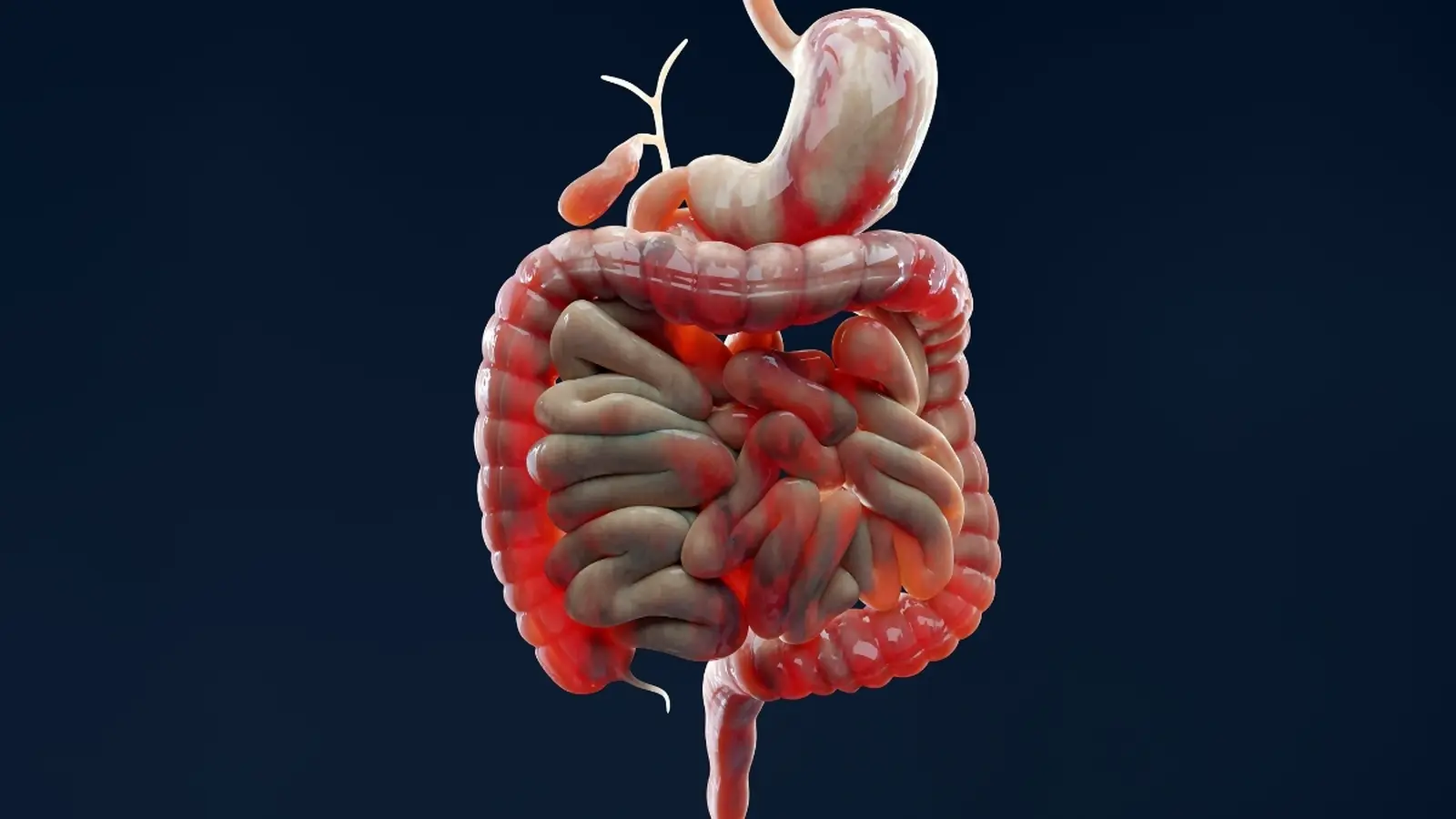
When a tiny genetic quirk tips the immune system into attacking a crucial anti-inflammatory signal, the result can be relentless gut pain and damage. That’s the picture emerging from a new study that finally explains why one HLA gene variant has dogged inflammatory bowel disease researchers for three decades.
Researchers from the UK and Denmark analyzed blood and DNA from thousands of people and found a direct link between the HLA-DRB1*01:03 variant and autoantibodies that neutralize interleukin‑10 (IL‑10), a cytokine that normally keeps inflammation under control. Put simply: in a subset of patients, the immune system removes its own brake.
The study began with nearly 4,900 patients diagnosed with IBD and about 1,000 healthy controls. Neutralizing IL‑10 antibodies turned up in roughly 3.5 percent of the IBD group and were absent from the control cohort. Broken down further, about 2.5 percent of those with Crohn’s disease and 4.4 percent of patients with ulcerative colitis carried these antibodies. The numbers are small, but when multiplied across millions of sufferers worldwide, the impact is far from trivial.

How did the team bridge the genetic signal to the immune response? By comparing the genomes of antibody-positive and antibody-negative patients, they found a striking enrichment of HLA-DRB1*01:03 in the antibody-positive subgroup. This genetic marker had been linked to severe IBD in earlier studies, yet its biological role remained opaque—until now.
This discovery ties a long-suspected culprit—IL‑10 dysfunction—to a specific HLA variant that predisposes people to autoantibodies, offering a concrete mechanism for disease in a definable patient group.
Experts say the finding matters for two reasons. First, it closes a loop between distinct observations: rare inherited IL‑10 pathway defects that produce severe early‑onset disease, and more recent reports of acquired autoimmunity against IL‑10 in adults. The new work shows these threads converge in a genetically defined subset of IBD. Second, it provides a practical way to stratify patients. If clinicians can identify who carries the HLA marker or the IL‑10 autoantibodies, they may be able to tailor therapy more precisely.

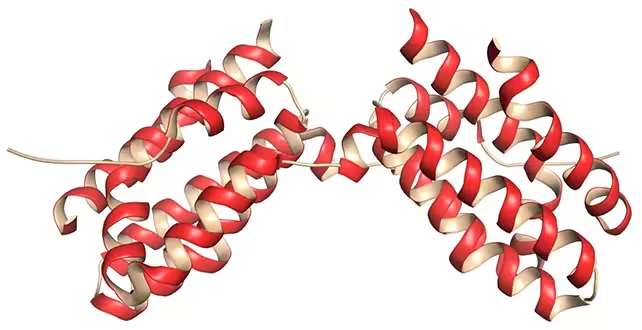
The 3D structure of interleukin 10.
Clinicians quoted in the study emphasize the clinical potential. A pediatric gastroenterologist noted that IL‑10’s role in intestinal inflammation has been suspected for decades; the current evidence now supplies the missing molecular link. A clinical gastroenterologist called it one of the most exciting discoveries within a specialist’s career because it makes the cause visible in a way that could guide treatment decisions.
This is a reminder of how studying rare, severe genetic disorders can illuminate common diseases. Immunologist commentary highlights that the chain of evidence started with unusual inherited syndromes tied to IL‑10 signaling and moved through observations of neutralizing antibodies to reveal a broader pattern in typical IBD cases. Different genetic variants and immune pathways can produce similar clinical outcomes—intestinal inflammation—but the underlying biology is not uniform.
What does this mean for patients today? Current therapies for IBD aim to dampen inflammation or, in some cases, remove diseased tissue surgically; none are universally curative. Identifying those whose disease is driven by IL‑10 autoimmunity could open the door to targeted interventions that restore IL‑10 signaling or remove the offending antibodies. Early, specific treatment might reduce the need for long-term immunosuppression and prevent complications.
The study, published in The New England Journal of Medicine, is not a final answer for all IBD sufferers. Instead, it reframes part of the problem in a way that researchers and clinicians can act on. It also underscores the complexity of inflammatory bowel disease: multiple routes, one outcome. The next steps are clear—validate these findings in broader cohorts, develop diagnostics to detect IL‑10 neutralization reliably, and test therapies directed at this pathway. That work will determine how many lives can be changed by this long-awaited breakthrough.
For anyone watching the hunt for precise, mechanism‑based treatments, this is a rare moment when genetics, immunology, and clinical medicine align to reveal a tangible target—and a reminder that sometimes the most persistent mysteries yield to careful, patient sleuthing.

Leave a Comment
Comments (2)
Whoa, finally a tangible mechanism wow. If clinics can screen for the marker and antibodies early maybe avoid years of wrong tx. kinda hopeful, nervous tho
So one HLA variant linked to IL-10 autoantibodies? Big claim. 3.5% sounds small but still worrying. Need replication, details on triggers and how this fits other IBD routes, if that's real then...