
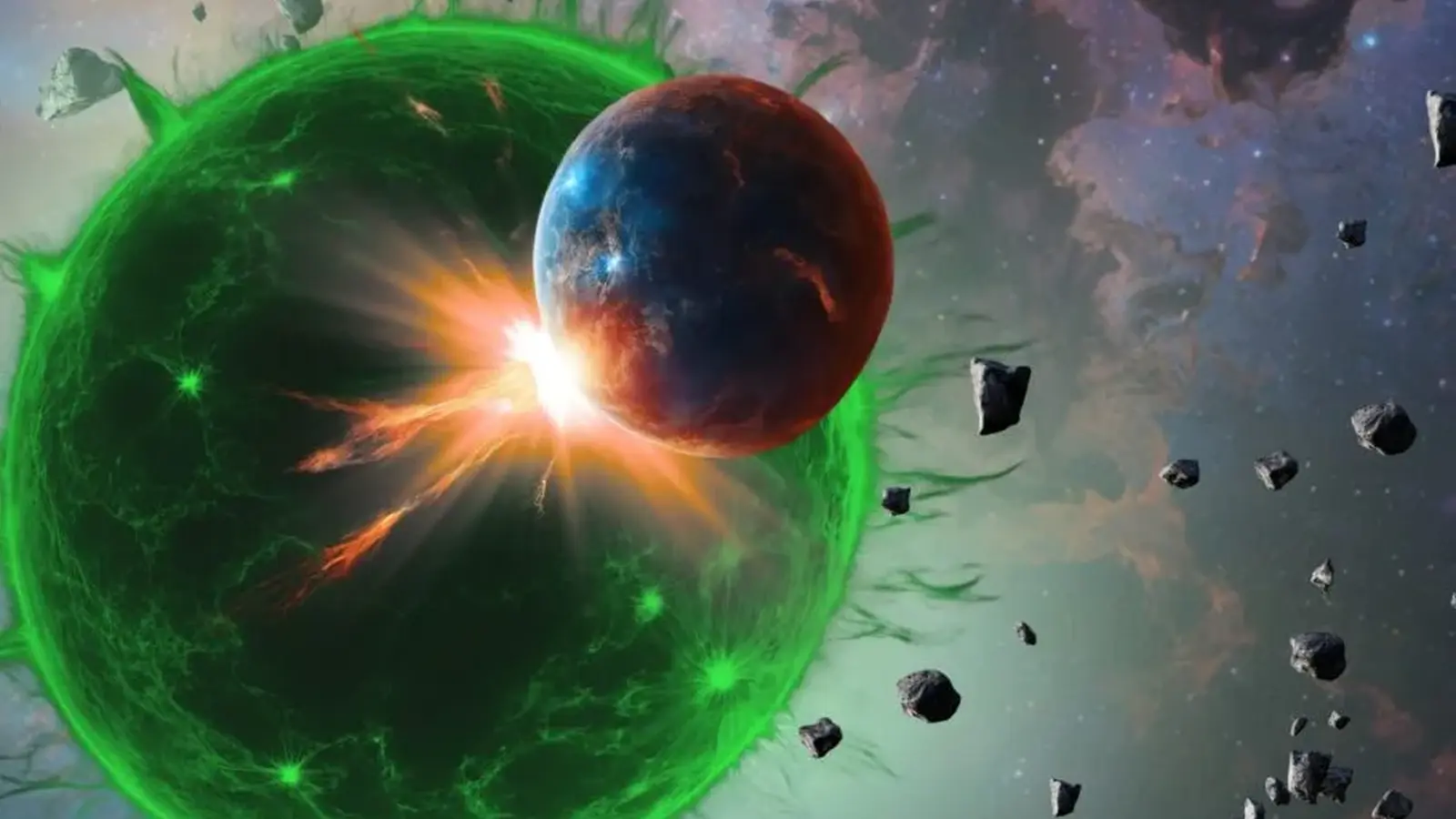
Imagine a star that glows green. Strange, right? For generations astronomers have read stellar color like a thermometer: cool stars glow red, sun‑like stars look white, and the hottest blaze bluish-white — much like iron that first glows red in a forge, then white as the heat rises.
White dwarfs were thought to follow that same, tidy rule. These compact corpses — the leftover cores of Sun‑sized stars — are extremely hot and dense, so astronomers long assumed their hue would come down to temperature alone. New research, however, pulls a loose thread in that assumption and finds a much more colorful picture.
The surprise comes from chemistry and crushing pressure. In a white dwarf the star’s core has collapsed until matter is packed to densities comparable with water and millions of times denser than a normal stellar photosphere. Under those conditions, trace elements such as carbon, calcium and sodium interact with a dense helium plasma in ways they wouldn’t in a lower‑density gas. The result: absorption and emission across wavelengths that shift a star’s apparent color away from the simple white‑hot blackbody we expect.
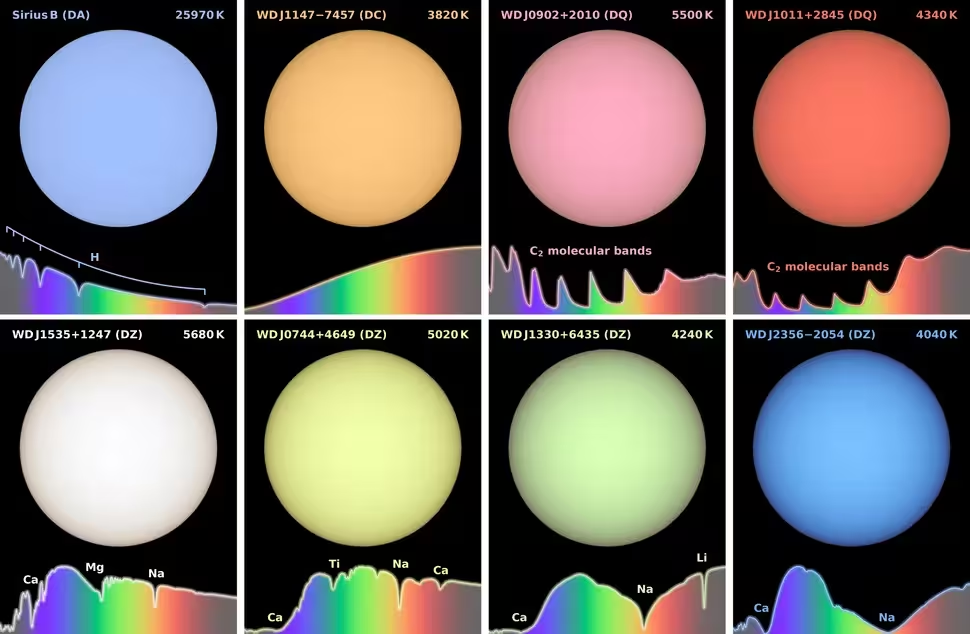
And there’s another twist. Some white dwarfs act like cosmic cannibals, sweeping up rocky material from surviving planets or asteroids. When a dead star devours that debris its thin atmosphere becomes polluted with metals — calcium, lithium and sodium among them — and those contaminants change which colors are absorbed or thrown back into space. The models show that, under the right mix and density, a white dwarf can adopt shades we rarely associate with stars: green, pink, turquoise, yellow, even purple.
A concrete example is WD J1330+6435, a relatively cool white dwarf about 326 light‑years away. Spectra reveal it is actively accreting rocky material from a nearby planetary body. The enrichment of its atmosphere with calcium, lithium and sodium matches the team’s simulations and explains why this object would appear green if we could see its true color with the naked eye.
We don’t usually perceive stellar color directly at such distances — most white dwarfs are too faint and far to show a true tint to our eyes — so spectroscopy and careful modeling are the tools that expose these hidden hues. The broader implication is tidy: dead stars are not uniformly monochrome. Their colors encode histories of death, density and, sometimes, planetary destruction.
Next time you picture the night sky, remember it may be richer in color than it looks; telescopes and spectral models are just beginning to reveal the unexpected palette of stellar remains.

Leave a Comment
Comments
No comments yet. Be the first.