
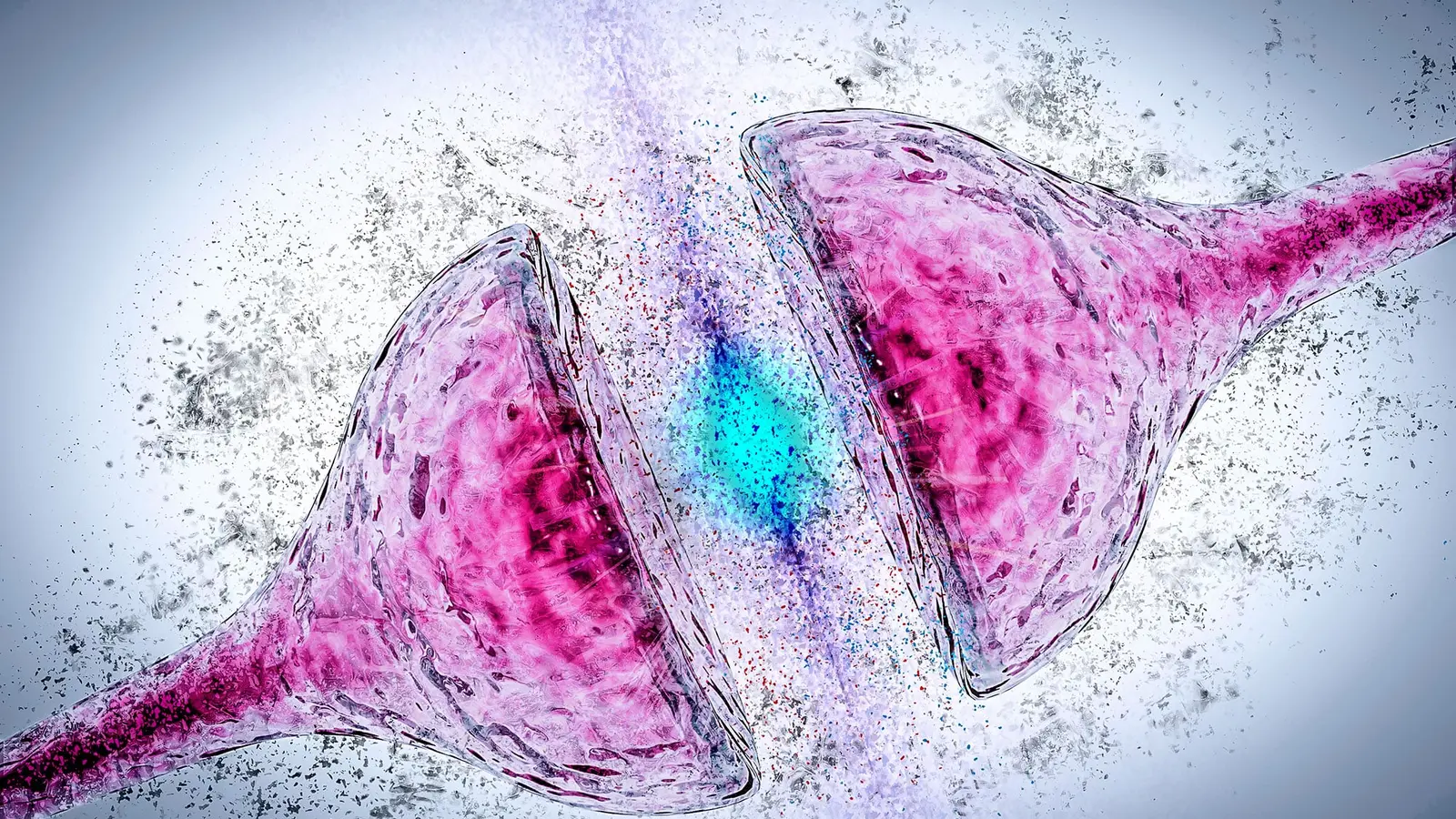
A tiny shift in a single protein can bring a brain back into tempo. That is the striking discovery from researchers at Gladstone Institutes who showed that nudging one ion channel into action restores the brain's rhythmic heartbeat and revives memory in mice engineered to model Alzheimer’s disease.
Brains keep time with fast electrical oscillations called gamma rhythms. They flicker 30 to 90 times a second during attention, learning, and recall. Scientists have long known these rhythms falter in Alzheimer’s, but exactly how individual neurons cooperate to produce them — and why that cooperation collapses — remained murky.
To answer that, the team tracked a specialized set of inhibitory neurons, parvalbumin-expressing interneurons, while mice were awake and engaged in a simple task. Using a mix of fluorescent imaging and real-time electrical recordings, the researchers could see which cells fired and when. The result was less like a parade and more like a choreographed jazz band: each neuron took a brief, precisely timed turn contributing to the rhythm.
A new discovery led by scientists at Gladstone Institutes offers a promising therapeutic target for restoring cognitive function in Alzheimer’s disease.
In healthy animals, the sequence was balanced. Early responders fired strongly, later groups eased in, and about a third of the cells stayed silent. In Alzheimer’s-model mice, the choreography unraveled. Early players lagged. Later cells rushed in. More neurons fired together and at similar strengths, producing excessive synchrony that paradoxically weakened the overall gamma oscillation.
More activity does not equal better performance. That counterintuitive idea emerges clearly here. When too many neurons act in lockstep, the fine timing that builds useful brain rhythms is lost. The brain’s orchestra becomes a blur.
The researchers traced this timing defect to reduced levels of Nav1.1, a sodium channel that helps parvalbumin interneurons produce quick, reliable spikes. When the team engineered Alzheimer’s-model mice to boost Nav1.1 production in those cells, the timing snapped back. Gamma oscillations strengthened. Unwanted epileptic spikes dropped. Amyloid plaque burden fell. And, crucially for behavior, memory and cognition improved — mice performed better on memory tasks and lived longer.

All of this was captured while animals ran on a treadmill, a simple way to engage attention-related rhythms, and with tools that lit up individual neurons when they fired. That combination mattered. Previous approaches often activated whole populations of neurons at once with optogenetics, revealing what the cells could do, but not how they naturally assemble to produce spontaneous rhythms during behavior.
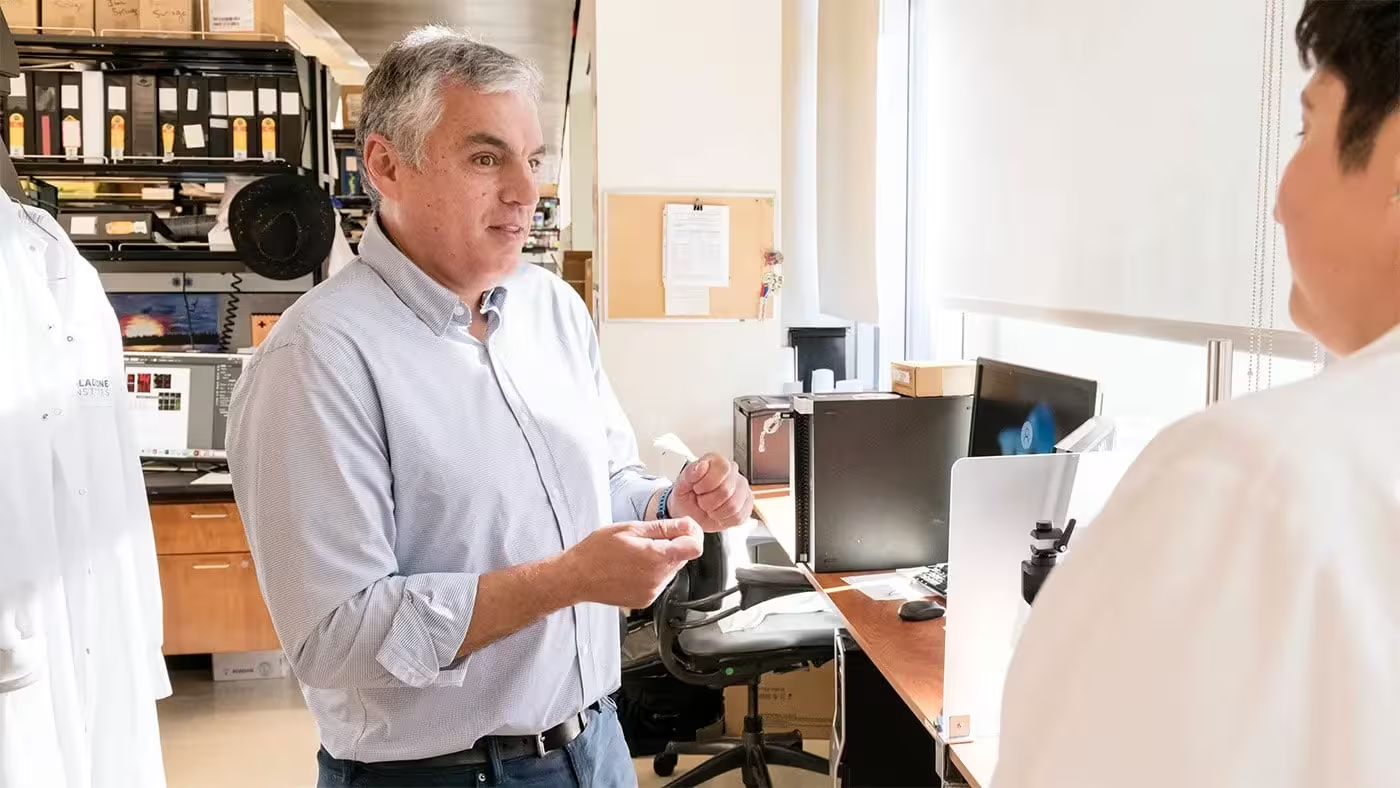
For this study, Jorge Palop collaborated with scientists at the Allen Institute to better understand how individual cells fail in disease and start designing treatments that act only on the specific cells responsible for restoring healthy brain function.
The work also sheds light on a clinical puzzle: why a notable fraction of people with Alzheimer’s show epilepsy-like activity. The team observed epileptic spikes following sudden drops in interneuron activity, suggesting that disrupted inhibitory timing may underlie both weakened cognitive rhythms and seizure-like events.
Translating this to people is not trivial. For one thing, we still do not know why interneuron failure occurs early in the disease or what decides which interneurons join a given gamma ensemble at any moment. There are also challenges in safely raising Nav1.1 levels in human brains. Yet the study points to a tangible, cell-specific target and uses delivery strategies developed with collaborators at the Allen Institute that can zero in on parvalbumin cells across species.
That specificity matters because the brain contains hundreds of cell types. Fixing the wrong population could produce noise, not harmony. Tools that direct treatments to the exact neurons that keep rhythm open a realistic pathway to therapies that restore function rather than merely masking symptoms.
Palop and colleagues are now pursuing small-molecule Nav1.1 enhancers as one translational route, while continuing to unpack how interneuron ensembles form and change with experience and disease. The study reframes part of Alzheimer’s as a disorder of timing — not just of plaques and tangles — and suggests that synchrony, when restored, can bring back what was thought lost.
If a single protein can reset the beat, what other hidden conductors might restore a faltering brain?


Leave a Comment
Comments
No comments yet. Be the first.