

Ask yourself this: could a tiny sugar molecule on the surface of your red blood cells nudge your long-term health? It sounds unlikely. Yet a sweeping review of reviews suggests one blood group quietly carries a higher chance of developing type 2 diabetes.
Researchers led by epidemiologist Fang‑Hua Liu sifted through 51 systematic reviews with meta-analyses, pooling evidence on roughly 270 putative links between blood groups and health outcomes. Think of the effort as flying a drone over a forest of studies: individual trees had been assessed, and now the team wanted the whole landscape.
The verdict was surprisingly narrow. After rigorous tests for consistency, sample size, bias and whether results would likely hold up in future work, only a single association met the highest standard of evidence: people with blood type B—whether Rh positive or negative—had a higher risk of developing type 2 diabetes compared with non‑B blood types.
Carriers of blood type B showed about a 28 percent greater risk of type 2 diabetes than those without type B blood.
Does 28 percent sound dramatic? Context matters. It’s a measurable effect, but modest beside the heavy hitters. For comparison, eating just 50 grams of processed meat a day has been linked with roughly a 37 percent higher diabetes risk in some studies. A sedentary lifestyle can more than double risk. And excess weight remains one of the strongest and most consistent drivers of type 2 diabetes.
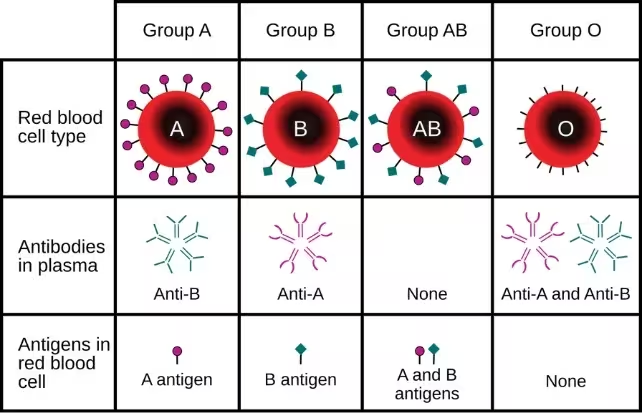
Blood type (or blood group) is determined, in part, by the ABO blood group antigens present on red blood cells. Antibodies in our blood plasma detect when a foreign antigen marker is present.
How might a blood-group marker influence metabolic disease? The reviewers didn’t pin down mechanisms. One hypothesis gaining traction involves the gut microbiome—microbial communities that interact with host tissues and immune signals influenced by blood-group antigens. A study published in 2025 pointed to microbial links, but the chain of causation is far from settled.
It helps to remember what blood types are: ABO describes which sugar antigens sit on red cells—A, B, both (AB), or neither (O)—while the Rhesus factor adds the familiar positive or negative suffix. These surface markers can shape immune recognition and, subtly, the body’s interactions with microbes and molecules circulating in the bloodstream.
The strength of this umbrella review lies in its skepticism. The team reanalyzed each reported association with statistical stress tests designed to expose weak, inconsistent or biased findings—small-study effects, lack of power, and unexplained heterogeneity. Most purported links didn’t survive that scrutiny. Only the B–diabetes link held up.
So what should you take away? If your blood type is B, it may be one more factor nudging the odds. But it is only one thread in a much larger tapestry. Lifestyle—diet, activity, and body weight—remains the dominant determinant of type 2 diabetes risk. Blood type won’t write your fate, but it might add context to how scientists think about susceptibility.
The review, published in BMC Medicine, reframes a subtle biological clue as something worth tracking rather than a definitive risk sentence. As researchers chase mechanisms and replicate findings across populations, that clue could prove useful for risk models or inspire new lines of research into host–microbe interactions. For now, the most effective steps remain the familiar ones: eat well, move more, and keep an eye on weight and blood sugar.

Leave a Comment
Comments
No comments yet. Be the first.