
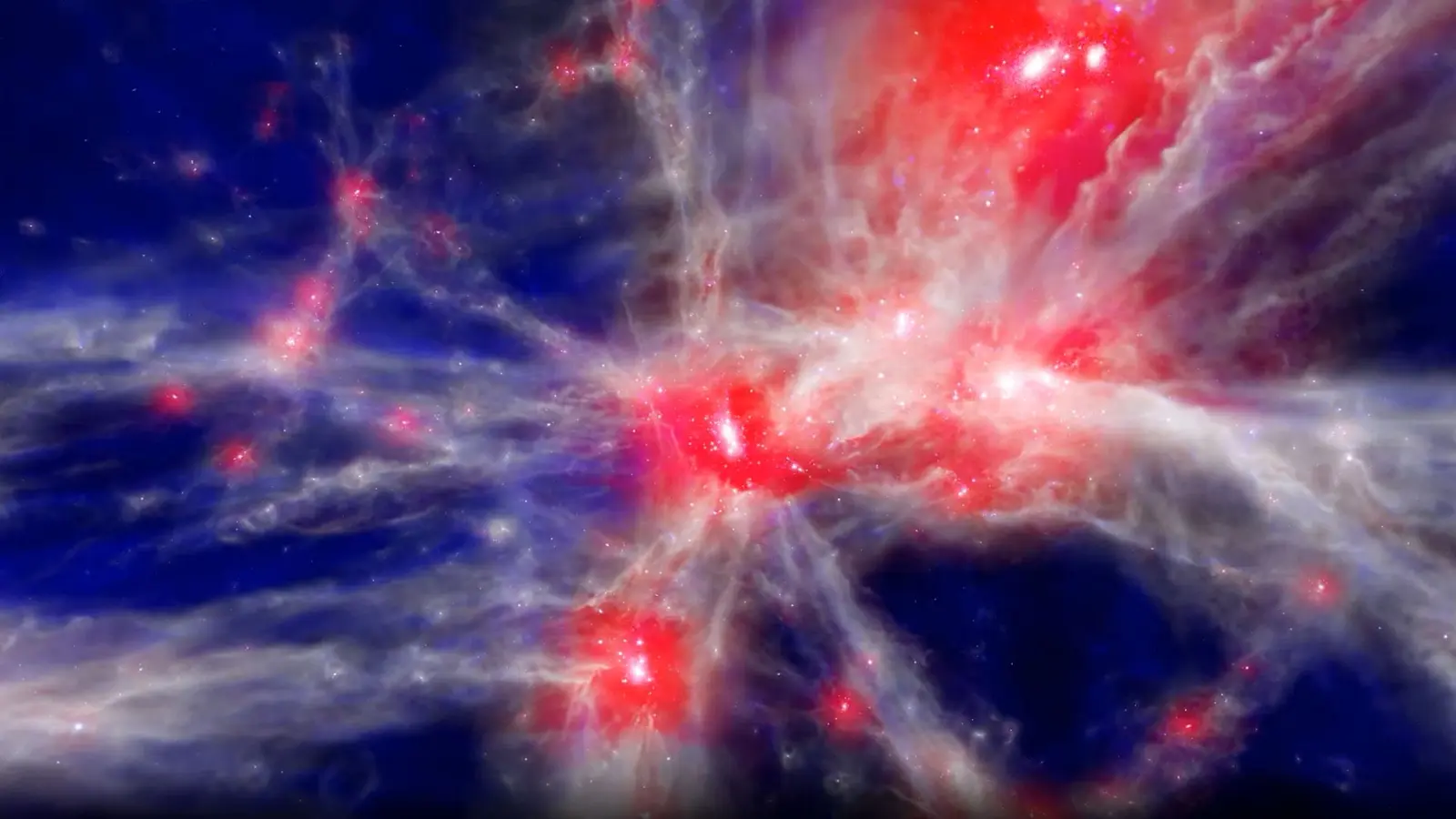
Not every patch of the cosmos is a friendly neighborhood. Some regions are fireworks displays of exploding stars and hungry black holes; others are sterile suburbs with too little of the raw stuff that builds worlds. Which parts of the universe are truly livable? That question drove a recent sweep through lifelike virtual universes.
Researchers used the EAGLE simulation suite — Evolution and Assembly of GaLaxies and their Environments — to build detailed, evolving maps of hundreds of millions of light-years. The code follows cosmic expansion, gravity, the flow of gas, the birth and death of stars, and the feeding frenzies of black holes. Think of it as a laboratory universe where every dangerous flare and every quiet epoch can be replayed and tallied.
There are habitable zones at many scales. Close to a star, a planet must sit in a narrow band where liquid water can persist. Step back, and the galaxy itself has a habitable ring: too close to the center and the stellar traffic and radiation levels spike; too far, and there simply aren't enough heavy elements to build rocky planets. The researchers asked where such Goldilocks conditions line up across many synthetic galaxies.
Heavy elements — astronomers call them metals — are essential. They seed dust grains, which clump into rocks and, eventually, planets. But there's a balance. Plenty of metals helps form Earth-like worlds. Too many, and the system is more likely to host migrating gas giants, so-called hot Jupiters, that sweep smaller worlds out of existence.
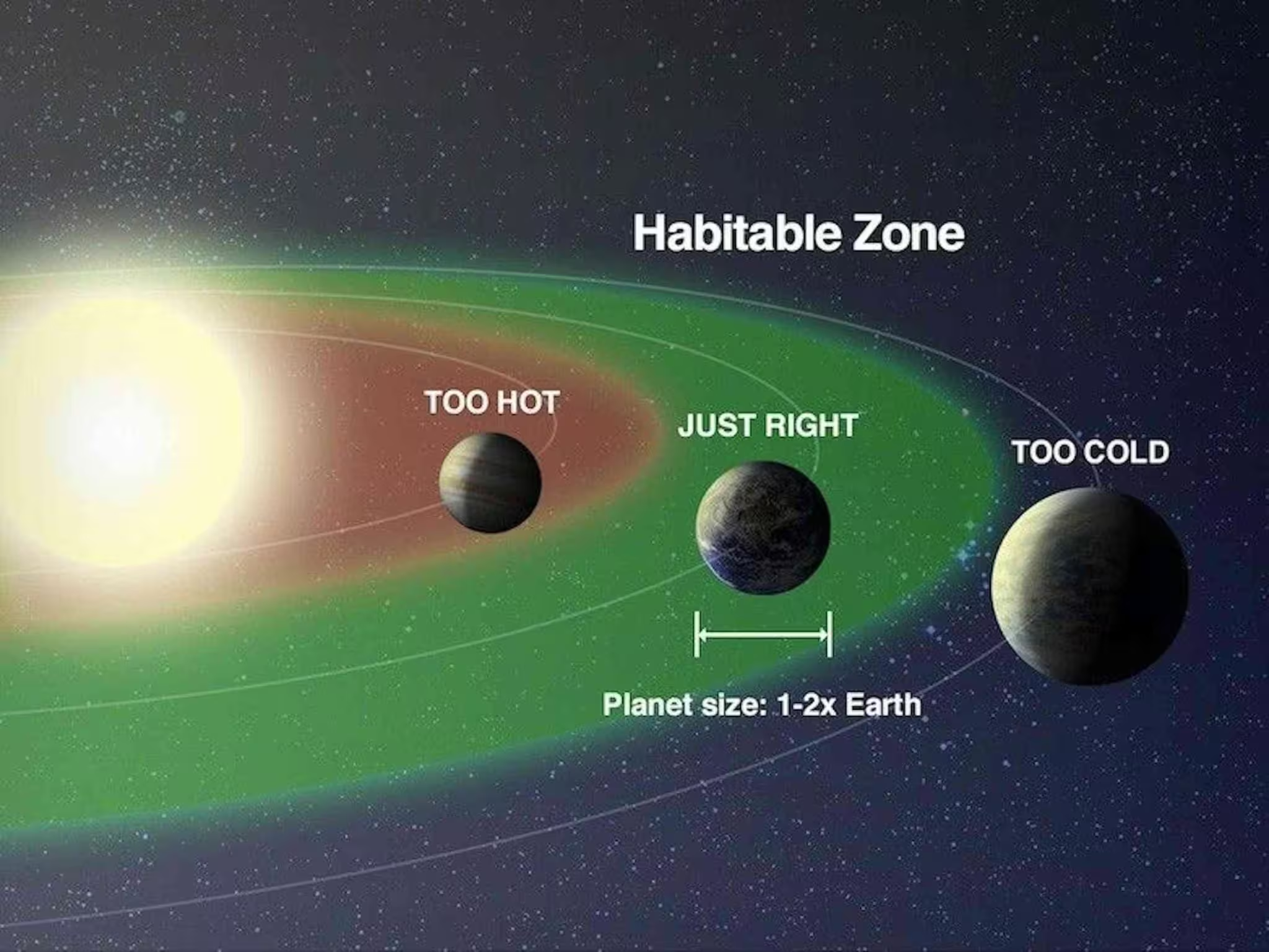
The circumstellar habitable zone near a star is ‘just right’ – not too hot, not too cold.
Cosmic catastrophes matter, too. Massive stars die in violent explosions that sterilize neighborhoods. Rarer events, like gamma-ray bursts, can irradiate entire swaths of a galaxy. Random stellar flybys can disturb planetary orbits. And lurking in the cores of many galaxies are supermassive black holes that, when active, bathe their surroundings in lethal radiation. The team modeled all of these hazards to estimate where life-friendly conditions might persist long enough to matter.
Scanning the simulations for regions combining the right chemistry, quiet environments, and stable stellar orbits yielded a reassuring headline: the Milky Way ranks among the better places to host life. Our Sun sits in the kind of outskirts that avoid the bulls-eye of galactic danger while still enjoying a supply of metals sufficient to build rocky planets.
That was not a foregone conclusion. The virtual universes could easily have favored earlier, denser epochs or tiny, efficient galaxies. But the outcome points to a simple picture: medium-large, well-evolved galaxies like ours have passed their most violent youth and now offer broad, long-lived niches for potentially habitable worlds.
What about the rest of the cosmos? Smaller galaxies, which are far more numerous, tend to be noisier and more crowded relative to their size. They experience more close encounters and energetic events per star, making them, on average, less forgiving. The simulations also suggest the universe is running out of peak real estate for life as catastrophic events slowly catch up with the formation of new planets.
Numbers help to ground the reassurance. In the Milky Way today, catastrophes intense enough to wipe out complex life are rare: over a billion-year stretch, fewer than one star in a thousand would expect to suffer an extreme, life-terminating event. That puts the galaxy in a comfortable, long-term regime for habitation — calm enough for complex biospheres to take their time.
For those hunting life beyond Earth, the takeaway is practical. Targeting Sun-like stars in the quieter outer disk of galaxies similar to the Milky Way maximizes the chance of finding stable, rocky worlds with the right chemical mix. And while the simulations cannot prove life exists elsewhere, they sketch where conditions are most forgiving — a cosmic real-estate map with clear preferences.
So the next time you look up at the hazy band of the Milky Way, remember: our galactic address is not just scenic. It may be one of the universe's better neighborhoods for life to get a foothold, and to linger long enough to tell a story.

Leave a Comment
Comments
No comments yet. Be the first.