
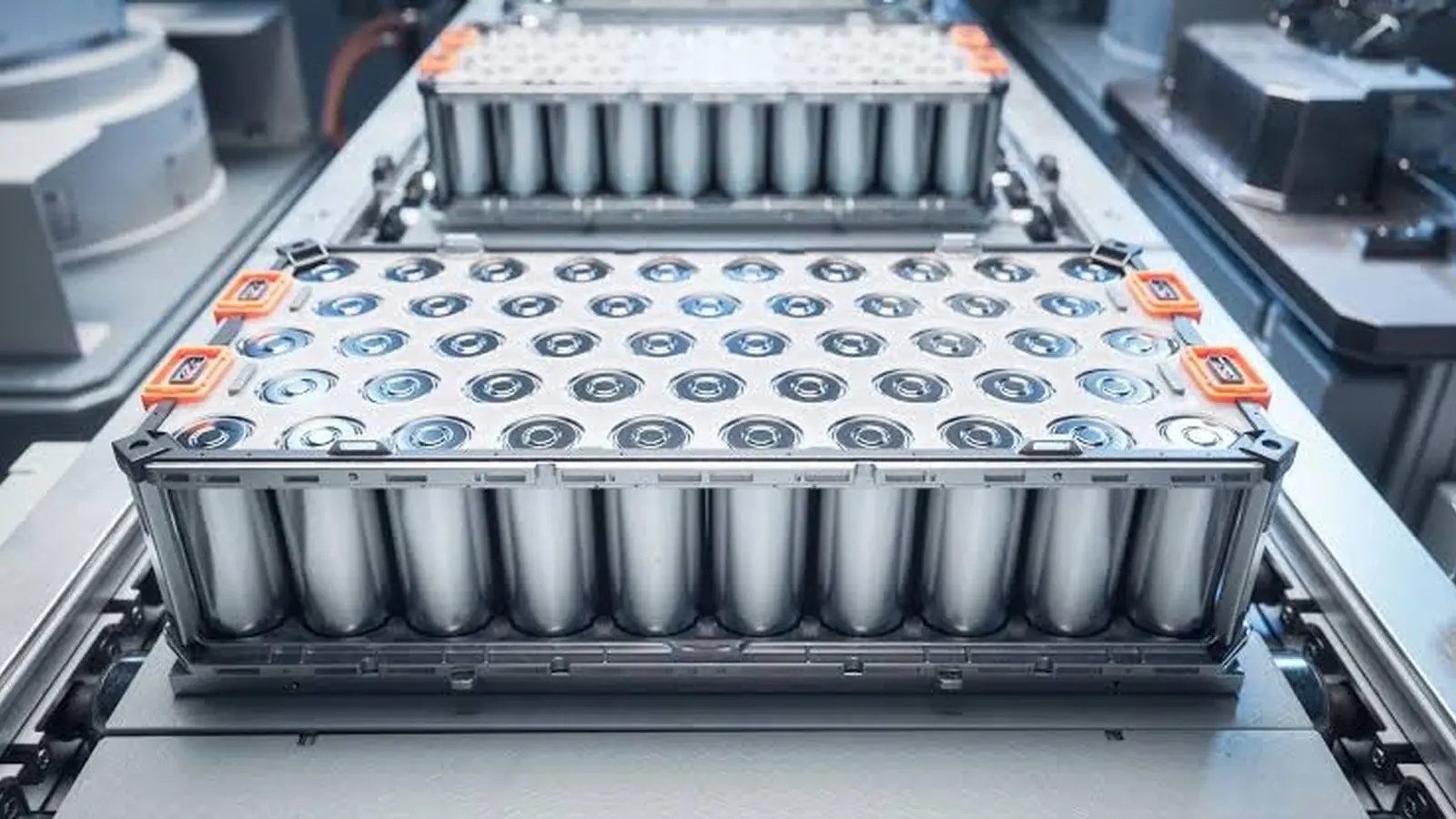
Imagine a battery pack that still holds juice but can no longer punch the clock. It happens more often than drivers realize. New field data show that a tiny minority of fast-aging cells can determine when an entire electric vehicle battery pack is retired, leaving a surprising share of stored energy untapped.
Researchers who tracked real EVs for over three years—cars with nickel-manganese-cobalt (NMC) cells and buses with lithium-iron-phosphate (LFP)—found that differences between neighboring cells rarely stay small forever. Cells live under different microclimates, receive slightly different manufacturing tolerances, and see different currents during driving and charging. Over tens of thousands of kilometers those small gaps can widen. At around 170,000 km in many passenger cars, some cells begin to fall behind faster, amplifying imbalance across the pack.
Why does one weak cell matter so much? In most packs the cells are wired in series. That design means the pack's usable voltage and current are limited by the weakest links. During charge, a low-capacity cell will hit its voltage ceiling before others. During discharge or high-power draws, a higher-resistance cell will heat up or hit operational limits earlier than its neighbors. The result: the pack is pulled back to protect a few struggling cells, not because the bulk of the cells have run out of life.
To quantify this, the team mined routine vehicle telemetry—voltage, current, temperature, and state-of-charge logs—and fused physics-based battery models with neural-network estimation. They corrected for seasonal temperatures and driving conditions to compare cells fairly. Their dataset included vehicles that had traveled up to 300,000 km, giving a rare window into long-term, in-the-wild aging.
The numbers are sobering. Uneven aging shaved usable pack-level state of health by about 6.2% in passenger cars and 7.5% in buses. When the researchers compared pack retirement dates with the average lifespan of individual cells, they found pack lives were roughly 17.7% shorter in cars and 22.8% shorter in buses. Power delivery also suffered: differences in internal resistance cut available power by roughly 12.9% for cars and 15.1% for buses. Across a pack's life, cars used about 80.7% of their cells' potential energy; buses used only about 72.9%—leaving nearly one-fifth to more than one-quarter of potential capacity idle when the weakest cells called time.
A handful of weak cells can dictate the fate of an entire battery pack.
These findings carry practical implications. Judging a pack by its average cell condition will miss the problem. Some fleets aged worse than others, suggesting that balancing strategies, thermal control, and cell grouping really matter. The study points toward solutions that sound simple but are nontrivial in practice: tighter manufacturing tolerances, smarter cell sorting before assembly, more aggressive or adaptive active balancing, improved thermal management to keep cells in the same operating window, and even reconfigurable pack architectures that can change series-parallel connections as cells diverge.
There is a systems engineering angle too. Better sensing and per-cell diagnostics, paired with prognostic models that spot accelerating outliers early, could let fleets extend service life and reclaim energy that today goes unused. And for designers, the message is unambiguous: maximizing lifetime is not just about improving the average cell chemistry, but about narrowing the spread of performance across the pack.
Published in Nature Energy, the work led by researchers at the Dalian Institute of Chemical Physics and Chalmers University of Technology reframes how we think about EV battery retirement. It asks a practical question with broad stakes: are we squeezing every last joule out of today’s batteries, or are a few weak links leaving value on the table?


Leave a Comment
Comments
No comments yet. Be the first.