
Can a single photo tell doctors more than a blood test? Researchers at Brigham have built an AI that comes frighteningly close.
Called FAHR-Face, the system was trained on more than 40 million face images spanning ages and ethnic backgrounds. From that single foundation the team produced two practical tools: FAHR-FaceAge, which estimates a person’s biological or “apparent” age, and FAHR-FaceSurvival, which gauges the likelihood of survival from a facial image alone.
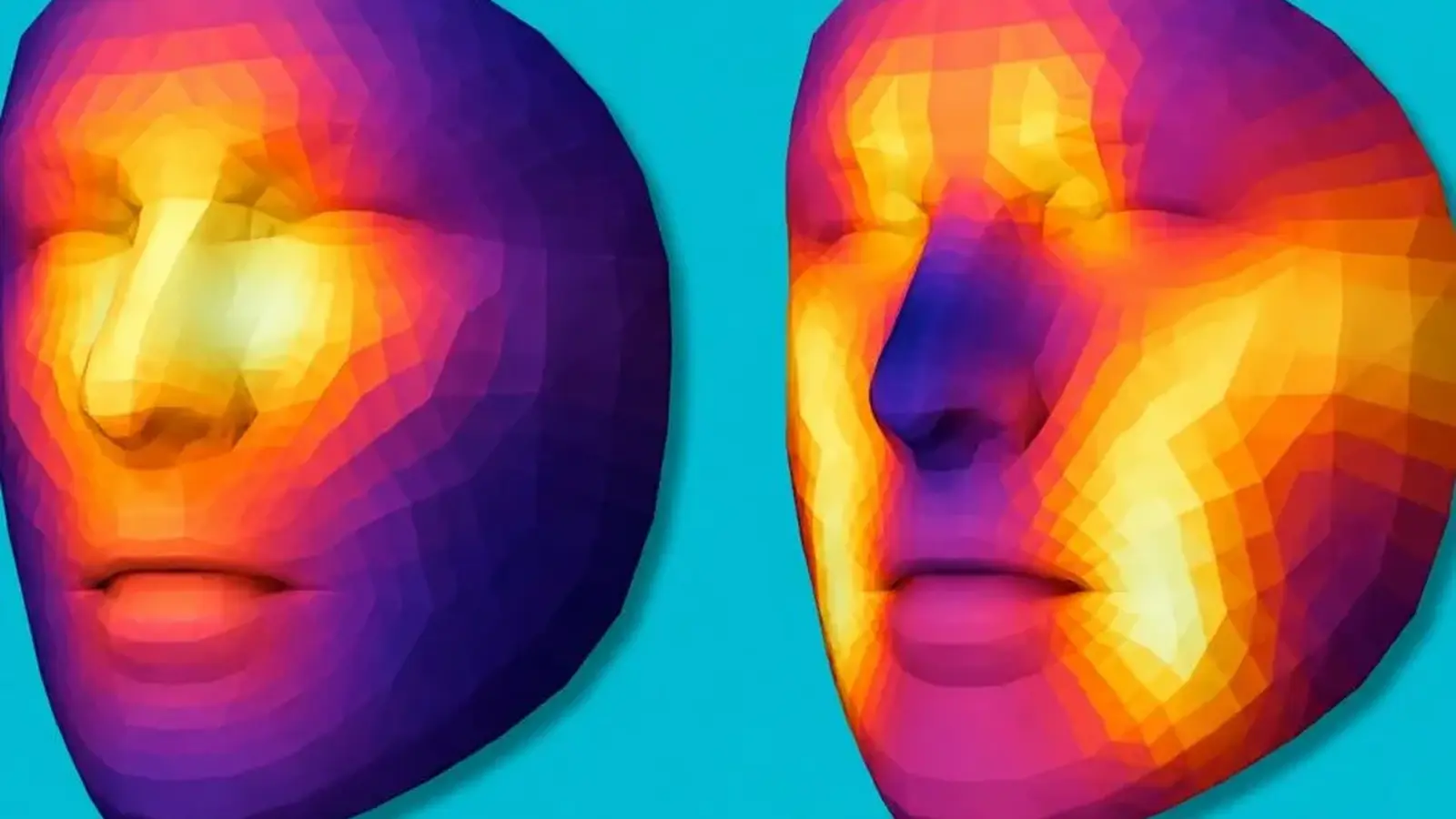
They did not simply copy one result into another. The two tools read faces differently. FAHR-FaceAge pays attention to lines tracing from the nose to the corners of the mouth, the forehead above the eye sockets and the temples. FAHR-FaceSurvival leans into subtler signs—the skin beneath the eyes and the area around the nose bridge carry most of its signal.
When the team tested these models on people receiving radiotherapy for cancer, the findings were striking. Patients the AI judged to look at least five years older than their chronological age faced a 21% higher risk of death over a mean four-year follow-up. By contrast, those flagged as appearing five or more years younger had about a 17% lower chance of dying in the same period.
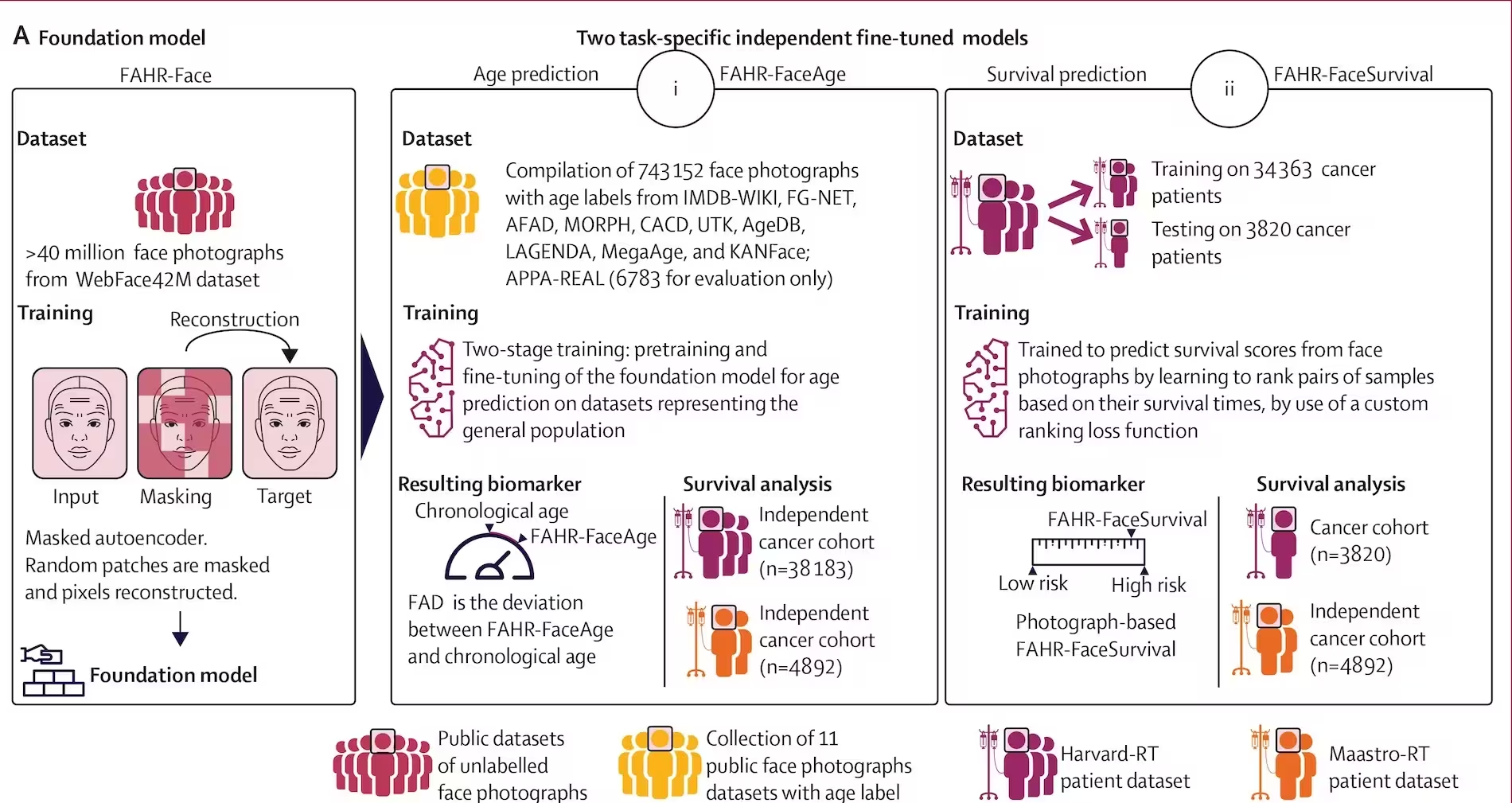
FAHR-FaceSurvival produced even sharper contrasts. Individuals placed in the highest-risk bracket by the model had more than three times the mortality of those in the lowest-risk group—and that association held up after adjusting for other medical factors clinicians typically count on.
The algorithms proved surprisingly steady across everyday photo variation. Angle, lighting, expression and even makeup made little difference to FAHR-FaceAge’s estimates. Most cosmetic procedures left the signal intact; rhinoplasty caused only a small shift. The researchers also detected behavioral fingerprints: heavy alcohol use, certain drugs and smoking tended to push an AI’s readout toward an older appearance.
What does this mean for medicine? At minimum, the work suggests face-image analysis could become an additional, low-cost lens for assessing frailty or risk of complications after major surgery or cancer therapy. It is not yet a clinical tool. The authors themselves caution that wider validation and ethical scrutiny are required before such a system is folded into routine care.
The full study appears in The Lancet Digital Health. Will a selfie one day end up in the medical chart? The science is advancing fast; the conversations about privacy and clinical value must keep pace.


Leave a Comment
Comments
No comments yet. Be the first.