

Imagine a child's brain keeping a different clock from their peers — not broken, just slower. Could that lag show up years before any sadness or panic? A sweeping new analysis suggests it might.
Researchers at the University of Iowa and Mass General Brigham examined nearly 30,000 brain scans collected over six years to trace how kids' brains mature. What they found was not uniform timing but a staggered schedule: sensory regions, like the visual cortex, tend to thin and settle earlier, around age 13, while fronto‑cortical areas tied to planning, attention and emotion regulation often don’t reach similar maturity until about 16.
Thinning of the cortex is normal. It reflects synaptic pruning — the brain trimming unused connections to make networks faster and more efficient. Yet children who, at roughly nine years old, still showed a thicker cortex in primary sensory areas were more likely to report symptoms of depression and anxiety by age 13. Thicker, in this context, looks less like strength and more like delayed maturation.
“Timing matters,” says Joshua Roffman, a psychiatrist at Mass General Brigham and an author on the study. He argues that to understand mental‑health risk we need to look not only at which circuits are active, but when they arrive at adulthood‑like function. A brain that matures out of sync may change how a child adapts to social and emotional challenges.
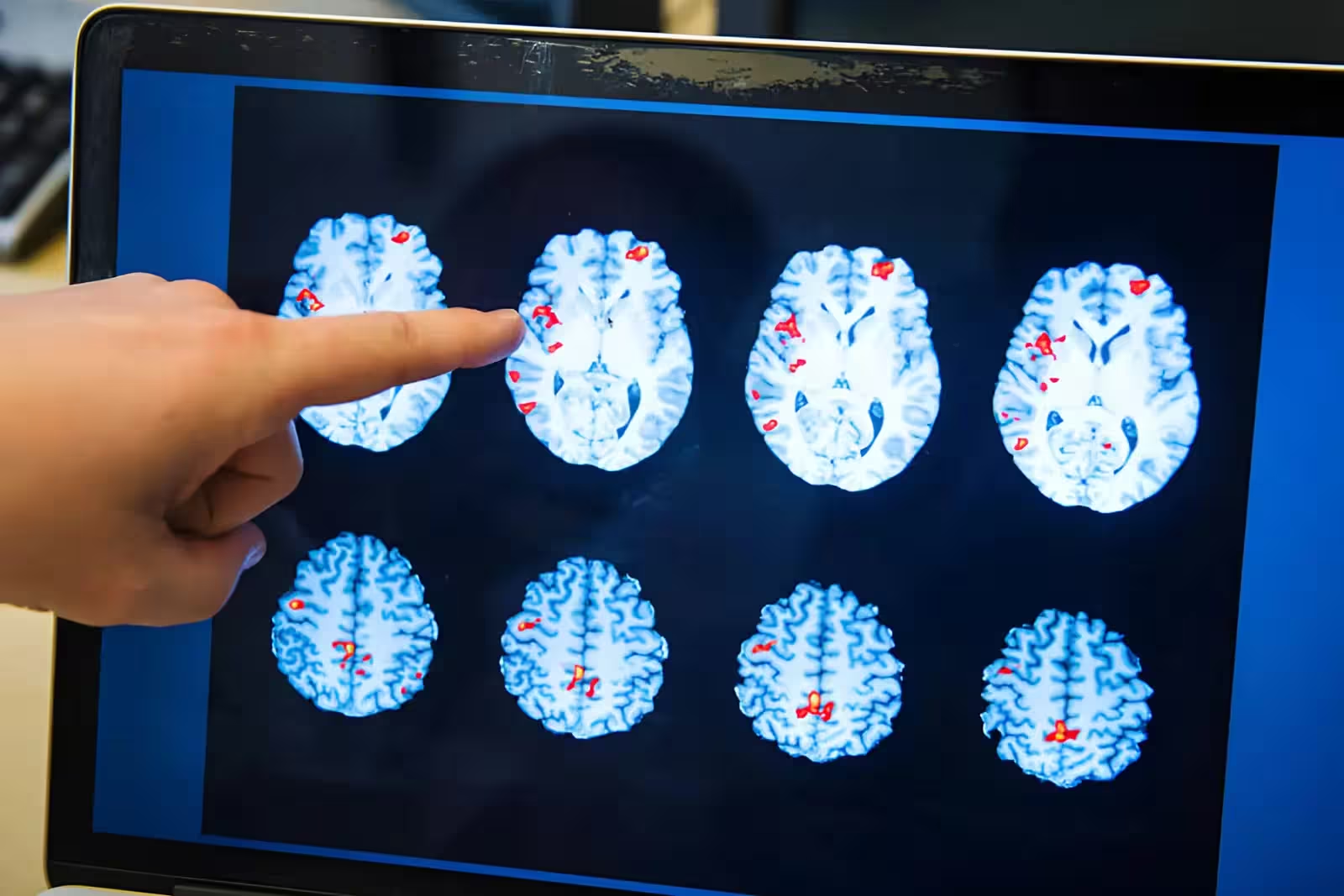
Digging deeper, the team found overlap between the brain regions tied to later mood symptoms and networks of genes that are active before birth. That raises a striking possibility: some vulnerabilities may be rooted in prenatal development. How those early genetic programs translate into altered adolescent behavior is still unknown, but one plausible pathway is a shift in neural plasticity. If pruning and maturation are delayed, a child’s windows for learning and adaptation might narrow at critical moments.
These findings were published as a preprint and reported in Nature; they have not completed peer review. Caution is warranted. The identified patterns come from population‑level data and cannot yet predict which individual child will develop a mood disorder. More targeted studies are needed before brain scans can play a role in clinical screening.
Avram Holmes, a neuroscientist at Rutgers who was not involved in the work, calls the study one of the clearest portraits so far of cortical development from childhood into adolescence, while stressing that these patterns alone are not a diagnostic tool.
Still, the study reframes a simple question: could the timetable of brain maturation be as important as the brain’s wiring itself? If so, tracking developmental tempo might open a new path for early support — not to label kids, but to help them keep pace when their brains fall behind.

Leave a Comment
Comments
No comments yet. Be the first.