
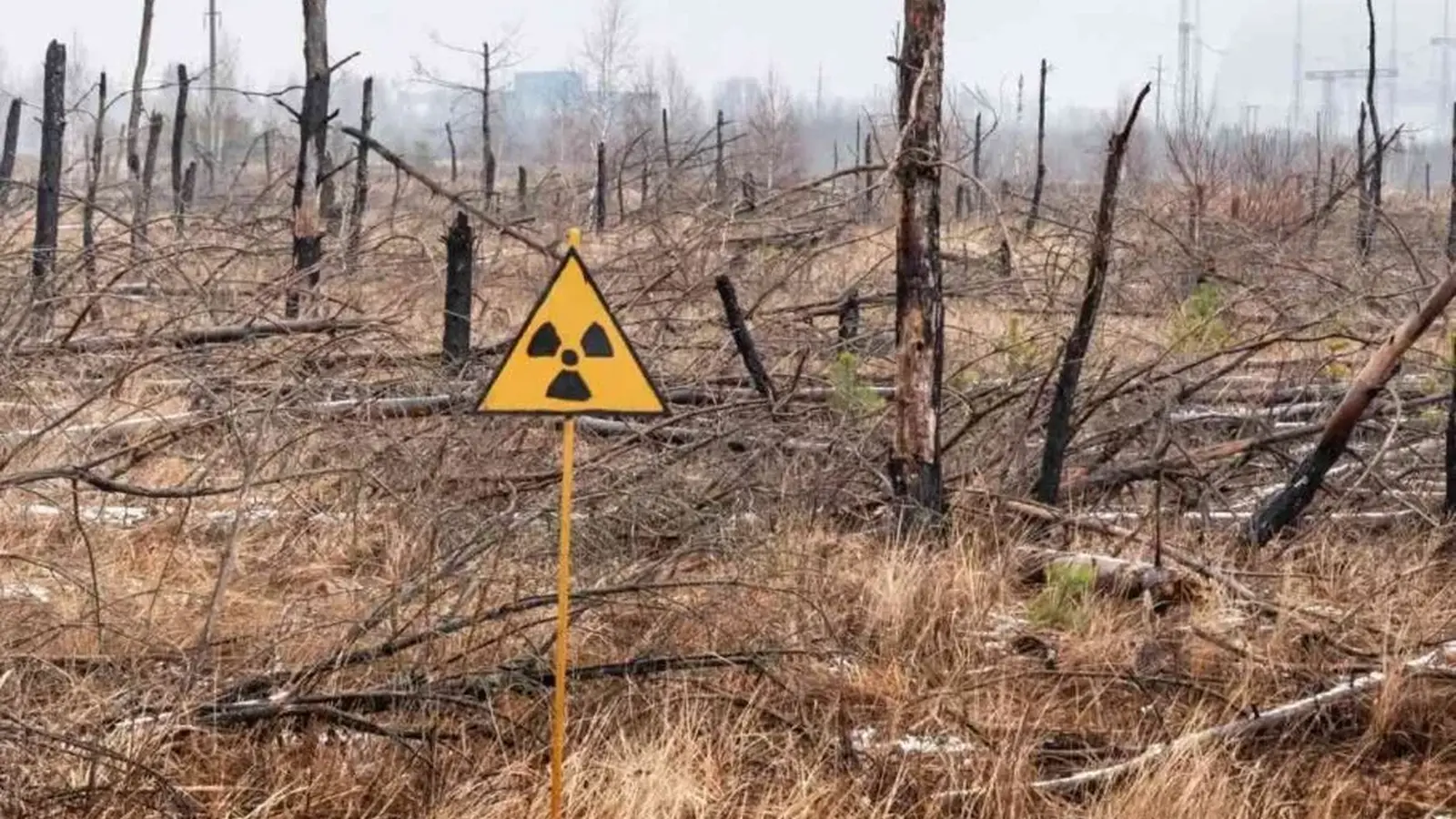
Forty years after the reactor blew, tiny remnants of that day still hold their secrets. They are dust-size and stubborn—between 8 and 50 micrometers—but they still glow with radiation and force anyone who enters contaminated zones to suit up.
Scientists who recently reexamined soil from around the site found something unexpected: many of these radioactive microparticles preserve structural features close to their original form. That runs counter to the long-held idea that such fragments would have long since collapsed into amorphous, weathered debris.
Researchers identify three families of particles. One group resembles uranium dioxide—the primary reactor fuel—right down to its crystal fingerprints. A second group is coated with zirconium, the tough metal used in fuel cladding that melted and fused during the reactor’s hottest moments. The third type is linked to graphite, formed when the reactor’s graphite control rods ignited and burned for nearly ten days after the explosion.
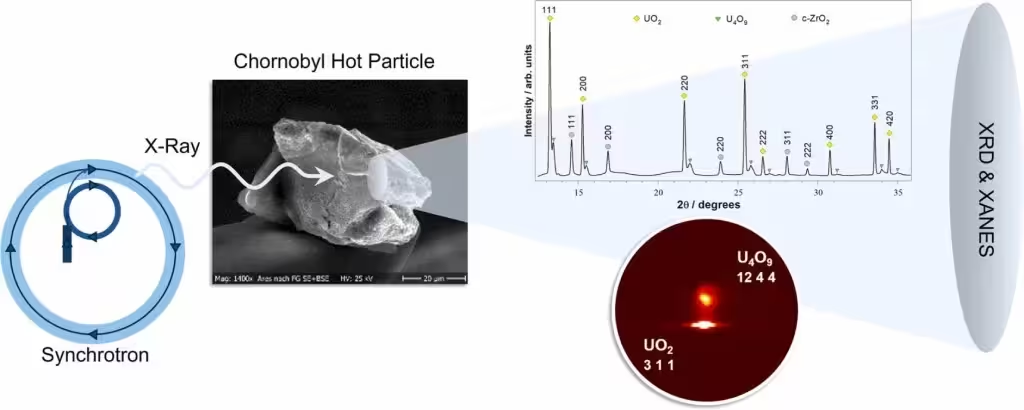
The chemistry tells a dramatic story. Reactor-grade uranium transformed into several oxides, including U3O8, a brittle and mechanically weak form that shattered into countless microscopic shards. Wind and weather move those shards, and when inhaled they present serious health hazards. But the rate at which these uranium-oxide particles break down in the environment varies from place to place, and until now the causes of that variability have been unclear.
To probe the mystery, teams turned to one of the sharpest tools available: synchrotron X-ray diffraction. Dr. Christoph Hennig at Germany’s HZDR used this technique to map particles at the atomic level. As Tobias Wiesenborn, a PhD physicist at the University of Hanover, explains, each particle was rotated and exposed to X-rays from some two thousand angles so the researchers could capture every reflecting plane. The result was the first successful atomic-scale structural survey of these radioactive fragments.
The surprising result: several particles still show a crystalline order very similar to the original uranium fuel. In other words, rather than dissolving into amorphous dust, pockets of material have retained a robust lattice that may slow their degradation in soil and sediment. That resilience suggests some particles could remain environmentally active for far longer than models had predicted.
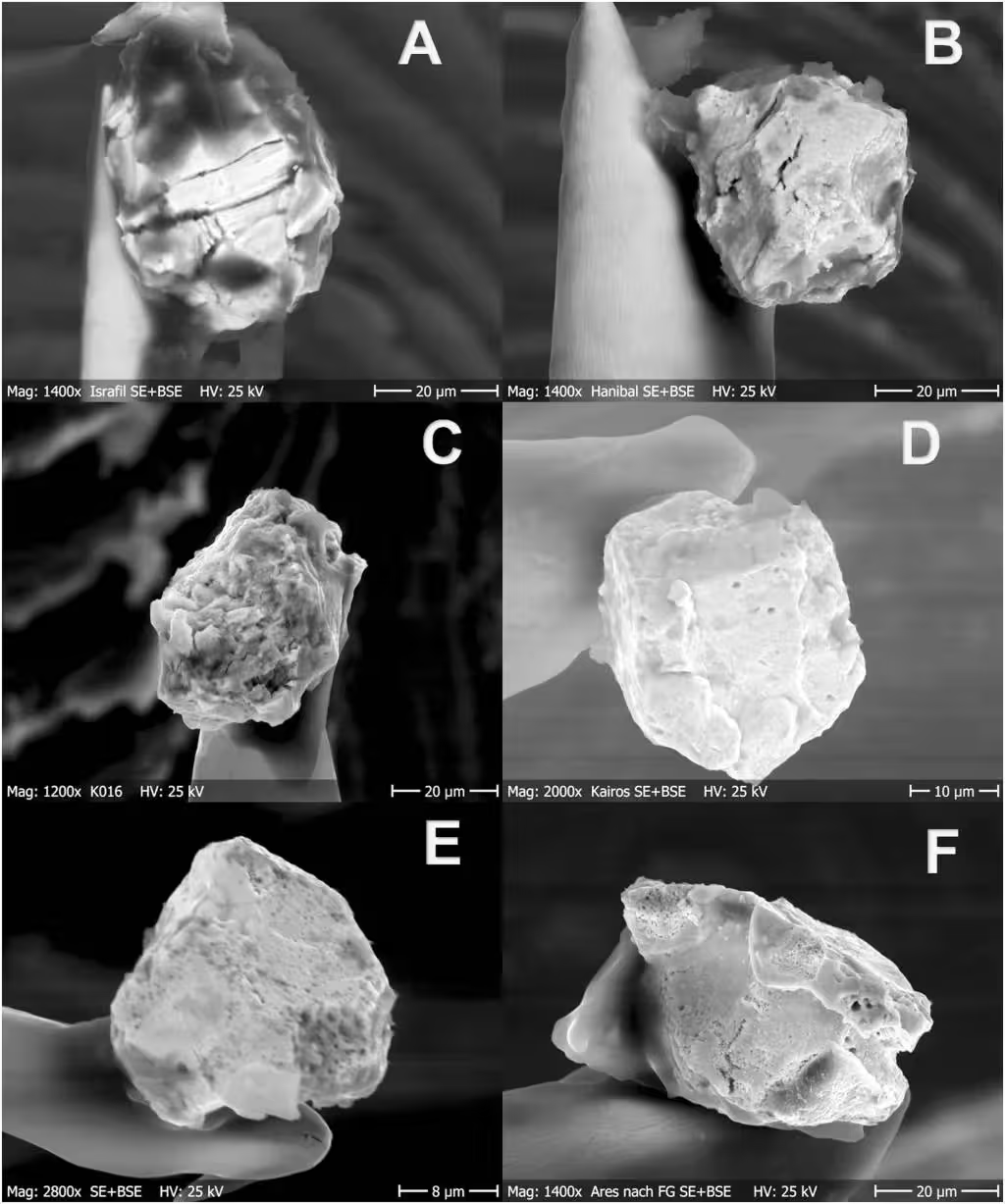
Why do some particles stay crystalline while others crumble? That question matters. Better answers would let scientists make far more reliable long-term forecasts for contamination spread, exposure risk, and remediation strategies. The new structural data provide a critical piece of that puzzle, but they also raise new ones about how chemistry, microstructure and environmental history combine to determine a particle’s fate.
The study, led by teams at HZDR and partners across Ukraine and Europe, appears in the Journal of Hazardous Materials. It is a reminder that even the smallest fragments of a catastrophe can carry a long memory—and that understanding that memory demands both precision instruments and patience.


Leave a Comment
Comments
No comments yet. Be the first.