
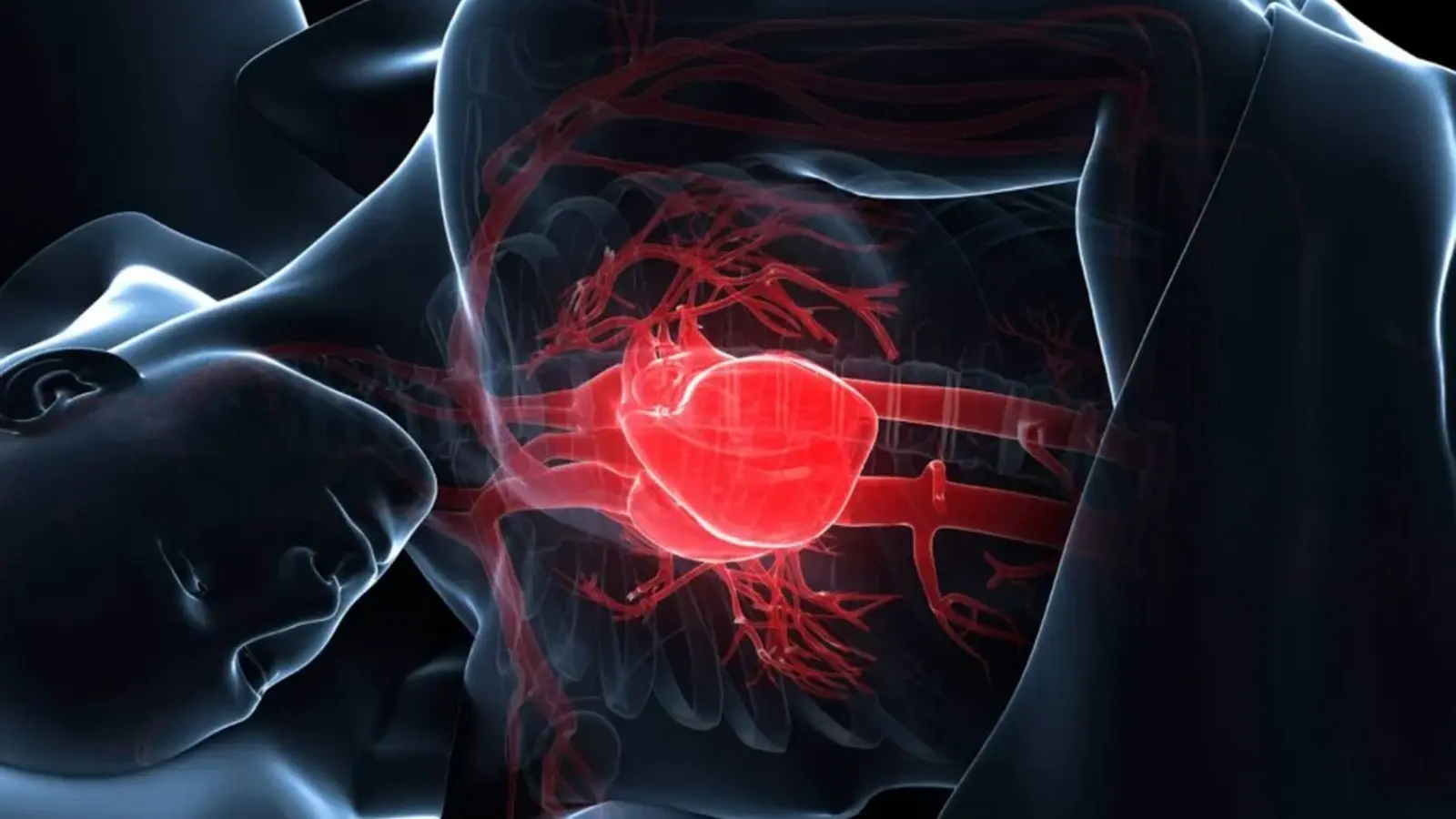
When you lie down and close your eyes, a quiet conversation begins between your heart and your nervous system. It’s subtle. Fleeting. Often ignored. But researchers now say that a single channel of that nocturnal heartbeat can reveal risks that won’t surface clinically for years.
Scientists at Emory University trained a deep learning model on nearly 16,000 people who took part in a large sleep study at Massachusetts General Hospital. Each participant wore a chest ECG during polysomnography—the standard overnight test for sleep disorders. The twist: instead of looking only for obvious arrhythmias, the algorithm learned to read faint electrical signatures across sleep stages and translate them into long-term cardiovascular risk.
The results are striking. The AI separated people into distinct long-term risk groups for multiple heart conditions and for death from any cause up to ten years out. That predictive power persisted even after statisticians adjusted for well-known risk factors such as age, sex, diabetes, high blood pressure, and smoking. In short: the model picked up something beyond traditional clinical markers.
How big are the effects? For each one standard-deviation increase in the AI risk score, the odds rose sharply: atrial fibrillation climbed by roughly 103–172 percent, stroke by about 19–40 percent, and heart failure by roughly 69–133 percent. Even the risk of dying from any cause increased—by some 65–82 percent. Those are not trivial margins.

Why might sleep be special? The team observed that patterns emerging in the lightest sleep stage—where heart rate and autonomic signals can swing quickly—were particularly informative. Short-lived autonomic jolts and subtle changes in how electrical impulses travel may make latent conduction or rhythm abnormalities more visible at night than during routine daytime ECGs.
Polysomnography already records cardiac activity, but in many labs the ECG is used only to rule out gross abnormalities. This approach suggests there’s a second, hidden layer of information in those tracings—one that machine learning can surface without any extra hardware beyond the single chest lead used in standard studies.
Applications could be practical and immediate: add an AI read to sleep-study workflows and flag patients who may benefit from closer cardiovascular follow-up long before symptoms appear. That said, the authors stress the need for further validation and careful clinical testing. Algorithms must prove robust across populations and device variations before they become routine.
Published in the journal SLEEP, this work nudges sleep labs into the frontline of cardiovascular prevention. Imagine a routine overnight test quietly alerting clinicians to a future heart problem a decade before it arrives. Wouldn’t you want to know?


Leave a Comment
Comments
No comments yet. Be the first.