

4 Minutes
A quieter peak could mean a higher Bitcoin bottom
New analysis from Galaxy Research and commentary from on-chain tracker CryptoQuant indicate that Bitcoin's market-bottom process is still unfolding — but the eventual low could settle materially higher than past bear markets. Galaxy's study finds that the subdued October 2025 cycle top and reduced speculative froth may have raised the network's effective cost basis, narrowing the potential downside for BTC.
The research suggests Bitcoin may avoid the extreme drawdowns seen in earlier cycles, although timing and stronger bottoming signals have yet to fully align. Traders and investors should follow realized price, MVRV, Pi Cycle Top signals, and demand metrics closely as the market continues to digest the post-peak adjustment.

Bitcoin’s four-year cycle peak-trough analysis.
Cycle dynamics and why this top looked different
Galaxy head of research Alex Thorn reviewed historical cycle peaks and troughs and found the four-year rhythm remains broadly intact. However, peak-to-trough losses have contracted across cycles: earlier collapses reached roughly 85% and 84%, the 2022 drawdown was about 77%, and the most recent decline measured near 51% in 2026. That trend toward shallower maximum losses is central to Galaxy's thesis that a calmer top lifts the floor.
Thorn highlighted several differences at October 2025's top: traditional topping indicators largely stayed quiet, with only two of eleven flashing, and the widely watched Pi Cycle Top indicator did not trigger for the first time. Bitcoin's MVRV — which gauges market value versus realized value — peaked around 2.29, materially lower than the 2.93–5.91 peaks seen in earlier cycles. Lower speculative excess implies fewer coins were bought at extreme premiums, keeping the network cost basis higher relative to all-time high (ATH).
Thorn summarized the implication concisely: a muted top raises the potential floor because the network's cost basis sits at a higher percentage of ATH compared with previous cycles, reducing the pool of highly underwater holders whose forced selling historically deepened bottoms.

BTC cycle bottom indicator list.

Realized price, cost basis and bottom scenarios
Galaxy cites the network's realized price as a key reference. With the realized value around $53,600, the firm frames several scenarios: a base-case bottom near $40,000–$46,000, a deeper washout in the $30,000–$37,000 range, and a shallower trough around $51,000–$54,000. The report warns, though, that cost basis levels are reflexive: panic selling can force coins to change hands at losses, lowering the average cost and pushing the implied floor meaningfully lower.
Practically, a 10–30% decline in the cost basis could drag Galaxy's implied base floor from roughly $40,000 back toward the high $20,000s. Historical timing also matters: previous cycle bottoms often arrived 12–13 months after the peak, while the current drawdown is only about eight months old — suggesting there could still be months before a definitive low appears.

Bitcoin bottom range based on realized price analysis.
On-chain demand signals from CryptoQuant
Complementing Galaxy's supply-side focus, CryptoQuant's on-chain metrics show demand pressures that support a cautious stance. Bitcoin traded near $59,000 in their latest window — roughly 9% above the realized price of $53,600 — placing BTC inside a valuation zone historically linked to major bear-market lows. Past bottoms, including the November 2022 FTX-driven sell-off, formed at or slightly below realized price, which suggests the bottom could overlap Galaxy's base-case band between $40,000 and $46,000.
Yet demand-side indicators have softened: CryptoQuant recorded a combined weekly decline of 652,000 BTC across speculative futures demand and apparent spot demand — the steepest contraction since January 2022. Its one-year demand gauge also turned negative, indicating fewer net buyers versus a year earlier. These metrics imply that even if structural supply dynamics raise a theoretical floor, real-world buying interest must re-emerge to confirm a sustainable bottom.
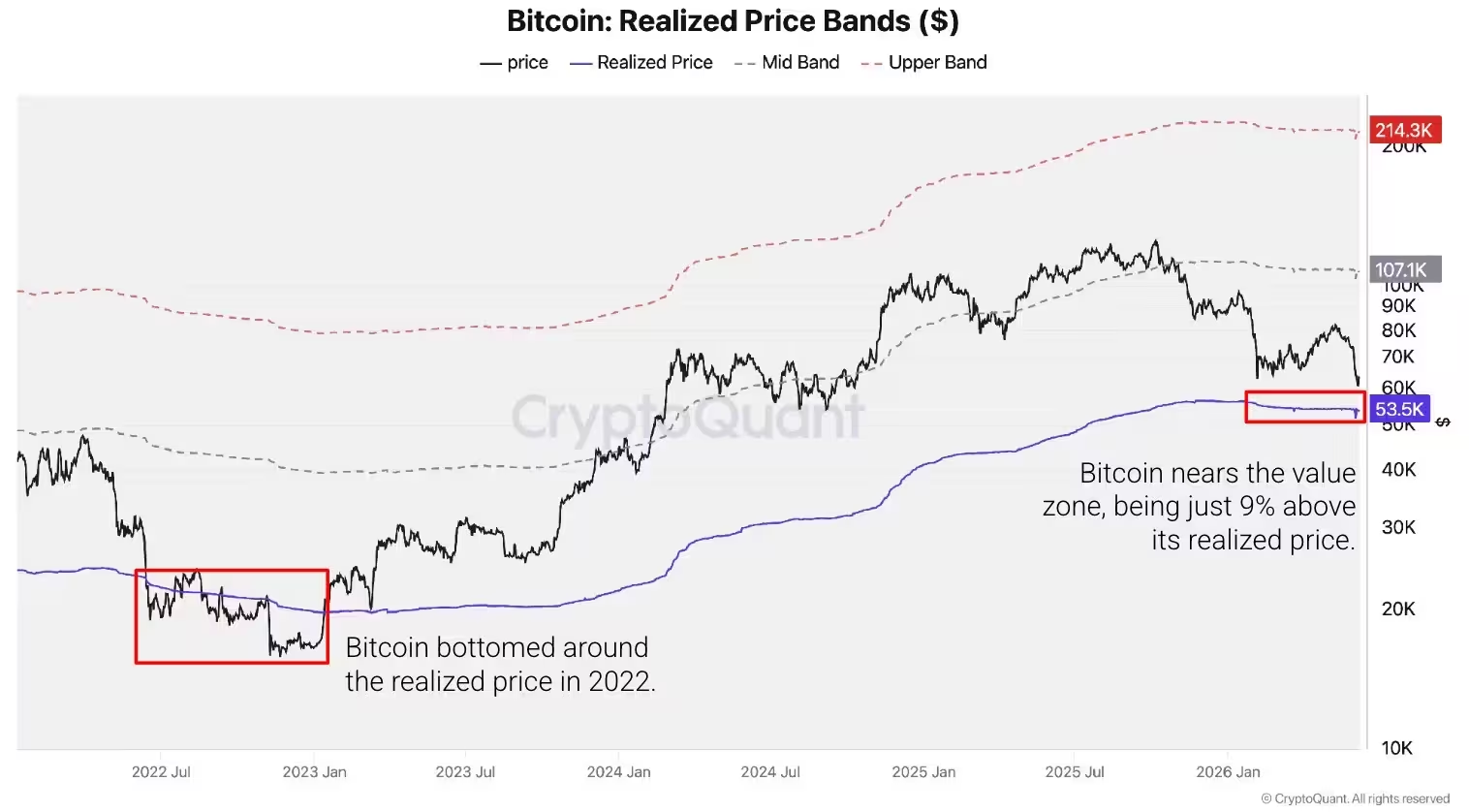
Bitcoin value zone based on realized price bands.
Takeaway for traders and investors

Galaxy Research's core message is constructive: a calm cycle peak reduces the proportion of highly leveraged or overly speculative holders, which in turn raises the network's cost basis and narrows downside risk. Still, several powerful bottoming indicators haven't yet fired, and on-chain demand remains weak. Market participants should monitor realized price bands, MVRV, Pi Cycle signals, and CryptoQuant's demand gauges to triangulate a likely bottom and manage risk accordingly.

Leave a Comment
Comments (2)
tbh seems plausible, muted top could keep the floor higher but timing matters. i'll wait for MVRV, realized bands and Pi Cycle to actually line up before buying heavy. not FOMOing
hmm raised floor makes sense on paper, but where are the buyers? crypto is reflexive, one panic move and realized price drops fast. anyone else skeptical or missing sth