
5 Minutes
Cardano co-founder warns Bitcoin’s crown could be at risk from quantum computing
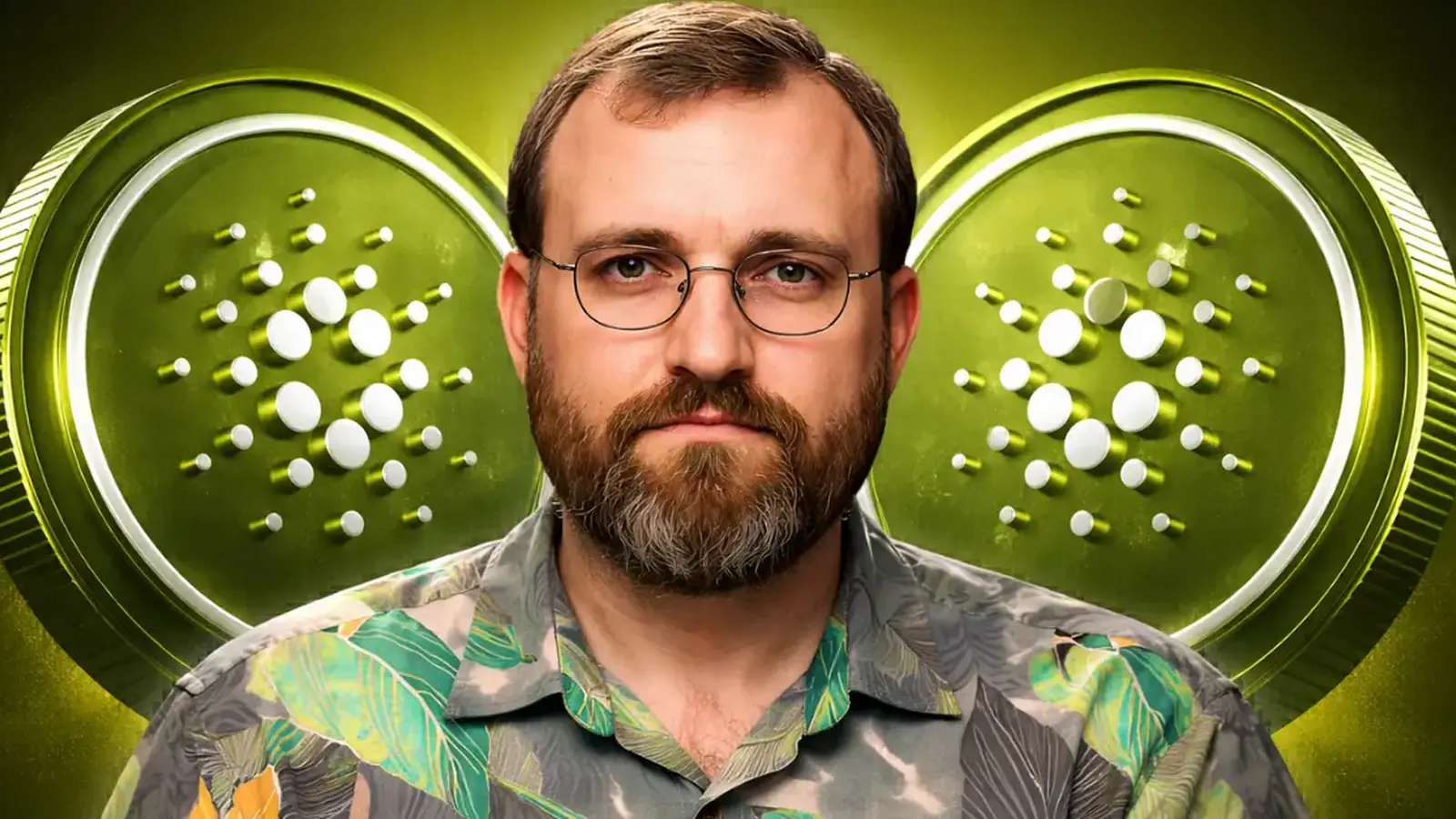
Cardano co-founder Charles Hoskinson has argued that Bitcoin’s position as the market leader could be undermined if the network’s governance model cannot coordinate a timely migration to post-quantum cryptography. Speaking in an interview published on July 24 with The Starting Block, Hoskinson framed the quantum threat as a governance stress test rather than an immediate military-style attack, saying Bitcoin is effectively “frozen in time” because meaningful protocol changes require wide agreement across developers, miners, node operators and users.
Why quantum computing matters for cryptocurrencies
Quantum computing threatens widely used elliptic-curve signatures such as ECDSA and Schnorr, which underpin ownership and transaction authorization on Bitcoin and many other blockchains. A powerful quantum computer could, in theory, derive private keys from public keys exposed on-chain and forge transactions. The U.S. National Institute of Standards and Technology (NIST) has warned of this future risk and has completed standardization of post-quantum cryptographic algorithms to help software and protocol designers transition to quantum-resistant primitives.
Not an immediate exploit, but a planning problem
Hoskinson emphasised that the core of his argument is governance: the real challenge is whether a blockchain can enact complex, high-stakes cryptographic upgrades without fracturing the network or undermining the properties that give the asset value. He did not predict a countdown to a quantum attack nor name a specific chain that would replace Bitcoin, but warned that failure to coordinate timely, secure upgrades could put BTC’s leadership at stake.

Bitcoin’s migration options and governance constraints
Bitcoin has no formal on-chain voting mechanism. Protocol changes rely on off-chain coordination between developers, miners, exchanges, wallet providers and node operators. This deliberate conservatism helps protect Bitcoin’s stability but can slow urgent responses.
Existing proposals and research
Work toward post-quantum migration is already underway. Bitcoin Optech is tracking efforts like BIP 361, which outlines a staged transition away from current ECDSA and Schnorr signatures contingent on selection of a post-quantum scheme. Researchers and developers are evaluating new address formats, hybrid signatures that combine classical and post-quantum algorithms, and recovery pathways to reduce risk during transition. These proposals remain under review and require broad ecosystem buy-in before they can be deployed.
Operational challenges for wallets, exchanges and custodians
Any practical migration must account for custodians, exchanges, wallet vendors, miners and long-dormant holders. Millions of BTC are estimated to sit in addresses whose public keys have been revealed; those UTXOs could be more susceptible if quantum-capable hardware appears. Coordinating migrations without creating split chains, conflicting ownership claims, or mass-exposure events is a complex logistical and technical challenge.
Cardano’s on-chain governance as an alternative path
Cardano completed its transition to formal community governance with the Plomin hard fork in January 2025. Under this model, ADA holders can vote directly or delegate voting power to representatives (DReps). The governance structure also involves stake pool operators and a constitutional committee for selected matters. On-chain voting can approve protocol upgrades, treasury spending and hard forks.
Governance advantages and real-world limits
Hoskinson argues Cardano’s governance gives it a clearer route to approve complex changes like a move to post-quantum cryptography. Cardano’s teams are funding cryptographic research and testing scale-focused designs such as Ouroboros Leios, which aims to increase throughput by separating block roles and enabling parallel work. Hoskinson has suggested Leios could make the network up to 60 times faster, though that figure remains an estimate and requires further testing, review and on-chain approval.
However, formal governance does not guarantee smooth adoption. During 2026, Cardano delegates challenged or rejected several proposals linked to Hoskinson and Input Output, including research requests on Leios scaling and quantum-resistant cryptography. That illustrates that even with formal voting, consensus and technical validation remain essential.
Where both networks stand on post-quantum readiness
Neither Bitcoin nor Cardano has deployed a full post-quantum transaction system yet. Bitcoin’s path emphasizes careful off-chain consensus and slow, conservative upgrades to preserve stability. Cardano’s on-chain governance provides a direct mechanism to approve changes but still faces technical review cycles, funding debates and the task of organizing developers, service providers and users.
The practical test ahead
The decisive moment will arrive when communities agree on secure post-quantum cryptographic primitives and then must migrate funds and software without fracturing the network. Both ecosystems are advancing research: Bitcoin developers are studying BIP 361, hybrid signatures, and new address schemes; Cardano is investing in cryptographic research and governance tooling while iterating on scaling upgrades like Leios and coordinating hard forks such as van Rossem.
Conclusion: governance, not panic
Hoskinson’s remarks place the quantum risk squarely in the governance domain. The technical risk from quantum computing is acknowledged by standards bodies and researchers, but the more immediate consideration for crypto markets is whether blockchains can make careful, consensus-driven migrations when they are ready. For Bitcoin, that means evolving an off-chain coordination process that can act swiftly if needed. For Cardano, it means turning on-chain votes and funded research into technically sound upgrades that pass review and adoption.
For crypto investors, developers and infrastructure providers, the takeaway is clear: post-quantum readiness will be decided as much by governance and migration planning as by cryptographic research. Monitoring BIP 361, NIST post-quantum standards, Cardano governance proposals, and developments around Ouroboros Leios will be critical for assessing long-term network resilience against quantum threats.

Leave a Comment
Comments (2)
Hmm, is Cardano's on-chain voting actually enough for a PQ switch? Or will politics and vendors stall it, if that's real then... unsure
Wow this hits different, governance > tech. If Bitcoin can't coordinate a PQ move, leadership's at risk... scary but logical imo