
3 Minutes
Imagine a clock that ticks from the heart of the atom. Quiet. Deep. Far removed from the electrons that have kept our most precise timepieces so reliable for decades.
That imaginative leap is no longer purely theoretical. Two independent research teams have now built working prototypes of what are being called nuclear clocks—timekeepers that lock a laser not to electron jumps but to a transition inside the atomic nucleus itself. The result is a new reference that promises exceptional stability and reduced susceptibility to environmental noise.
Why the nucleus? Because protons and neutrons live in energy landscapes that are fundamentally different from those of electrons. Nuclear transitions can be much less perturbed by stray electromagnetic fields, and some transitions are extraordinarily narrow. In practice, this could produce an oscillation so steady that it nudges the frontier of precision timekeeping beyond today’s best optical and cesium clocks.
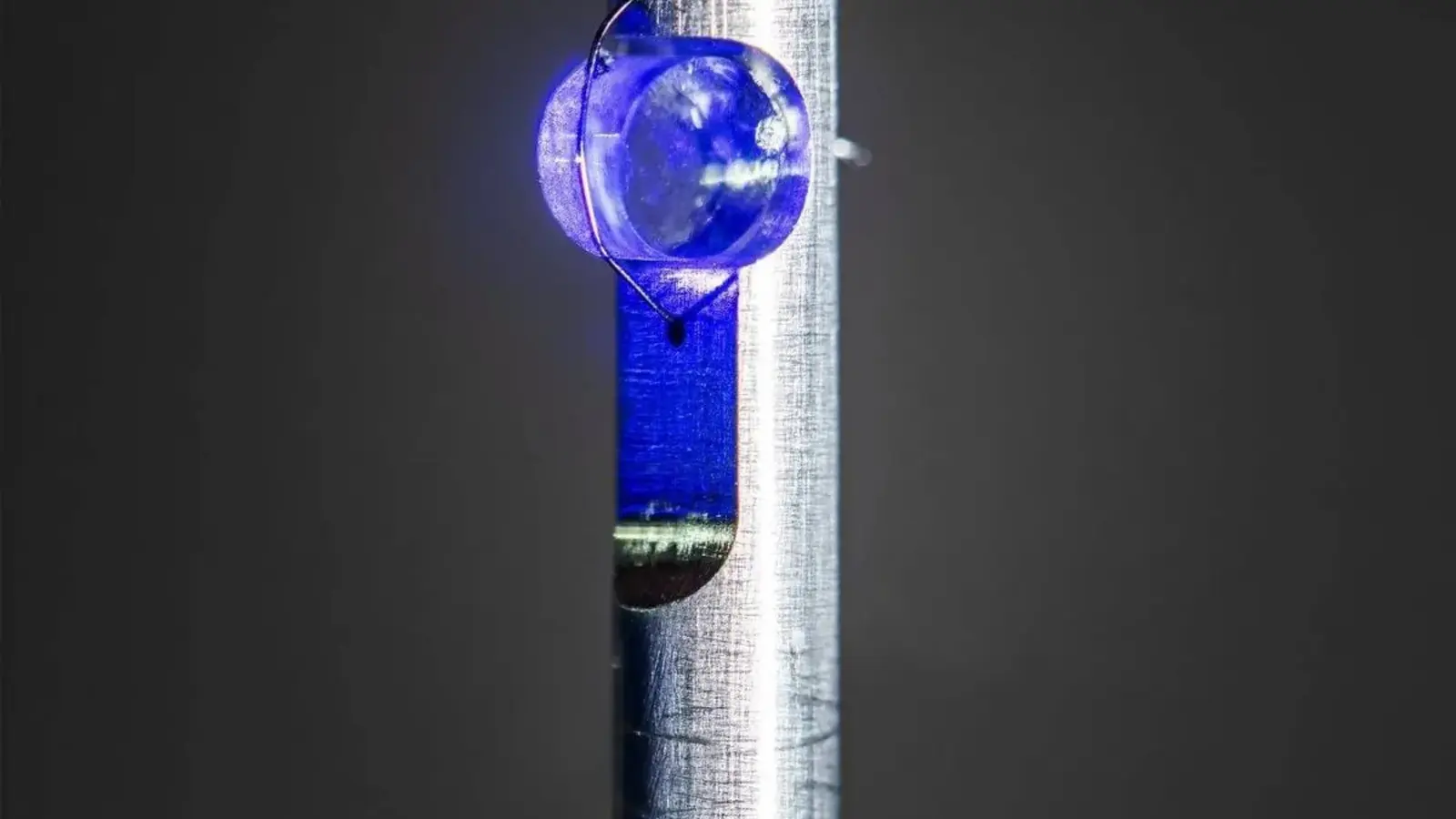
Both groups used the same clever platform: a calcium fluoride crystal doped with tiny, controlled amounts of thorium-229. That particular isotope is special. Its lowest excited nuclear state sits at an energy low enough to be accessed directly with precision lab lasers—an exceptionally rare property among known nuclei. In short, thorium-229 is the only realistic candidate for a laser-driven nuclear clock for now.

There are still engineering hurdles. The core innovation reported in these experiments was not merely observing the nuclear transition—researchers have implemented a full feedback loop that continuously adjusts the laser frequency to stay locked to the nuclear resonance. Without that control, you can measure a transition. You cannot build a reliable clock. This practical stabilization step marks the shift from laboratory curiosity to an actual time reference.
The two efforts took different routes. One team pushed higher laser power. The other increased the thorium concentration in the crystal. Different designs. Similar outcome: both systems produced stabilities and initial accuracies that compare favorably with top atomic clocks in some sensitive measurements. Early days, yes. But promising days.
Beyond bragging rights in precision, nuclear clocks open new experimental windows. Could they help detect feathery, ultra-light dark matter fields that subtly warp fundamental constants? These clocks have already been used in preliminary searches. No dark matter signal has turned up yet. Still, in several scenarios their sensitivity appears competitive with existing atomic-clock searches, and in others it could surpass them.
There is another, almost practical advantage: solid-state nuclear clocks could be far more compact and robust than many vacuum-chamber atomic clocks. Imagine highly stable, portable clocks that tolerate ordinary electromagnetic clutter. The leap from delicate lab rigs to resilient devices seems more achievable with a nucleus-based reference than with many current atomic systems.
The idea of a nuclear clock was floated in 2003. It took years of incremental advances in laser technology, materials, and measurement control to bring the concept into the lab. Now the field feels like the start of a competition—a race to refine stability, extend coherence, and push systematic uncertainties down. What comes next will be engineering: longer runs, lower noise, and careful comparisons with optical and cesium standards.
There is a poetic symmetry to it. Timekeeping began with celestial motions, then shifted to pendulums and quartz, then to atoms. The next chapter may be written inside the nucleus—a quieter beat inside matter itself. Will that beat rewrite fundamental tests of physics or help reveal the faint fingerprints of dark matter? The first practical steps have been taken, and physicists are listening closely.


Leave a Comment
Comments
No comments yet. Be the first.