
3 Minutes
A short hop over a Florida airfield felt, for a few nervous minutes, like the future taking its first tentative breath.
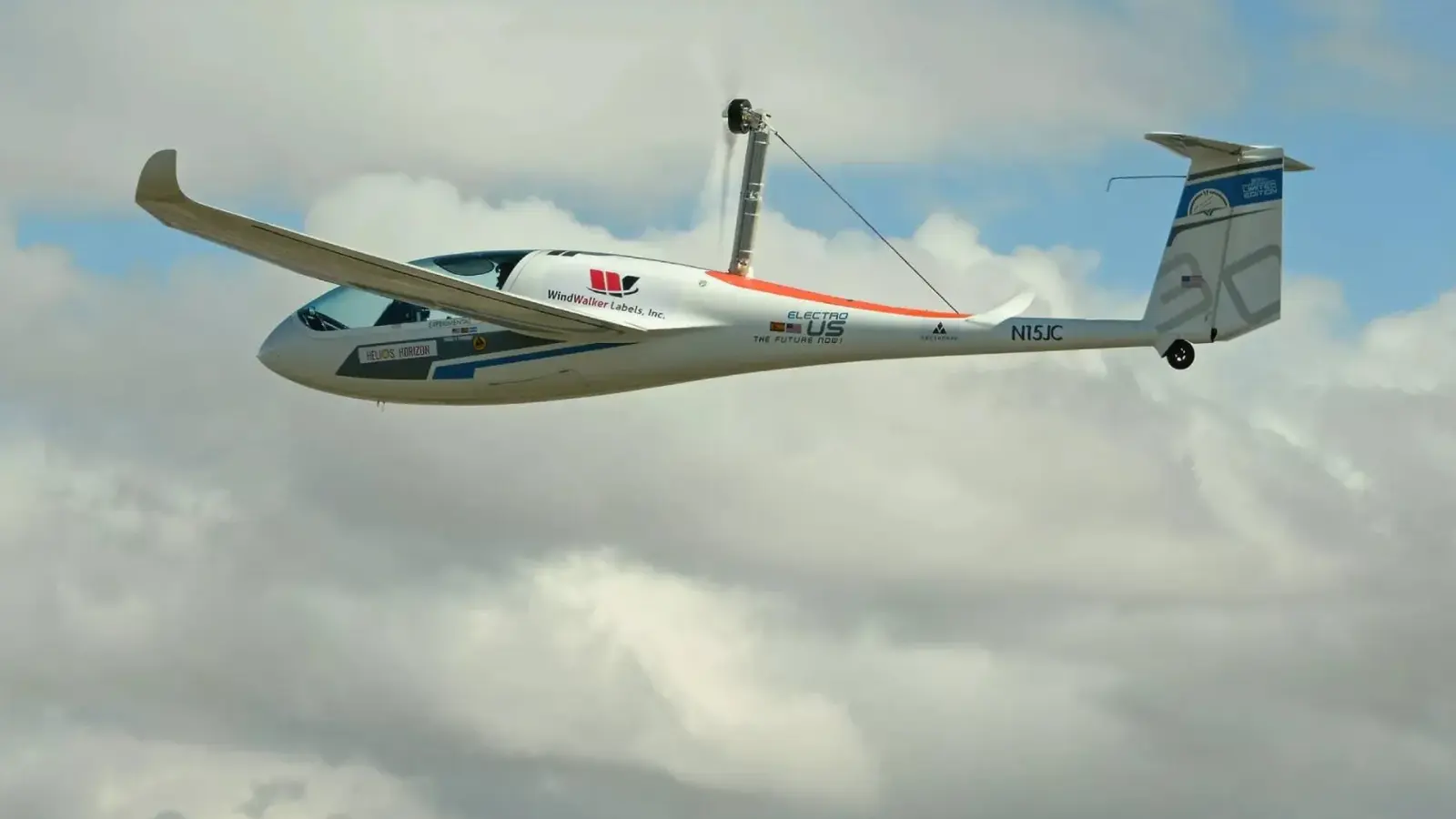
On June 5 at Zephyrhills Municipal Airport, test pilot Miguel Iturmendi guided the Helios Horizon — a manned, fixed-wing craft — through a series of short experimental flights. They were not long-haul triumphs. They were cautious, methodical checks of weight, balance and handling after replacing conventional cells with solid-state batteries. Still, the moment is a landmark: this is the first recorded manned fixed-wing flight powered by solid-state cells.
Why does that matter? Because electric aviation has been boxed in by one stubborn physics problem: energy per kilogram. Typical lithium-ion packs, the same basic chemistry used in electric cars and many drones, rely on liquid electrolytes and struggle to store enough usable energy for commercial-scale distances. Planes demand far more energy density than cars. Weight is unforgiving.

Solid-state chemistry changes that equation. Swap the liquid electrolyte for a solid and you get several practical gains: better resistance to punctures, lower fire risk, improved thermal stability — and crucially, a much higher energy density. In Helios Horizon's case, the team reports an increase from roughly 260 Wh/kg with its previous lithium-ion setup to about 410 Wh/kg using the new solid-state cells — a jump of nearly 60 percent. Iturmendi and his colleagues expect further improvements; the team forecasts another rise of roughly 40 percent within a couple of years.
These batteries also play nicer with existing infrastructure. They can be charged from standard AC power and support rapid charging — the project claims a charge to 80 percent in under 15 minutes. The Helios Horizon isn’t relying on batteries alone. Solar panels glued to the wings and an energy-recovery scheme that turns the propeller into a generator during descent extend range in clever, low-tech ways. Call it regenerative flying.
The aircraft itself began life as a motorized Pipistrel Taurus glider. The development team grafted on a bespoke battery management system, a custom propulsion stack, thermal controls and the solar add-ons. The platform has already proven its aerial chops: the craft previously hit 7,315 meters, and the next target is a lofty 12,192 meters — the altitude often cited as a commercial cruise level.

Helios Horizon is not alone. China’s EHang tested a two-seat vertical takeoff prototype, the EH216-S, with lithium-metal solid-state cells and logged a 48-minute continuous flight at an energy density near 480 Wh/kg. CATL has showcased a compact cell concept around 500 Wh/kg and says aviation tests are underway. In Europe, Airbus and Renault have opened a joint R&D channel aiming to roughly double current energy densities so mid-range electric or hybrid airliners could be feasible in the 2030s.
Prototype success, however, is only the start. Certification, regulatory approvals and years of reliability testing lie between these demonstrators and daily airline operations. Still, each incremental leap in cell chemistry chips away at the old limits.
For now, the Helios Horizon flight reads like a promise: the physics that once chained electric aircraft to very short hops are loosening. Will solid-state cells be the spark that finally lights routine electric flight? Eyes will be on the next climbs and the next battery data to find out.


Leave a Comment
Comments
No comments yet. Be the first.