
3 Minutes
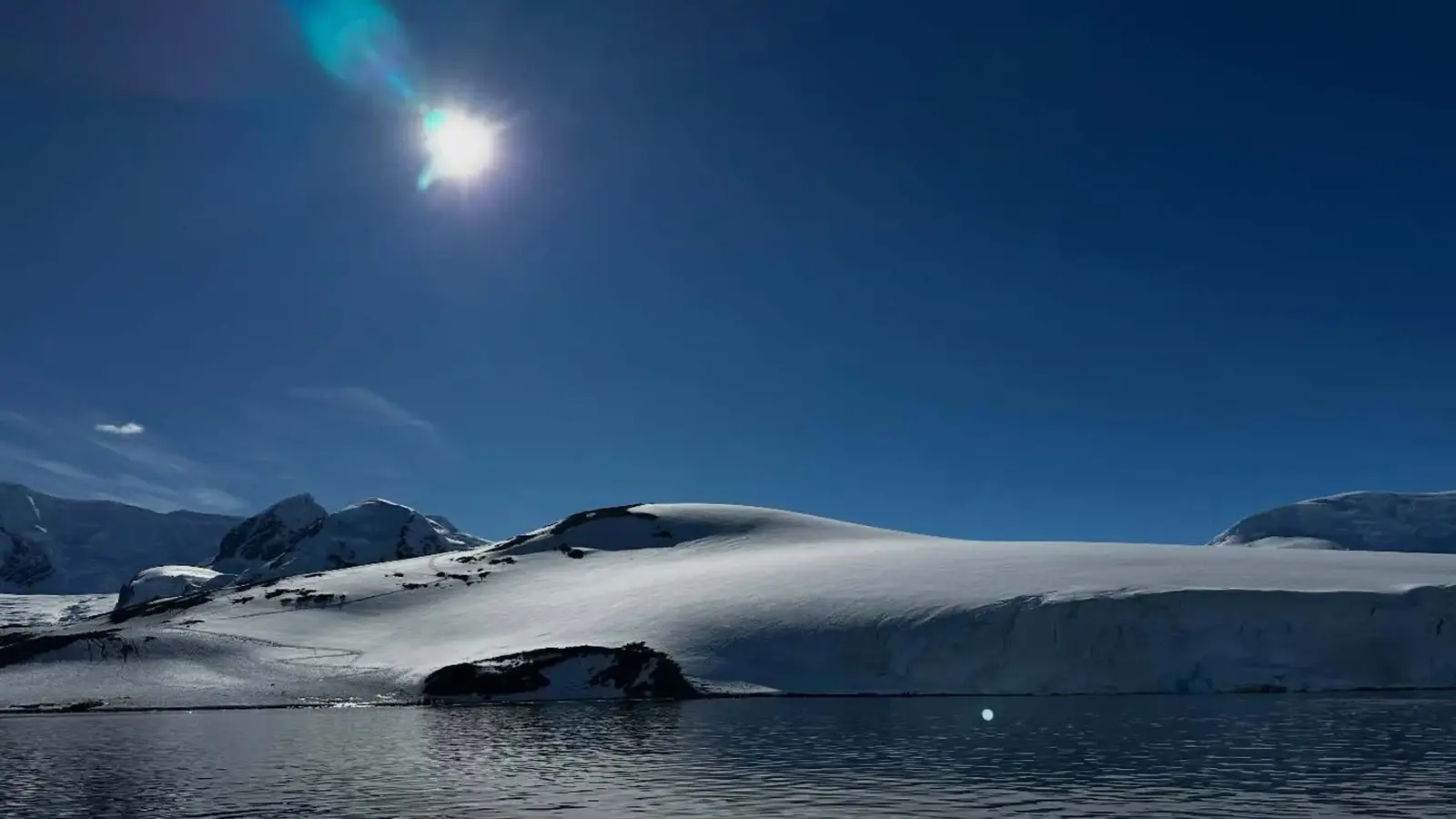
It was raining in Antarctica. In June. In places where snow should be piling up and everything outside should be locked in ice.
On June 6 researchers on the Trinity Peninsula — the northernmost tip of the Antarctic mainland — recorded a bewildering 15.4 C. That single reading was roughly 20 degrees Celsius above what the season normally delivers. For scientists watching the frozen continent, the spike felt less like an anomaly and more like a flashing warning light.
Raúl Cordero, a climate scientist at the University of Groningen, framed the number bluntly: the temperature was far beyond what early winter in Antarctica should look like. Short of a dramatic weather movie scene, few could explain how outdoor surfaces were visibly melting in conditions that usually bury the ground beneath fresh snow and thick surface ice.
Field observations made the headline figure painfully real. Chilean glaciologist Luis Muñoz recounts a weekend visit to Collins Glacier, in the peninsula’s northwestern reaches, where rain — warm rain — fell and ate into the surface ice. 'Everything outside was melting,' he said. Glaciers that should be gaining mass and layering fresh snow instead lost ice and shed weight. For ice that depends on seasonal accumulation, that pattern is unnerving.

Not every heat spike will topple the Antarctic. A single warm event is unlikely to obliterate a continent of ice. But context matters. The peninsula and the broader Antarctic system have been under sustained stress for decades: faster glacier retreat, increasing human presence, and signs that the ocean under some ice shelves is warmer than expected. The Thwaites Glacier in West Antarctica — often nicknamed the 'Doomsday Glacier' — remains a vivid example. Scientists trying to instrument its underside have shown that waters below the ice are warmer than many models predicted, offering a mechanism that can accelerate ice loss.
Cordero ties the recent surge in temperature to unusually strong westerly winds, a pattern increasingly recorded since the 1980s. Those winds can reshape weather over the Southern Ocean and, when amplified, bring unusually warm air or push warm ocean water toward ice shelves. Climate studies have connected shifts in these wind patterns to human-driven warming.
If greenhouse gas emissions continue unabated, Antarctic melting could accelerate to roughly ten times today's rate by the end of this century.
That stark projection comes from researchers at Victoria University of Wellington. Their modeling shows that if global average temperatures climb roughly 3.5–4 C above preindustrial levels, surface melting across Antarctica will become far more widespread. Ice shelves that today buttress inland ice would become more vulnerable to abrupt collapse, and the likelihood of rapid ice-sheet loss — with major sea-level consequences for coastal cities worldwide — would rise.
Science rarely deals in neat certainties. But when thermometer records, field reports of rain on glaciers, and underwater temperature measurements all point toward a common trend, the picture grows harder to dismiss. The Antarctic is not immune. It is a system responding to changes in the atmosphere and ocean, and those changes are already reshaping the way ice grows and disappears.
What happens next depends on choices made far from the continent: energy systems, emissions trajectories, policy decisions. For researchers boots-on-the-ground observations remain essential; for the rest of us, the question is more existential. Will we treat these warning signs as mere curiosities, or as the prelude to a much larger, more costly transformation of the planet?

Leave a Comment
Comments
No comments yet. Be the first.