

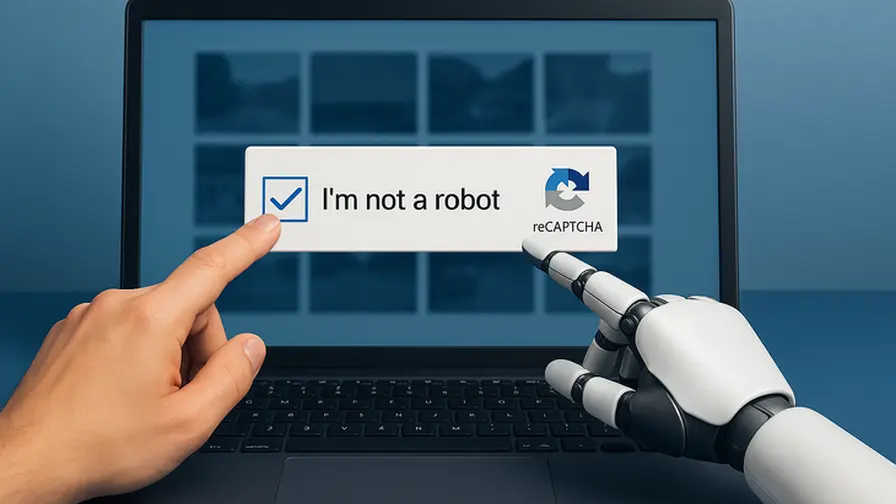
Imagine a web where the annoying CAPTCHA puzzles and endless login gates slowly fade away. That’s the promise Cloudflare and several major browser makers are pitching as they try to wrestle control back from an internet increasingly run by bots.
At the center of this shift is a proposal called Private Access Control Tokens, or PACT. Developed with input from browser teams at Chrome, Edge and Firefox alongside partners including Google, Microsoft, Mozilla and Shopify, PACT aims to give websites a compact, privacy-preserving signal: is this incoming request coming from a legitimate human-driven session or an automated agent acting on someone’s behalf?
The twist is that browsers, rather than the sites themselves, would issue anonymous attestations. A site that has strong confidence a visitor is human could produce a token, and that token could then be presented elsewhere as proof of human presence—without revealing who the person is, what they browsed before, or any long-lived identifier. Think of it as a reusable, private result from a CAPTCHA that proves the user’s session integrity, not their identity.

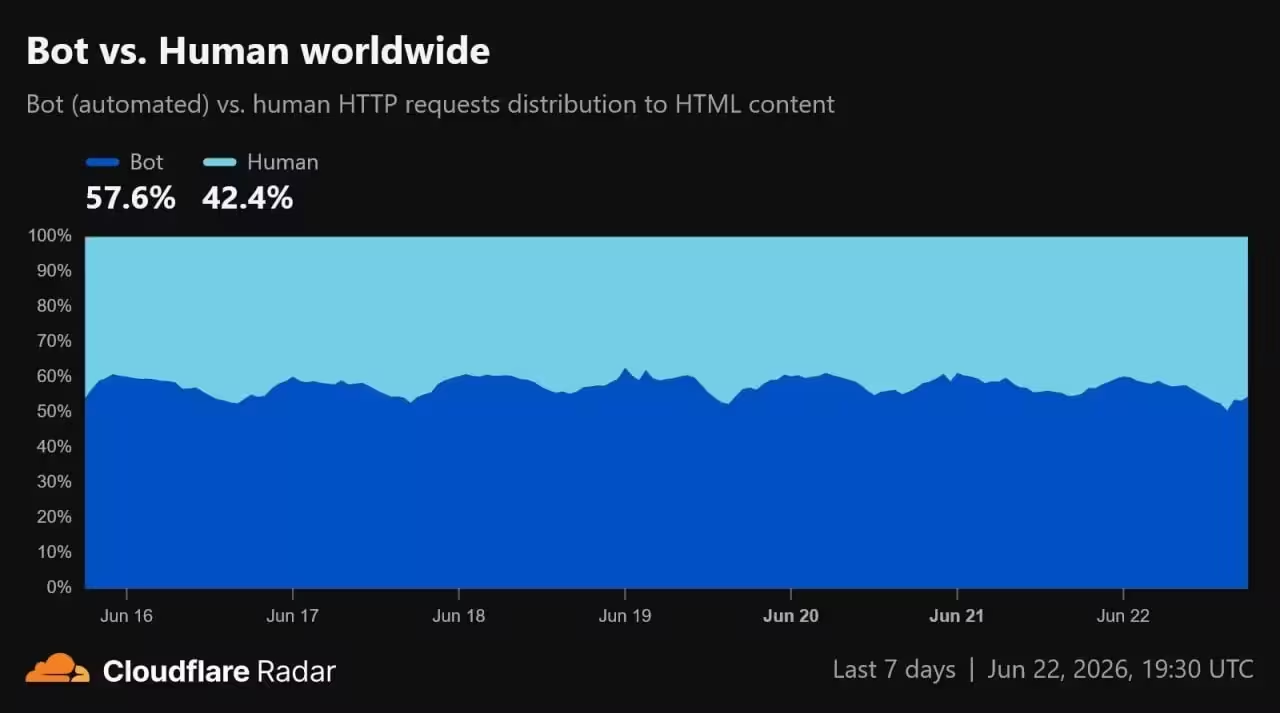
Why now? Because the internet looks different than it did just a few years ago. Cloudflare’s leadership has warned that bot traffic already exceeds human traffic, with spikes even higher in short periods. The rise of AI-driven agents that can crawl pages, compare prices, fill forms and perform tasks once reserved for humans has blurred the line between benign scripts and malicious automation. Legacy defenses—IP-based blocks, rate limits, and simple challenge-response puzzles—are losing their teeth.
Defense systems tuned for old-school crawlers can’t reliably spot modern agents that behave like people. So instead of reflexively blocking anything that appears automated, PACT’s architects want a more nuanced signal: not a binary human-or-not, but an indicator of whether a session should be trusted or treated with suspicion.
That nuance matters. A shopping site, for example, might want to accept traffic from a legitimate price-comparison bot sponsored by a retailer but reject a scraper that harvests product images. PACT lets sites receive a compact green light without asking for a name, an account login, or a cross-site tracking cookie.
Still, the details matter—and many remain fuzzy. What qualifies as a "strong attestation of human identity" in practice? Could the definition favor certain browsers or client software and unintentionally penalize niche platforms? Will tokens be equally available to trusted native apps, headless browsers, or third-party agents running on consented behalf? The answers will shape who gets welcome access and who gets pushed into stricter verification funnels.
Cloudflare’s pitch includes a privacy safeguard: tokens are designed to be unlinkable and ephemeral, protecting browsing history while still conveying useful trust signals. But the system also hands browsers a kind of gatekeeping authority. That raises questions not just about technical criteria, but about policy: which parties decide the rules for attestation and how transparent will that process be?
Technically minded readers should note another important point: PACT is not a magic bullet for bot mitigation. It’s a protocol-level trade-off—trading some conventional friction (CAPTCHAs, pop-ups, identity checks) for coordinated attestation from software that sits between users and sites. The hard engineering parts—proof-of-work for tokens, replay-resistance, rate control, and robust privacy guarantees—will need rigorous scrutiny before wide adoption.
If browsers become the arbiters of session trust, we’ll need clear, auditable rules and broad ecosystem participation to prevent unintended centralization or bias.
For site owners, developers and privacy advocates, PACT is worth watching because it proposes to change where trust is produced on the web. Are we ready to rely on browsers as neutral referees, or does that simply shift power to a new set of intermediaries? The coming months of design discussions and prototype tests will tell whether PACT can replace friction with smarter, more private trust signals—or whether it will introduce new trade-offs that merit debate.
Either way, a quieter, less CAPTCHA-ridden web is an appealing idea. The question is who gets to decide how quiet it should be.


Leave a Comment
Comments (2)
Wow didnt expect browsers to gatekeep like this. Fewer CAPTCHAs would be sweet, but kinda nervous too, hmm
So browsers decide who's human now? sounds risky... who audits the rules, and what about small browsers