
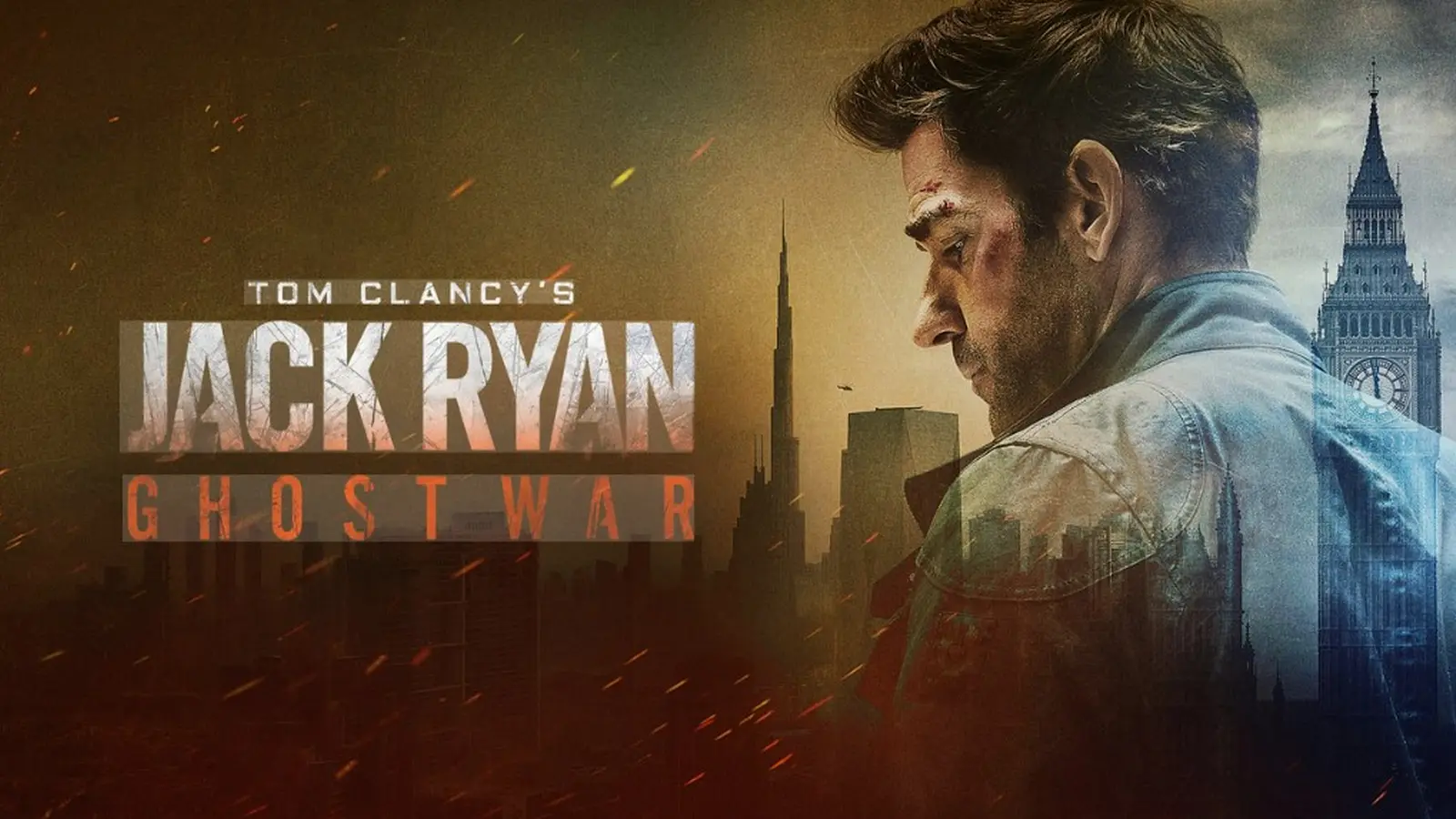
Opening with a hit and fade to black, Tom Clancy's Jack Ryan: Ghost War promises the kind of lean, efficient espionage cinema Hollywood once owned. The film delivers technique. It does not always deliver truth.
Andrew Bernstein knows his camera language. He stages the opening attack with a technician's eye: clean framing, a patience for mechanical details, and an economy that hints at competence. The trouble begins almost immediately after the credits. The antagonist, Liam Crowne (Max Beesley), is introduced in a brisk, memorable prologue — and then disappears for nearly half the runtime. That choice turns what should be taut cat-and-mouse energy into a compartmentalized puzzle full of fragments.

Hollywood has long excelled at crafting antagonists. Big-name studio pictures either invest in a fully fleshed villain or settle for a recognizable type. Here, Crowne lands closer to the latter: a serviceable, archetypal opponent whose motivations are sketched rather than excavated. Does that matter? It does, when the film leans on geopolitical shorthand — the familiar Russia-versus-America axis — to ignite the plot. The movie nudges the audience toward a simplified worldview. You feel the nudge. You might even resent it.

In the first thirty minutes, Ghost War suffocates under its own exposition. Scenes that should hum with tension instead lumber through pages of dialogue. Characters proliferate; each arrives with a dossier and a backstory, and the film expects you to assemble relationships on the fly. John Krasinski's Jack Ryan is the linchpin, earnest and steady, opposite Wendell Pierce's CIA veteran and Sienna Miller's MI6 officer, but these figures are often asked to carry speeches that paint their agencies as an almost utopian force for good. The rhetoric feels staged; it seldom earns the audience's acceptance.

Yet the film is not without its second-act redemption. Bernstein shifts his emphasis from talk to image. Sequences that were previously labored turn kinetic. The exchanges thin out. Visual storytelling takes over. Characters who were hazy in the exposition find clearer outlines. The relationship between plot threads begins to snap into place, and with that clarity comes investment.
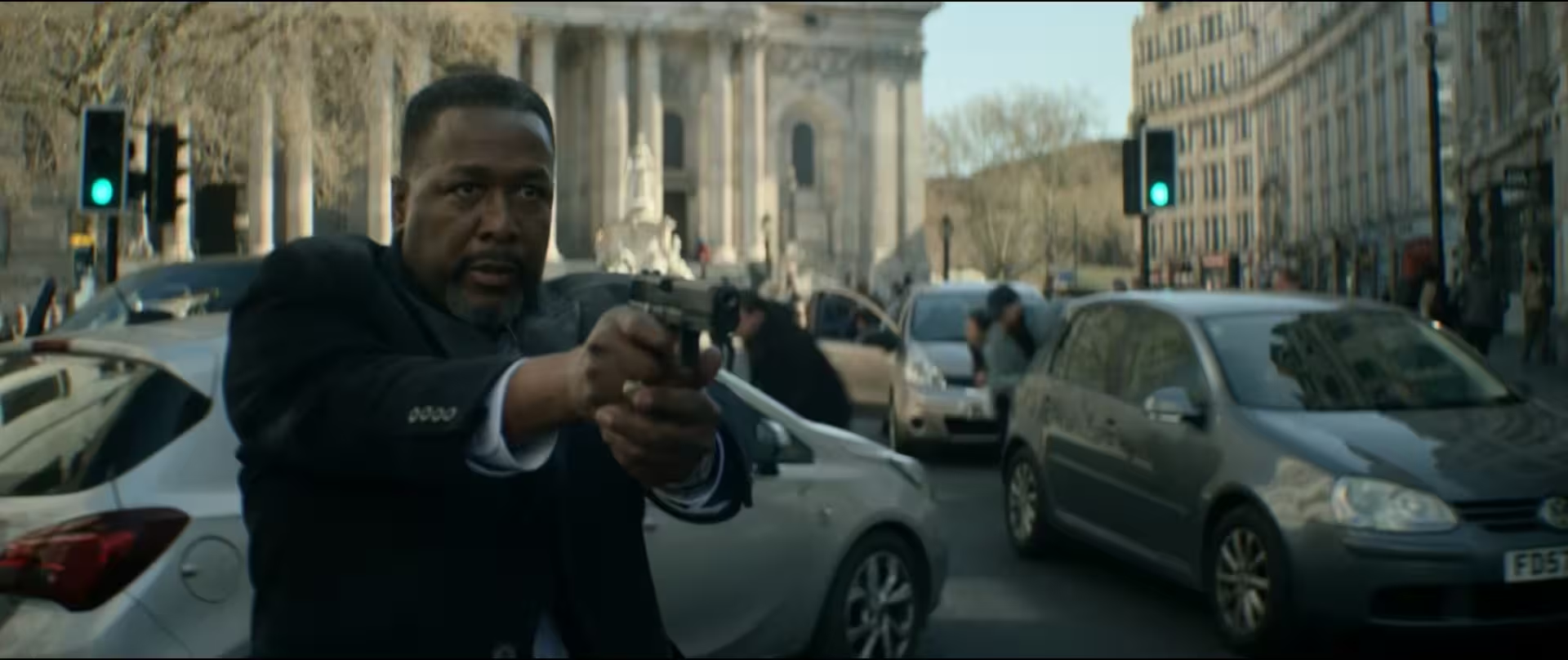
Action set pieces are the film's real currency. Bernstein times them with an editor's precision. A car explosion involving Elizabeth Wright (Betty Gabriel) lands as a rare, effective jolt — not because it shocks with novelty, but because the buildup actually works. Those moments where the movie leans into craft — blocking, sound design, the choreography of small beats — are when Ghost War nearly becomes the film it hints at in the opening.
Still, the film never fully abandons its didactic streak. When ideology slips back into dialogue, the drama frays again. The director can stage emotion; he cannot always manufacture moral complexity. The screenplay favors tidy lines over messy human contradictions, and in doing so it keeps the audience at a respectable distance rather than drawing them into intimate moral conflict.
So where does that leave us? With an uneven entry in a franchise that wants to blend political thriller with blockbuster muscle. Ghost War is technically proficient. It offers craft. It also leans on familiar tropes and convenient plotting. If you come for pure spectacle and clear, competent filmmaking, you'll find moments of real satisfaction. If you crave subtext, depth, or a villain who lingers in memory, the film may feel transactional.
Ghost War is a flawed but watchable specimen: a six out of ten for technical polish and the occasional surge of cinematic life.
Worth watching once. Worth debating afterward. Which side of the ledger matters more to you?


Leave a Comment
Comments
No comments yet. Be the first.