
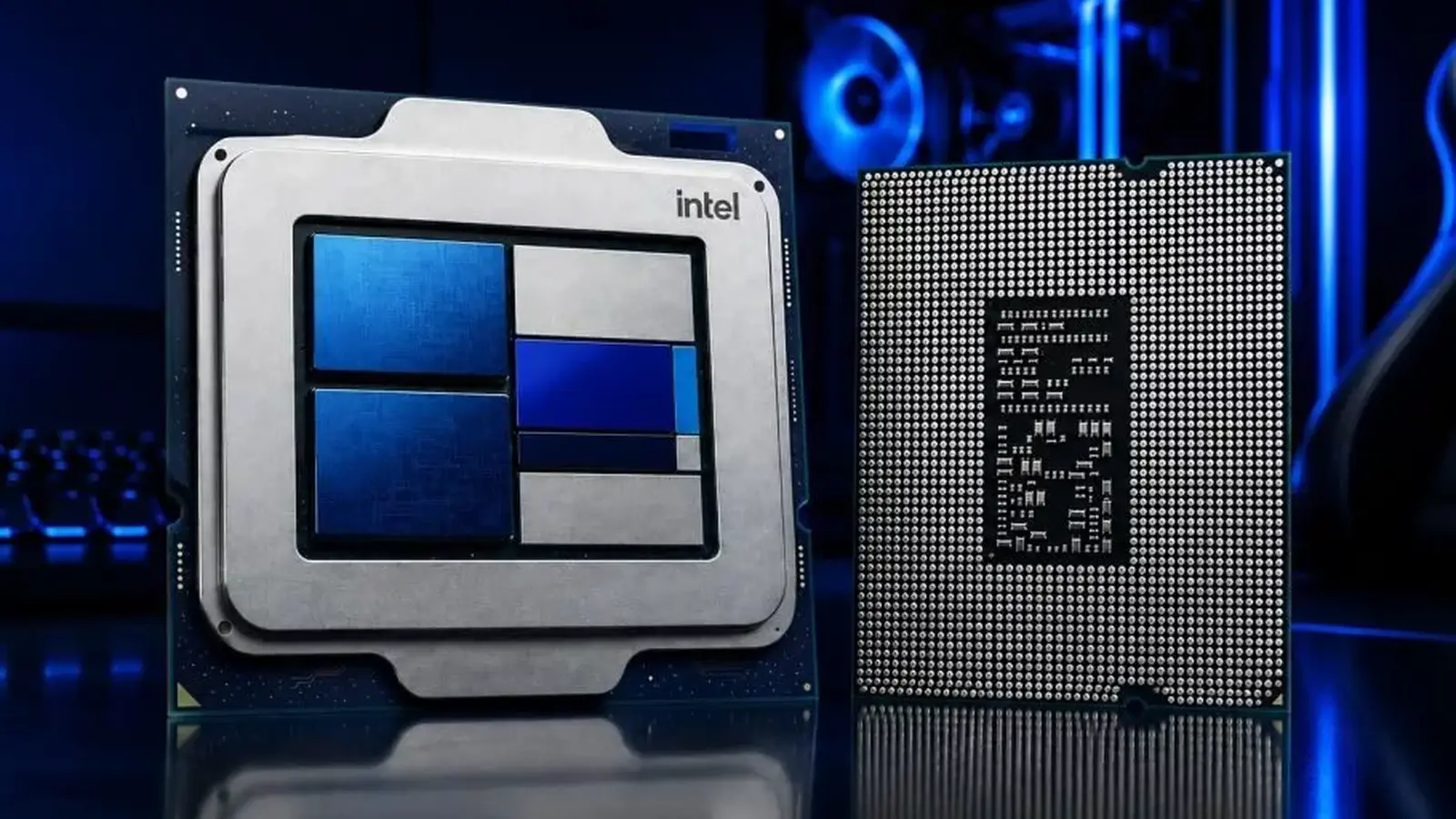
Think 300 watts was extreme? Intel’s next desktop flagship may rewrite what “power-hungry” means. Leaks point to a Nova Lake S chip packing a staggering 52 cores across two compute tiles — and a boost PL2 ceiling that could reach 474 watts under heavy load.
That jump is dramatic. Arrow Lake S capped out at 24 cores and 24 threads, and even Raptor Lake topped out around 32 threads in some refreshes. Add 20 more cores and you do not just scale performance; you scale power delivery, cooling demands, and motherboard engineering in one sweep.
According to LC Tech Leaks, Intel updated the Z990 platform’s power guidelines to accommodate dual-tile Nova Lake designs with a PL2 limit of 474W. The practical effect: motherboard VRM layouts are being rethought. Instead of the usual two 8‑pin CPU connectors, Z990 boards may adopt three 8‑pin plugs to reliably feed the processor under sustained boost.

The photos circulating show a PCB arrangement that reads like a hybrid: two 8‑pin EPS headers plus an 8‑pin PCIe-style connector. The message from the leak is specific — anything beyond 474W is classed as Dual‑Die overclocking. In other words, you’ll only see power exceed that threshold if someone manually pushes both dies past factory specifications.
But vendors and community leakers warn against treating the third connector as a universal requirement. Another source, jaykihn0, stresses that a triple‑8‑pin layout is more of an optional capability offered by some board makers rather than a hard necessity imposed by the CPU. Z970 boards, for example, aren’t expected to carry the tri‑connector setup. Likewise, some 175W Z990 boards will ship with two connectors while others include three — and according to the sources, that choice won’t magically unlock a higher default power mode for a 52‑core SKU.
Motherboard power classes are getting more explicit, too. Boards will be segmented into profiles — roughly 35W baseline (cfgdwn), 65W value/performance, 125W, and 175W baseline/performance models — and if a CPU is seated on a board whose maximum sustainable power is below the chip’s PL1, the processor will simply fall back to a lower performance profile by default. That detail matters when you consider pairing a dual‑tile beast with a lower‑end board. If the platform can’t feed the PL1 budget, the silicon will adapt — but performance will too.
If you’re eyeing a 44‑ or 52‑core Nova Lake, check the motherboard’s VRM and connector layout before you buy.
New desktop silicon is forcing a return to heavy lifting in the power delivery department. The question now isn’t just how many cores you want — it’s whether your rig is ready to feed them.


Leave a Comment
Comments
No comments yet. Be the first.