
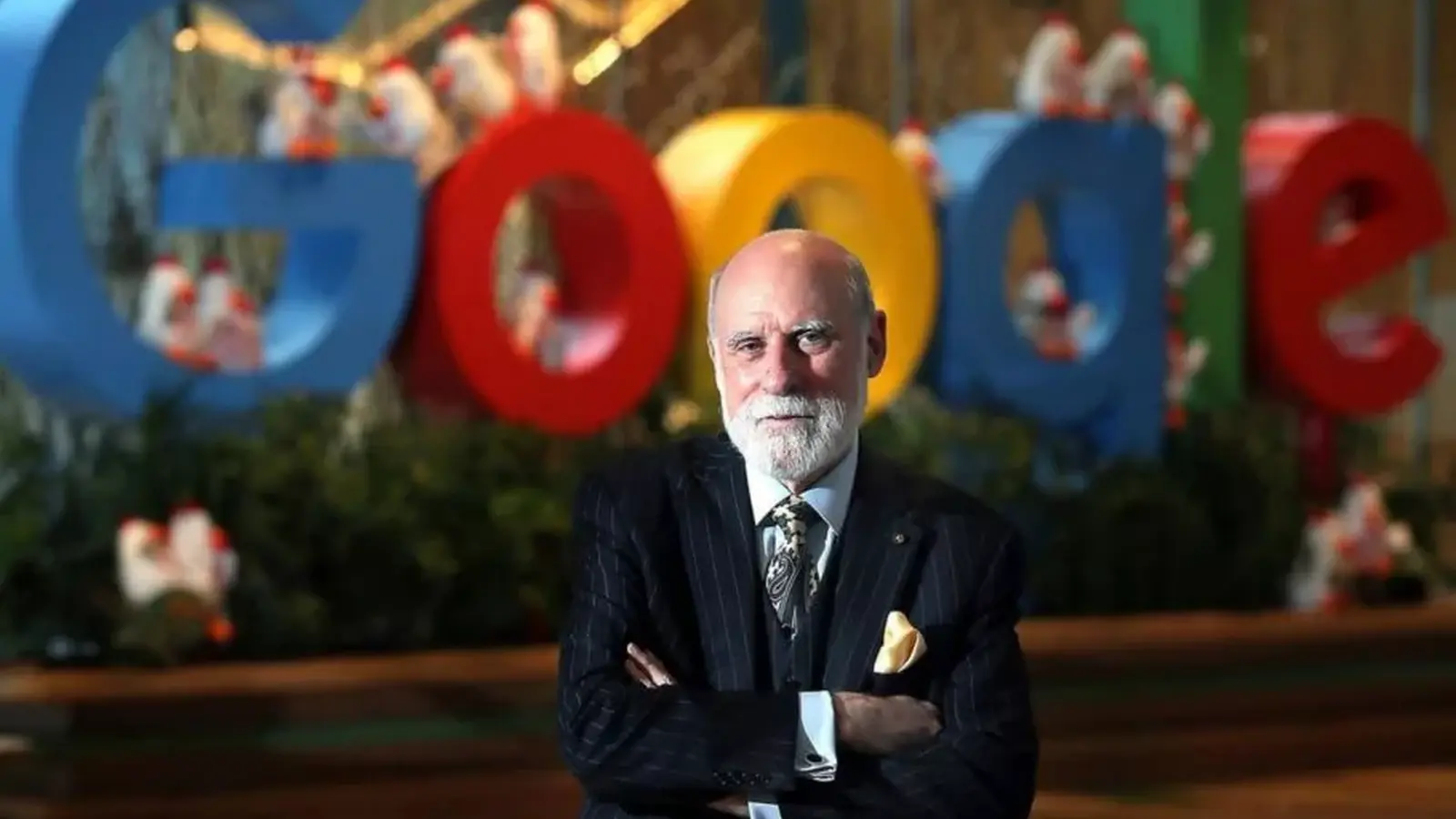
He helped stitch the web together. Now he is stepping away. Vinton Cerf, often called one of the fathers of the internet, will retire from his role as Chief Internet Evangelist at Google next week, closing a chapter that began in the packet-switched labs of the 1970s and stretched into the cloud era.
The news surfaced at the Open Frontier conference when David Patterson, the UC Berkeley professor known for RISC architecture work, mentioned Cerf’s departure during a panel discussion. Patterson noted Cerf’s two-decade tenure at Google and the fact that the retirement is imminent—just one week away. Google had not responded to requests for comment at the time of the announcement.
Names like Cerf and Bob Kahn appear on the short list of people who quietly rewired modern life. Together they architected TCP/IP, the protocol suite that lets disparate networks behave like a single, global fabric. That work—born in the 1970s—earned Cerf and Kahn the Turing Award and even the Presidential Medal of Freedom. Those are not just trophies on a shelf; they are markers of a system-level change that underpins everything from streaming video to online banking.

Cerf joined Google in 2005 and spent more than 20 years there advocating for an open, interoperable internet. His role was less about product launches and more about stewardship—nudging standards, reminding engineers of the bigger picture, and defending the principle that networks should be able to talk to each other without gatekeepers deciding the rules.
At Open Frontier the conversation widened beyond history into a pressing question: how should society govern the protocols of machine intelligence? The panel included figures such as Francois Chollet, creator of Keras, and John Ousterhout, the creator of Tcl. They debated sustainability for open-source projects and the concentrated control of advanced AI models by a handful of labs. Voices in the room argued that natural language might be enough for agents to coordinate. Cerf pushed back.

Why not just let machines talk like people? Because human language is messy. It is flexible. It is full of implied meaning and ambiguity. For systems that will negotiate, transact, and make consequential decisions on their own, Cerf warned that loose, ambiguous communications create risk. He argued for precise, formalized protocols—standards that would make machine-to-machine interaction predictable and verifiable.
Cerf’s central point was crisp: as autonomous agents proliferate, informal language alone won’t cut it—clear protocols will.
The idea feels familiar to anyone who’s wrangled with early internet design: interoperability doesn’t emerge by accident. It is engineered. Standards matter. They tame complexity and reduce fragility. If the web’s foundations were built around shared technical rules, Cerf believes the same discipline should guide how AI agents coordinate, to prevent catastrophic misunderstandings and to preserve competition and openness.
There was nostalgia in the room, yes. But the discussion was forward-looking. Panelists returned again and again to a common anxiety: a handful of labs concentrating compute, data, and models creates systemic risks—technical, economic, and social. Open-source sustainability came up as more than a philosophical point; it is a practical one. Who will maintain the libraries and tooling that the next generation of AI depends on?
Cerf’s retirement is both symbolic and practical. Symbolic because one of the architects of the internet’s underlying rules is leaving public-facing stewardship. Practical because his perspective—insisting on formal standards for interoperability—lands at a moment when the industry is grappling with how to make advanced AI systems work safely together.
He leaves behind a networked world that would not exist without his early work, and a debate about machine communication that will shape the next decade. Who writes those rules next? That is the question that lingers, and it matters more than ever.


Leave a Comment
Comments (2)
is formal machine protocols enough to curb big lab dominance? sounds pragmatic but who gets to write the rules, and who enforces them...?
wow, what an era ends. cerf stepping down hits differently... the internet's guardian gone? we need someone to fight for open standards, now more than ever