
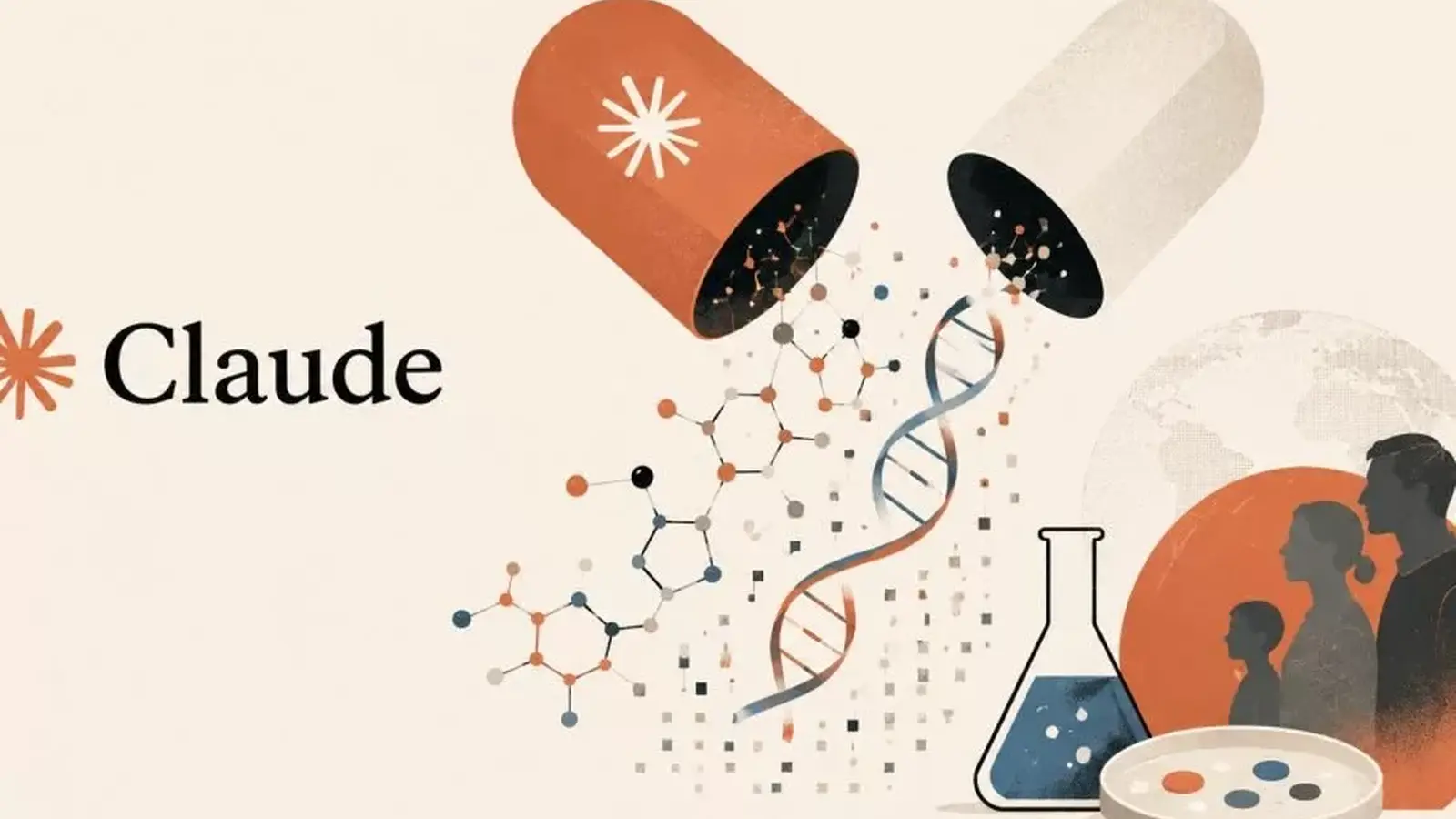
When a company famous for conversational AI begins hiring bench scientists and building wet labs, you notice. Anthropic has quietly moved from crafting chat models to assembling a toolkit for drug discovery, unveiling Claude Science at the event The Briefing: AI for Science, according to The Verge.
Claude Science is pitched as an integrated workspace: datasets, analytical tools and visualization engines pooled in one interface so researchers can see complex results as clear charts and images rather than scattered files. The idea is tempting. A single environment that stitches computational workflows together could shave weeks off routine analysis and surface hypotheses faster.
But building the platform and actually bringing a molecule to the clinic are very different projects. Anthropic says it will focus on neglected diseases and pursue bespoke therapeutics. So far, details are scarce about how the company plans to run animal studies, organize clinical trials, or partner with established manufacturers. The company has, however, been hiring heavily in life sciences over the last year and reportedly set up dedicated labs to support its ambitions.
Anthropic enters a crowded field. Big tech firms and specialist startups already aim to sell computational drug discovery: OpenAI, Google and Amazon have launched life science initiatives; Insilico and Isomorphic Labs have been developing end-to-end drug design pipelines for years. What sets Anthropic apart is its pedigree in large language models and a public bet that those models can meaningfully accelerate scientific workflows when paired with domain data and lab infrastructure.
Experts caution against overreach. Researchers such as those at Cambridge and UCL note that AI tools are valuable at many stages—from proposing novel scaffolds to analyzing high-dimensional assay data—but they don’t replace the need for high-quality experimental data. In biology, the signal is often noisy. Models hungry for consistent, well-annotated datasets can be hamstrung by the patchy, heterogeneous reality of experimental results.
Can computational methods eliminate hands-on experiments? Not yet. Oxford chemists and others point out that a compound must still be vetted for efficacy, toxicity and delivery in living systems. Predictive models help prioritize candidates. They do not, at present, remove the fundamental requirement of physical validation.
Anthropic appears to understand that distinction; its investment in biologists and laboratory space suggests a hybrid approach—AI to generate leads, humans and experiments to prove them.
What to watch next: whether Claude Science can link in with external CROs and manufacturers, how transparent Anthropic will be about validation workflows, and whether the platform generates reproducible preclinical data that convinces regulators and partners. If the company can bridge the computational and experimental worlds, it could add a credible new player to AI-driven drug development—but execution will be everything.


Leave a Comment
Comments
No comments yet. Be the first.