

Imagine your AI not as a productivity tool on your laptop but as part of the household — answering questions at breakfast, helping a grandparent navigate a prescription, or offering a child age-appropriate homework prompts. OpenAI appears to be leaning into that future.
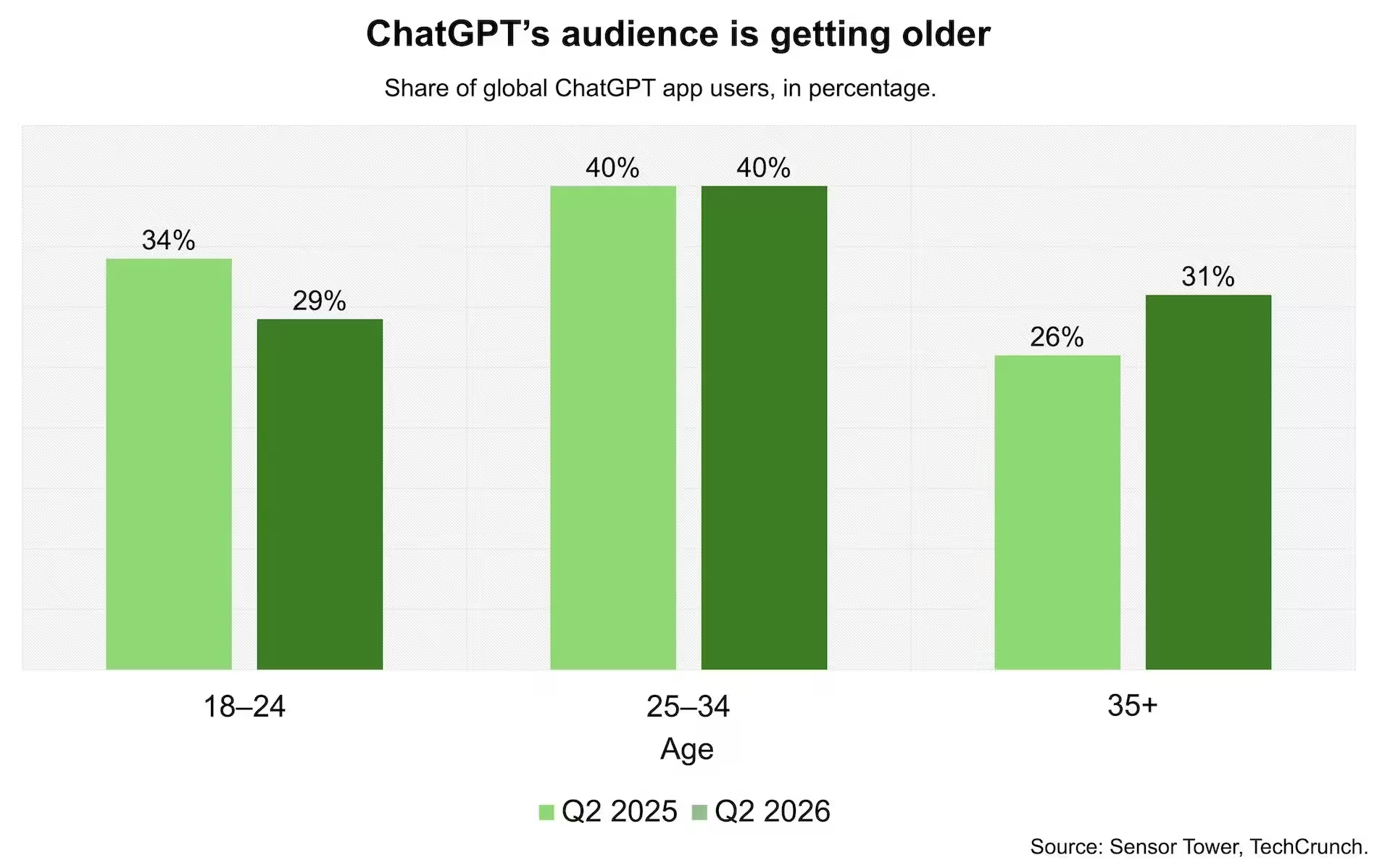
Behind the scenes the company is shifting strategy. It is hiring a dedicated product manager in San Francisco to design experiences aimed specifically at families, parents, and older adults — audiences that are increasingly using ChatGPT and similar assistants. Usage patterns are changing fast: Sensor Tower estimates users aged 35 and older grew to 31 percent of the global base in Q2 2026, while the 18–24 cohort slipped to 29 percent. In the United States, about one in four parents with smartphones report using ChatGPT.
That shift matters. Ben Bajarin of Creative Strategies frames it as a transition from single-user productivity apps to household technology — the same path followed by Google and Apple, but with a twist. AI is not merely a content relay or search engine; it can act like a household assistant that remembers, nudges, and helps everyone under one roof. That broader footprint brings new design challenges and new responsibilities.
Safety experts are already pressing the point. Stephen Balkam, who leads the Family Online Safety Institute, says early AI products were never built for kids and families, so they need different protective guardrails. His group's research found a disconnect between parents and children: only 27 percent of parents believed their child had used AI in the past week, while 38 percent of kids said they had. That gap speaks to visibility and oversight — or the lack of it.
The legal and regulatory environment adds another layer of urgency. OpenAI faces several lawsuits from parents alleging that interactions with ChatGPT contributed to harm in cases involving self-injury and suicide. Those claims underscore how quickly the stakes rise when an AI moves from a work desk to a family room where vulnerable people interact with it daily.
Competition complicates the picture. While ChatGPT is attracting older users faster than many rivals, Google’s Gemini currently leads among American parents with 32 percent penetration, ChatGPT follows at 24 percent, Claude at 4 percent, and Copilot at 2 percent. Market share is not just about models; it’s about which company can package trust, privacy, and parental controls in ways families actually adopt.
Expect product moves that reflect these realities. Family subscription plans, child-safe profiles, household-shared memory systems that respect privacy, and much stronger parental controls are likely on the roadmap. Design will need to balance helpfulness with boundaries. That will require UX decisions, content filter strategies, and legal teams working in tandem — fast.
OpenAI’s pivot feels less like a marketing tweak and more like a reckoning: AI is graduating from solo usage to communal life. The question now is whether the industry can build features and safeguards that parents trust, elders can use, and children can safely explore — before the living room becomes yet another unregulated frontier.


Leave a Comment
Comments
No comments yet. Be the first.