
3 Minutes
The moment a casting announcement lands, the Internet erupts. It happened again when Christopher Nolan’s starry take on Homer, The Odyssey, began to circulate: critics online picked apart casting, costume choices and even the accents.
Nolan, unfazed, told The Telegraph that pre-release uproar rarely matters. “Those conversations that happen before people have actually seen the film are largely meaningless,” he said, pointing out that loud opinion rarely equals informed judgment. Short and blunt. He’s been down this road before.

Think back to his decade-long detour with Batman. Nolan reminded listeners that when he started Batman Begins, half a century of creative baggage came with the character. Opinions were heavy. Expectations heavier. His response then — and now — was to focus on honoring the source by interpreting it as powerfully as possible. Different doesn’t mean dishonest, he argued. It simply means an adaptation with a point of view.
Not everyone accepts that. The most vocal objections to The Odyssey have come from unexpected corners: social media personalities and political figures who objected to casting choices such as Lupita Nyong’o as Helen of Troy. Some critics framed it as a political statement. Elon Musk went so far as to suggest Nolan had “lost his authenticity,” while conservative commentator Matt Walsh attacked Nyong’o on X, arguing that casting reflected a broader agenda.
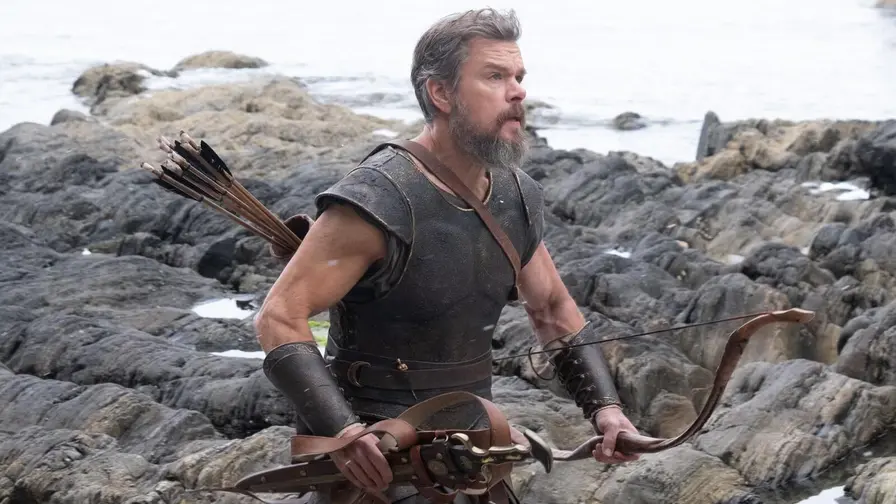
Design choices took heat too. Images of the film’s armor spawned memes comparing the look to modern superhero suits. Fans who prize historical authenticity saw American accents and contemporary phrasing as anachronisms. Nolan answered those points not with denials but with detail: his team researched period materials and finishes, and costume designer insights shaped decisions about rank and status on screen. Small touches, he said, were meant to convey social standing — not pop-culture homage.

He described the work on weaponry and metal finishes in almost forensic terms: the concept of darkened bronze, ways to add precious metals, even using sulfur to achieve particular patinas. The aim, Nolan suggested, was not to recreate a museum exhibit but to make objects that feel lived-in and meaningful on film. Pragmatism met poetry.
Artists make choices; audiences make meaning. That seems to be Nolan’s shorthand. He’s not naïve about noise on social platforms. He knows controversy sells headlines. He’s also convinced that time and the screen will do the real talking.
Whether The Odyssey will quiet critics — or deepen the debate — will be decided in theaters, where context and performance finally puncture pre-release chatter. For now, Nolan’s posture is familiar: let the spectacle speak, and let viewers decide if his translation of an ancient epic lives up to its legend.

Leave a Comment
Comments
No comments yet. Be the first.