
3 Minutes
Imagine waking up to a concise briefing written by an assistant that already read your inbox. It flags the three emails you must answer, highlights today’s calendar clashes, and suggests a sensible schedule — all before you’ve had coffee. That’s the promise Google is quietly rolling out with Gemini Spark.
Introduced at this year’s developer conference as an agent-style model, Spark didn’t stay behind locked doors for long. Until now, the tool was mostly the preserve of developers and a handful of premium users. The gate is opening: Google says U.S. customers who subscribe to AI Pro — a $20 monthly tier — can turn Spark on. Global subscribers to the higher-end AI Ultra plan also gain access. But not everyone gets to play. Residents of the European Union, Switzerland, the U.K., and Nigeria are excluded from this initial expansion.
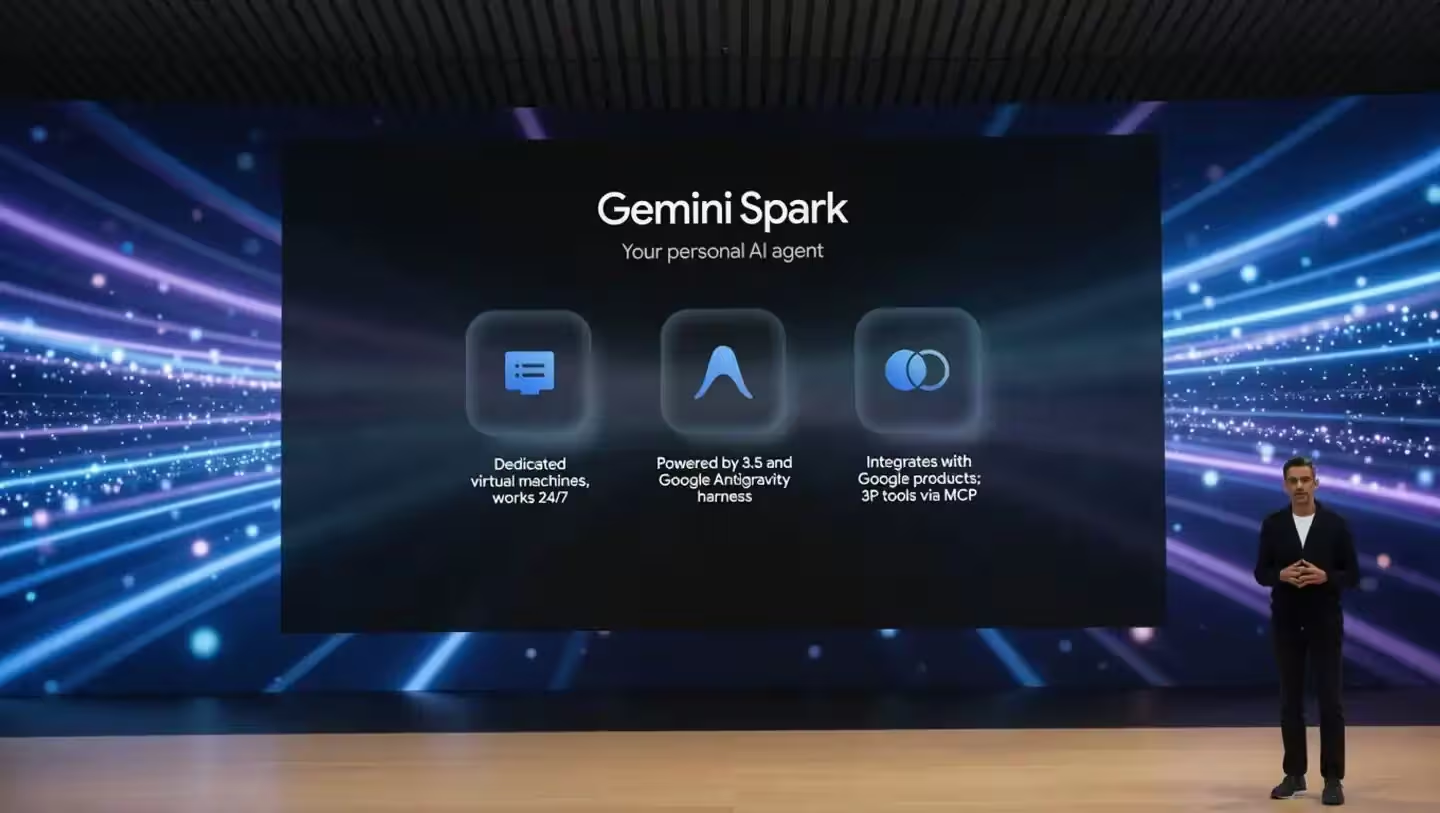
So what does Spark actually do? Short answer: automations that feel personal. Built on Gemini 3.5, the assistant operates like a digital agent rather than a simple chatbot. It reaches into Google Workspace apps to perform tasks that previously needed manual steps. Think of it as handing routine chores to a colleague who never forgets context and remembers deadlines.
Ask it to check your email each morning and surface the three most urgent messages. Tell it to draft replies in your tone. Feed it spreadsheets and it will summarize key trends. Want your day reorganized based on new information that arrives? Spark can reshuffle priorities and propose a fresh plan. The range is broad. Drafting, summarization, scheduling and basic data distillation are only the start.
There are practical limits. Access is gated behind subscription tiers, and Google has chosen a careful, staged rollout rather than a global flip of a switch. The company directs interested users to the Spark landing page, where tasks can be assigned and preferences set. That central control point is useful: it helps users understand what Spark can do and where it plugs into Workspace workflows.
Why the selective availability? Google hasn’t offered a full public explanation beyond the subscription and regional details. Regulatory, privacy and localization factors often influence product rollouts, and complex AI features tend to get staggered launches. Whatever the cause, the upshot is simple: some users get an advanced assistant now, others will have to wait.
For teams wrestling with overflowing inboxes and messy calendars, Spark represents a pragmatic step toward day-to-day automation that actually saves time. It’s not a magic wand. It’s a highly capable helper that integrates into apps people already use and nudges routine work off your plate.
Curious to try it? If you’re in an eligible region with the right subscription, check the Spark page in your Google account and experiment with delegating a few small tasks. Start small. See what it learns. Then scale up.


Leave a Comment
Comments
No comments yet. Be the first.