
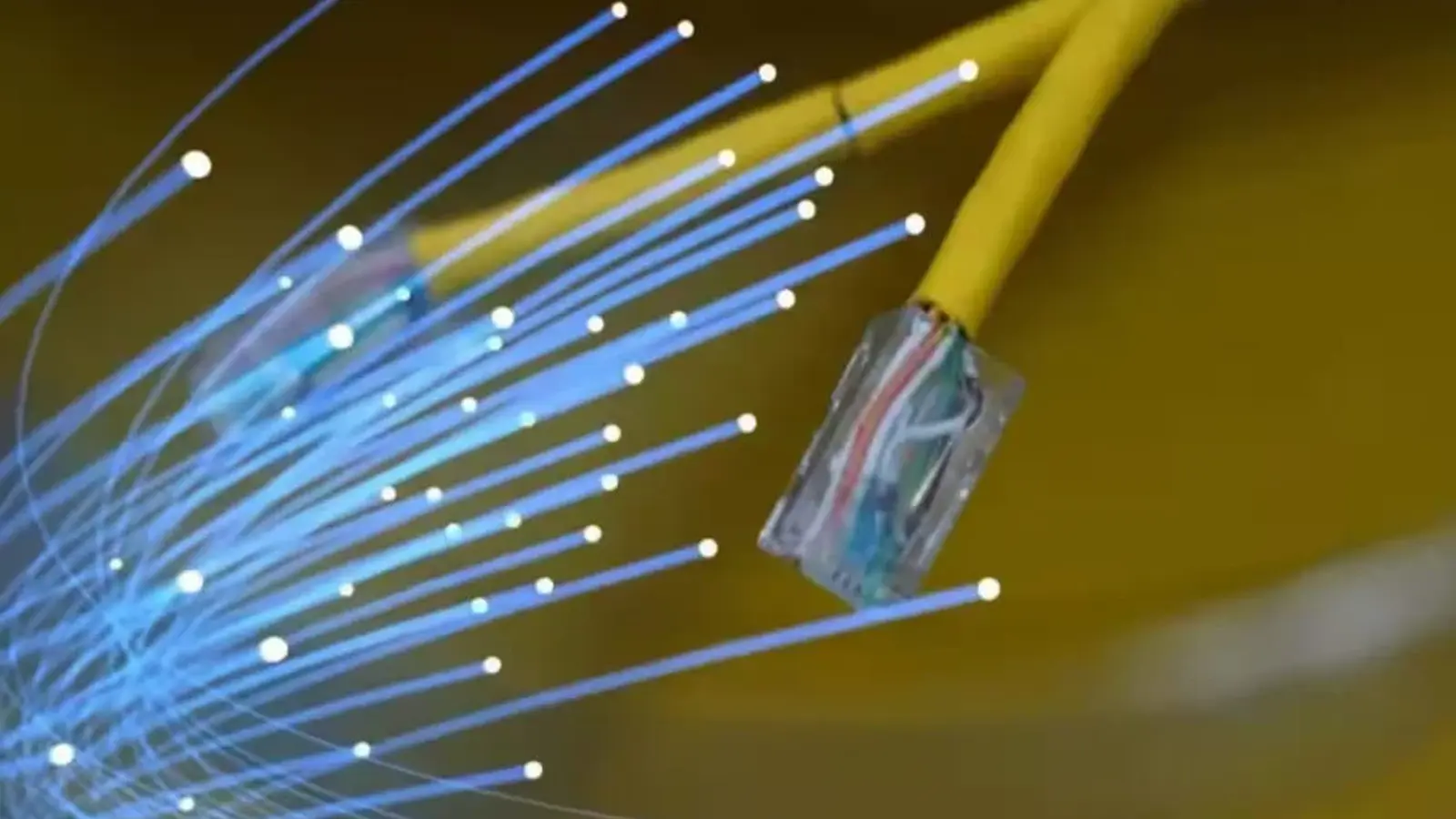
A Chinese research team achieved a data transmission rate of 3.2 petabits per second (3,200,000 gigabits per second) using a 24-core optical fiber cable, setting a new world record.
The experiment was carried out over a 10.3-kilometre multi-core fiber and demonstrated stable, simultaneous bidirectional transmission, which researchers say could in theory deliver more than 20,000 4K films per second.
The project was led by the Key National Laboratory of Optical Communication Technology and Networks at the China Information and Communication Technologies Group (CICT), in collaboration with Pengcheng Laboratory and FiberHome Fujikura.
The system uses a 24-core fiber architecture with space-division multiplexing across three wavelength bands: S, C and L. Researchers created thousands of parallel transmission channels by combining the multiple cores with wavelength division techniques.

Commercial coherent optical modules and advanced modulation formats were used to stabilise the links and reduce inter-core interference, the team said.
According to the researchers, the setup delivers about 32 times the capacity of conventional single-core G.652 fiber systems, which typically reach around 100 terabits per second using C and L bands.
The team reported per-wavelength rates of 400 gigabits per second in the S band and 1.2 terabits per second in the C and L bands, achieved with domestically produced optical modules.
This result improves on the same group’s earlier record of 2.5 petabits per second recorded earlier this year, representing roughly a 28 percent increase.
The researchers emphasised that the experiment used hardware architectures compatible with commercial standards, which they say brings practical deployment and operational use closer to reality. They added that the expanded infrastructure capacity could address growing demands in areas such as artificial intelligence workloads, large language model training, hyperscale data centers and future 6G networks.


Leave a Comment
Comments
No comments yet. Be the first.